Media outlets consistently publish pieces about symbolic capitalists who understand and describe themselves as poor, or struggling, or barely getting by, or broke (e.g. here, here, here)– often despite healthy six figure incomes and/or low expenses (because they’re childless and either single or partnered with someone who works and whose income supplements their own rather than drawing from it). The impression you’d get from these narratives is that in order to live a decent life in New York City or similar metropolises, you need a minimum of $250k.
Indeed, a third of Americans who make a quarter-million or more describe themselves as “living paycheck to paycheck” — largely because they decline to live within their ample means. Most millionaires understand and describe themselves as “middle class.” Most white collar professionals seem to agree that these folks are middle class, which allows them to think of themselves as “working class.” And insofar as both the millionaires and six-figure salary crowd mutually define themselves against billionaires, both parties tend to misunderstand their own social position by failing to understand that, compared to most non-billionaire Americans, they are quite affluent.
Instead, having little sense of how most other people live, symbolic capitalists routinely describe themselves as “ordinary Joes.” They view the elite lifestyles they feel entitled to as “normal” or the bare minimum for a decent life. As a consequence, they have a tough time imagining how an individual could survive in New York City without a robust six-figure income — let alone a family. But people do it all the time. I would know.
I lived in Manhattan for seven years (2016-2023) while pursuing my PhD at Columbia. My grad stipend was about $35k. As I note in the introduction to We Have Never Been Woke, this was more money than I’d earned in my life, working full-time at jobs that required real work. BUT, I was also supporting a family of four (wife, two kids), so I supplemented my income by public writing and working off-and-on (sometimes full-time, sometimes part-time, sometimes not at all). As a result of these additional revenue streams, our annual household income generally fluctuated between $75-85k per year.
Our net income was never super far from our gross income: my grad stipend wasn’t taxed upon delivery, the income was declared at the end of the year. Almost all the taxes extracted from paychecks from my side jobs was typically refunded at the end of each year thanks to deductions and tax credits for families, students, cost of living adjustments, etc. (sometimes, as a result of credits, we got back slightly more than we paid in taxes).
With respect to my gross income: to consistently bring in around $80k was amazing to me. It was far more than the U.S. median individual income at the time (it’s 173% the median individual income today). It was significantly more than the median U.S. household income during that period. Our earnings were roughly equivalent to the current median household income of New York City residents. That is, most households in New York today get by on less than what we were bringing in at the time.
That said, if we look at households that had our same family structure, we did bring in less than most contemporary married NYC couples with children. If we don’t look at current NYC married families, but look at the wages of families during the *specific periods we lived there,* we were significantly closer to the NYC median for others with our family structure at the time. Zooming into our particular corner of NYC, we made significantly more than the median income for households with families on the west side of Manhattan and north of Central Park, where our apartment was located.


There were lots of poor people around us. We were not poor. We were not anywhere close to poor.
There were also lots of rich people around us. At the time, we were not rich or particularly close to rich. We were getting by comfortably. But even if we’d made significantly less money, I would have never described us as “working class” because I was attending an Ivy League school at the time. And as a result of attending said school, we’re now in a very different financial place.
My family and I no longer live in the city because my job (tenure-line professor at an R1 research university) is in the center of the north shore of Long Island. These days, my wife and I’s combined income puts us around the bottom of the top quintile of all U.S. households. We are more than comfortable.
But whenever I tell fellow symbolic capitalists that, for the seven years preceding this job, we lived a nice life in Manhattan on around $80k per year, I am regularly greeted with incredulity. Folks estimate that you’d need 2 to 3 times as much money as we brought in, minimum, for a family to thrive in the city. When I try to tell them that they’re wildly overestimating how tough it is to live in NYC due to all the poverty-cosplaying that goes on with white collar professionals in outlets like the New York Times, they have a hard time swallowing this reality. Instead, they often demand to see our financials.
Obviously, I’m not going to post my tax returns, bank statements and/ or bills — that’d be insane. So I’ll do the next best thing and sketch our expenses in general terms.
Rent
A big driver of incredulity that a family could live comfortably in New York for under $100k is that many seem to be under the impression that apartments in New York City cost a minimum of $5-6k. Reems of news stories reporting on the median asking price for apartments in NYC help foster this illusion (e.g. here). But the asking price for NYC apartments tends to be very different (much higher) than the market rate that people actually pay.
In fact, only about a third of two-bedroom renters in Manhattan actually pay over $3k per month for their apartment.

If you move away from renters and what they pay, and look at units and what they’re actually generating in rents, you see a similar picture. The U.S. Census Bureau estimates that although most (62% of) occupied units in NYC have 2 bedrooms or more, less than a fifth of all occupied units in the city (18%) are being rented out for $3k or more. Nearly three quarters (73%) of all occupied units in the city are being rented for less than $2500.


That said, the price of housing in NYC has gone up significantly in recent decades. But even today, the typical New York household pays roughly $1600 or less for their place (up from $1k in 1993).

Of course, many units in NYC are rent-controlled, rent-stabilized or publicly owned. This distorts the averages listed above. But even if one restricts the analysis exclusively to market rate units, it remains the case that the median rent New Yorkers actually pay is roughly $2k.

Of course, different parts of the city have very different rents. Manhattan is more expensive than the other boroughs. However, the median rent in that region still comes in under $2,100 (and, again, all the other boroughs have median rents lower than that). Even in the most expensive community districts in the city (i.e. Midtown, Lower Manhattan, the Upper East Side, Murray Hill, Greenwich Village, Battery Park) the median rent doesn’t exceed $3,500 per month.

No matter how you slice it, if someone is paying $5-6k per month for their apartment in New York City, they have a really expensive apartment – it’s likely to be huge (3+ bedrooms, multiple bathrooms, lots of square footage) and/or a luxury unit and/or located in an especially trendy or in-demand area. Anyone paying that kind of rent could almost certainly live elsewhere for much less and without great inconvenience re: commuting, etc.
Our own rent was pretty similar to most Manhattanites: we stayed in a 2bd/ 1ba apartment for about $2800 per month. Water and internet were included in our rent. Electricity and gas were not. They ran about $150 -200 per month.
My wife and I had cell phones, my kids did not. We had just two lines to pay for, and we went with a discount carrier that covered both of us for about $50/mo.

These bills, along with the rent, took us to a bit over $3k per month. My Columbia stipend covered these expenses almost fully, so the money we made through outside work (typically $40-50k per year) paid for our other expenses.
With respect to where we lived, our experience was a little unique because Columbia University was our landlord.

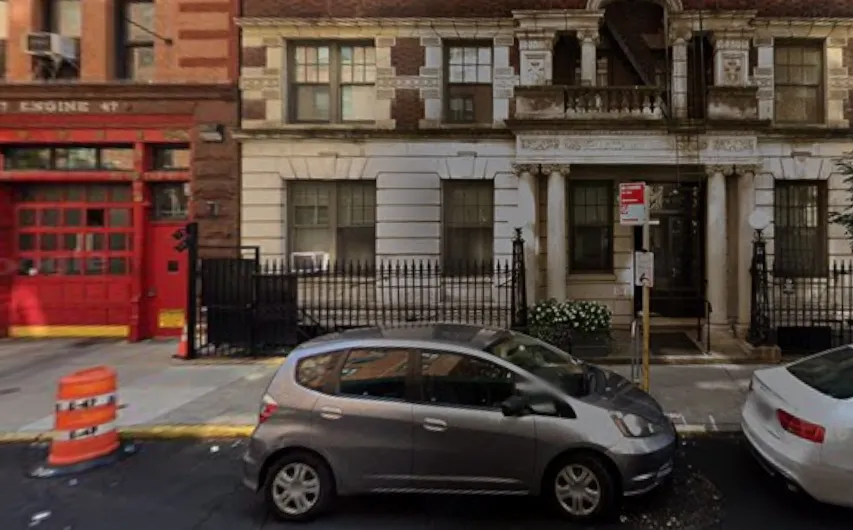
Between 112th and 122nd Street (north to south) and between Riverside Drive and Morningside Drive (east to west), there are almost no units available for the public to rent at *any* price. Columbia owns almost all of the residential property and reserves it to rent out to associated faculty, staff and admin (and they own much else besides: as I’ve discussed elsewhere, Columbia University is the largest private landowner in all of NYC).
There were many ways that being a tenant of Columbia University was great: if there was any problem in our place, we could count on it getting fixed quickly and well.
Additionally, although we never had to worry about this ourselves, if someone fell behind on their rent, they were virtually immune to being evicted. Columbia University is an Ivy League school whose primary purpose is to identify and cultivate elites. It would be declassee for the school to have lots of homeless affiliates. As a result, if you don’t pay your rent, the school typically won’t put you out on the street so long as you’re still a member of the Columbia community — but they will withhold the incredibly valuable credentials students are there to obtain until they’re fully paid up. Likewise, although we had excellent credit, they rented space out to all affiliates without much regard for credit scores. So if you were someone who did have bad credit, you’d be able to get a spot through Columbia that you’d never be able to get on the market. And my understanding is that they tried to avoid dinging your credit if you fell a bit behind on the rent (they’re counting on graduates to have a solid financial life post-graduation — allowing them to make nice alumni donations to the school — so they try their best to refrain from messing up your finances themselves). They charged a standard deposit (first and last month up front, plus security) but they might have even worked with people on the deposit (spreading it over multiple payments) if they couldn’t front the money right out of the gate.
Again, none of this was relevant for us: We had great credit. We paid the standard deposit upfront. We paid our rent in full and in time every month. But it’s nice that others could benefit from these perks.
All said, it was great to rent from Columbia University. However, the rent itself wasn’t much cheaper than market rates in the surrounding area.
Even today, despite rising NYC rents since 2020, there are tons of places on the north or east sides of Columbia’s frontier for about the same price that we were paying for our flat in 2023. To get a place in the same broad area we lived (on the west side, north of Central Park) for the same price we paid, you don’t need to have magic access, secret knowledge or an intergenerational rent stabilized place. You can just pick one of the many, many options publicly available on Zillow at that rate. Indeed, you can get a place right down the street from Columbia University’s sociology department for “just” $3k per month.

The southern frontier of Columbia University is a little more expensive, but you can still get 2 bedrooms for under $3.5k. And at the time I was living there, you could have likely picked up one of these places for about the same price that we were paying for our Columbia-owned unit or, if anything, just slightly more.
And, again, these are just regular market prices that you can get from a quick Zillow search. It’s just flatly false that you need to spend upwards of $5k for a decent NYC apartment. The typical two-bedroom goes for half that (or less). You don’t need some kind of special access or process to get those prices — those are just the market rates.
Granted, $2800 for a two bedroom is wild relative to Arizona prices. Before moving to Manhattan, we were renting a 4-bedroom house for less than half the rent for our Columbia-owned 2-bedroom apartment. But the prices for NYC apartments, while expensive relative to much of the rest of the country, are far more affordable than the hyperbolic discourse of poverty-LARPing symbolic capitalists suggests. There are all sorts of problems with the housing market in New York City, but typical rents at/ above/ over $5k isn’t one of them.
Childcare
As of 2024, the typical childcare costs in NYC was about $2400 per month for the most intensive type of care for the most needy type of child (NCA 2 infant care) for those who use childcare for several hours every day.

That is a considerable cost, but notice, that’s the upper bound for those who relied on paid caregiving. Most NYC kids receiving some form of childcare are not infants, and most households do not use the most intensive forms of care, nor do most households with children rely on paid care for several hours every weekday.
Nationally, even in the age group where paid care is most common (ages 3-5), less than 25 percent of U.S. kids are enrolled in full-time and center-based care. This is why voters consistently rank childcare as fairly low in terms of their concerns about affordability: they don’t use it much!

It tends to be highly-educated and relatively-affluent urban and suburban white collar professionals (operating under a dual-earner model) who consume particularly large amounts of childcare, and whose preferences demand the most intensive and expensive forms of childcare (for better or worse for their kids or themselves and their community). As public policy researcher Stephanie Murray put it:
“The perception that tons of American kids spend their early years in daycare is probably an indication that you are in a highly educated, high income social bubble, because childcare use in the U.S. is heavily stratified by socioeconomic status (yes, even among babies and toddlers).”
And even for these folks, the daycare affordability challenge is most relevant in the period before their kids start school (and to a lesser extent, during their elementary school years). It’s a pain point that melts away after a few years.
In any event event, most families in NYC (or American more broadly) do not spend tons of money to have strangers take care of their kids — let alone paying premium dollar to get the most demanding forms of care. Instead, they adjust their schedules and coordinate with partners, relatives, friends and neighbors to reduce the amount of time they have to rely on paid caregiving (or eliminate that cost altogether) and to allow parents to spend more time with their kids.
That’s what we did.
When my son was born (and we were still living in Arizona), my wife was the primary breadwinner and I was the primary caregiver. Our daughter was 2 when we moved to Manhattan (and my son was starting kindergarten). At the time, my wife had a strong desire to stay home from work and dedicate herself to being a wife and mother for a change. My own income was solid enough to allow her to do this.
A family can not only survive on $80k but, if a single earner is pulling in that much, it’s possible to do a “traditional” arrangement or to have a “kept” spouse. The narrative that people are locked into a dual-earner model to meet their basic needs is true for folks who work jobs below the median income levels. For symbolic capitalists, the issue typically isn’t that both partners need to work, it’s that both partners generally want to pursue high-powered careers. And as I explain in We Have Never Been Woke (pp. 146-148), they mostly accomplish this feat by outsourcing “women’s work” primarily to “other” women – typically immigrants and minorities – often paying them substandard wages to maximize profits on their second salary.
That was not the path we took. For the first two years, my wife didn’t work. Because of where my daughter’s birthday fell, she was able to start kindergarten while she was still 4 years old (she turned five a few months in). After my daughter started school, my wife would work sporadically if there was something she wanted to do. When she’d had enough of somewhere, she’d quit. She didn’t have to wait to look for a different job — she could just walk away with confidence that we’d be alright.
When she worked more, I worked less and took on more cooking, cleaning and caregiving responsibilities. When she pulled back from the workforce, I pursued more supplementary income to pick up the slack. And so, we ended up with a pretty consistent income and our kids getting consistent and free childcare.
During periods when my wife wasn’t working but both kids were in school, the Mrs. was very active in the community. For instance, she was president of our school’s PTA for a time. Even after she stepped back from that role, she continued to run the book fairs and support the PTA and the school in other ways. And when the kids got home, she made sure they did their school work, gave them a snack, and did enriching stuff with them before getting started with dinner.
Our parents all live far away, so we couldn’t rely on free childcare from the grandparents, but we didn’t rely much on daycare or babysitters either. Very rarely, maybe once a year, we might hire someone for a date night. Other than that, we took care of our kids ourselves. And we wouldn’t have wanted it any other way (although, of course, being closer to our folks would have been great).
If we had preferred a different path, we definitely could have afforded childcare: should my wife had wanted to pursue full-time work, a good share of our second stream of household income would’ve gone to hiring other women to raise our kids. But we wouldn’t have been worse off financially for all that. Insofar as her wages were higher than those of the babysitter (and/or she spent more hours working than we needed to hire childcare for), we’d have had net gains in income. But, again, if one partner brings home a decent amount of money, two incomes are not actually necessary for a decent life – not even in NYC.
Single parents might literally need to rely on childcare in order to earn enough money to pay the bills (although, for lower-income people, childcare costs often lead them to rely on friends or neighbors, trade caregiving and other responsibilities, or leave their kids at home with a smartphone and a prayer until they get off work). According to U.S. Census estimates, most (59% of) NYC families with children are single parent households. Insofar as parents in these families work outside the home, they’d genuinely need someone else to watch any young children (and their kids, specifically, may be more likely to benefit from third-party childcare than others).

However, white collar professionals in two-parent households are not remotely in the same boat. If they’re shelling out $20k per year or more on childcare, they are making a choice to do so in order to allow both parties to maximize their incomes or careers.
Now, if that’s how people want to prioritize their money and time, more power to them. No judgement made here. But it’s important to recognize this as a genuine choice that’s being made in these instances: married professional families could absolutely restructure their commitments to rely on childcare less or not-at-all. The fact that so many white-collar couples are instead choosing lifestyles that require 20+ hours per week of childcare is the main reason this service is so expensive for (less advantaged) New Yorkers who genuinely need it. Having the state subsidize these folks consumption patterns would likely make childcare even less accessible for the less advantaged.
In any event, my wife and I made a different set of choices. And with a “mere” $80k per year plus two married parents in the household, we had the luxury of choosing how much childcare we relied on. Other families in similar or better circumstances have the same luxury, whether they recognize it or not.
Kids’ Tuition
Most Columbia University affiliates sent their kids to private schools – as do many other New Yorkers (including, perhaps, most Manhattan professionals).
In our case, we lived just outside of Harlem. We were zoned for PS 165. In the past, towards the end of the period when Harlem was a Jewish enclave, the school was attended by J.D. Salinger. These days, the school is mostly (61 percent) black and Hispanic and most (58 percent of) families have incomes that qualify them as “economically disadvantaged.”
My wife and I never felt the pull of spending tens-of-thousands of dollars per kid per year on private schools to keep our children away from the darks and the poors – nor did we have any desire to spend comparable money to live in a place where “those people” would not be zoned for the schools we sent our own kids to. Instead, we just yielded to the default, and our kids received a fine education at PS 165, their zoned public school.
Yet, although the school was just blocks from Columbia University, very few other CU faculty, staff or students enrolled their kids at PS 165. Pretty much everyone I talked to at Columbia strongly supported public schools in principle and for other people’s kids. Very few were willing to invest their own families into these institutions. And too many labor under empirically-misinformed perceptions about how important it is for their kid to attend an “elite” school.
White-collar professionals who say NYC is unaffordable for families typically view it as such because they’re spending tens-of-thousands of dollars per year on private schools. These expenditures might seem “normal” or “necessary” to symbolic capitalists, but this is a sign of how out-of-touch they are. The vast majority (80 percent) of New Yorkers do what we did: they just send their kids to their zoned public school.
Our kids’ K-12 tuition was $0. This is, in fact, the same tuition paid by most other NYC families. If someone is sinking huge sums into primary or secondary school tuition, this isn’t because New York City (or whatever city they happen to live in) is expensive. It’s because they are refusing to let their kids be among the city’s normie population.
Other Expenses
In terms of food, we rarely ate out. Our splurge was that, on Saturday mornings, I’d take the kids to a diner (exploring different diners around the area) where I’d get an egg-and-cheese on a roll and they’d get some pancakes or something.
Other than that, we mostly ate at home. And in the rare instance where we did consume restaurant meals, we never had it delivered: we’d either eat on premises or I’d pick it up and take it home myself.
Despite eating primarily home-cooked meals, we still got to take advantage of the city’s culinary offerings by making use of ingredients that were simply not available to us in Sierra Vista, AZ (sometimes we shopped at Asian, Hispanic, Middle Eastern or other ethnic stores that tend to have affordable prices because they largely cater to the immigrant and minority populations that provide services to professionals; other times, we picked up unusual stuff from West Side Market; we bought our more conventional groceries from Target).
We enjoyed lots of discovery, innovation and palate-expansion by taking advantage of the city this way. We ate well. We ate healthy. We ate diverse food. It was prepared at home and for a reasonable price. We had fun doing it.
As Muslims, we don’t drink. In light of how much colleagues seemed to be consuming, our abstention likely saved us tons of money compared to the typical symbolic capitalist household. I know well from my pre-Islam days that drinking is not cheap. And the types of alcohol that professionals tend to go for is far more expensive than what I would have purchased back then.
In terms of clothes, most of the kids’ stuff was off the rack from Target. We didn’t waste money on fads and brand names and luxury. We didn’t need to: our kids fit in just fine and had their needs covered well. If the kids ever did want some more expensive clothing item or toy, they knew they’d have to wait until Christmas or their birthdays and see if their grandparents decided to get it. And in general, they were conditioned to have reasonable tastes and were taught to be grateful for what they had. Attending public school with so many students who had so much less helped reinforce these sensibilities.
In terms of activities, New York City is full of inexpensive stuff to do. It is overflowing with museums, libraries and parks. Free or cheap events, fairs and shows are happening all the time (and NY public school kids often get significant discounts for things that would otherwise cost money). We spent a huge share of our downtime out of the house rather than sitting around bored and/or staring at screens. And it was very affordable to do that.
We didn’t own, want or need a car. We either walked or used public transportation to get where we wanted to go. We rarely used taxis. We never used Uber or Lyft. Because we didn’t rely on disposable chauffeurs to take us around, we saved a ton of money and got to see a lot more of the city in much more granular detail (for good and ill). We miss the amount of walking we did. We talk about this a lot (Stony Brook, for all its virtues, is not well-designed for walking or even biking. The public transportation is pretty bad too. So now, we have cars and we drive to most places).
In general, we were mindful of our expenses and didn’t have a ton to spare at the end of each year, but we were not poor or struggling, nor were we stressed out about money constantly. When we got a nice influx of cash (such as in our tax returns) we usually squirreled it away to ensure that if we had an interruption or surprise expense, we could cover it. And that worked out well.
The Bottom Line
It’s absolutely possible for a family to flourish and live a comfortable life in New York City without either parent earning a six-figure salary.
If you see a situation where one or both parents earns $100k per year or more but says they’re struggling or poor – or singletons claiming they can “barely get by” on incomes that exceed the median NYC household – this is a sign that you’re dealing with someone who doesn’t understand how normal people live… to include most other New Yorkers. And they’re probably not being particularly smart or frugal with their money.
Granted, if you’re someone who thinks that life is simply not worth living without
- Living in trendy areas of the city
- Having other people prepare food for you daily while others deliver that food to your home
- Having other people shop for you, drive you around, and run errands for you on a whim — ready on hand at the press of a button
- Sending your kids to private school and then having someone else care for your kids after school
- Regularly buying premium products for self-presentation and self-care, for oneself and one’s family
- Consuming large volumes of classy booze and recreational drugs each year — consuming these substances every day or several times a week.
- Attending selective/ expensive parties, events, concerts or going clubbing every week
- Taking vacations fairly regularly
If this is your standard for a “comfortable” life then, sure, it’s tough to make it in NYC without a large income. You’d probably need significantly more money to live like this in Manhattan than Duluth.
But literally none of this is actually necessary. Most New Yorkers do not live this way. My own family certainly didn’t. And we were quite happy and comfortable without any of this. You could be too. New York is expensive, but not so expensive that families need at least a six figure salary (or even two six figure salaries) to get by. Most professional households in the city would find that they make more than enough to flourish if they lived more like regular people.