On June 6, Immigration and Customs Enforcement (ICE) conducted aggressive raids in Los Angeles, sweeping up gainfully employed workers with no criminal record. This lead to demonstrations outside of the Los Angeles Federal Building. During these protests, David Huerta, president of the Service Employees International Union California, was arrested alongside more than 100 others – leading to even larger demonstrations the next day.
Donald Trump responded on June 7th by sending federal troops to Los Angeles to quell the protests without any consultation with California governor Gavin Newsom and, in fact, in direct defiance of Newsom’s wishes. This dramatic federal response, paired with increasingly aggressive tactics by local police, lead to the protests growing larger and escalating in their intensity. They’ve begun spreading to other major cities too.
Cue the culture war.
On the right, the response was predictable: the federal clampdown was largely praised. Hyperbolic narratives about the protests and the protesters were uncritically amplified and affirmed. On the left, the response was no less predictable. There is a constellation of academic and media personalities who breathlessly root for all protests escalate into violent revolution while another (“moderate”) faction claims to support all the causes in principle but somehow never encounters an actual protest movement that they outright support.
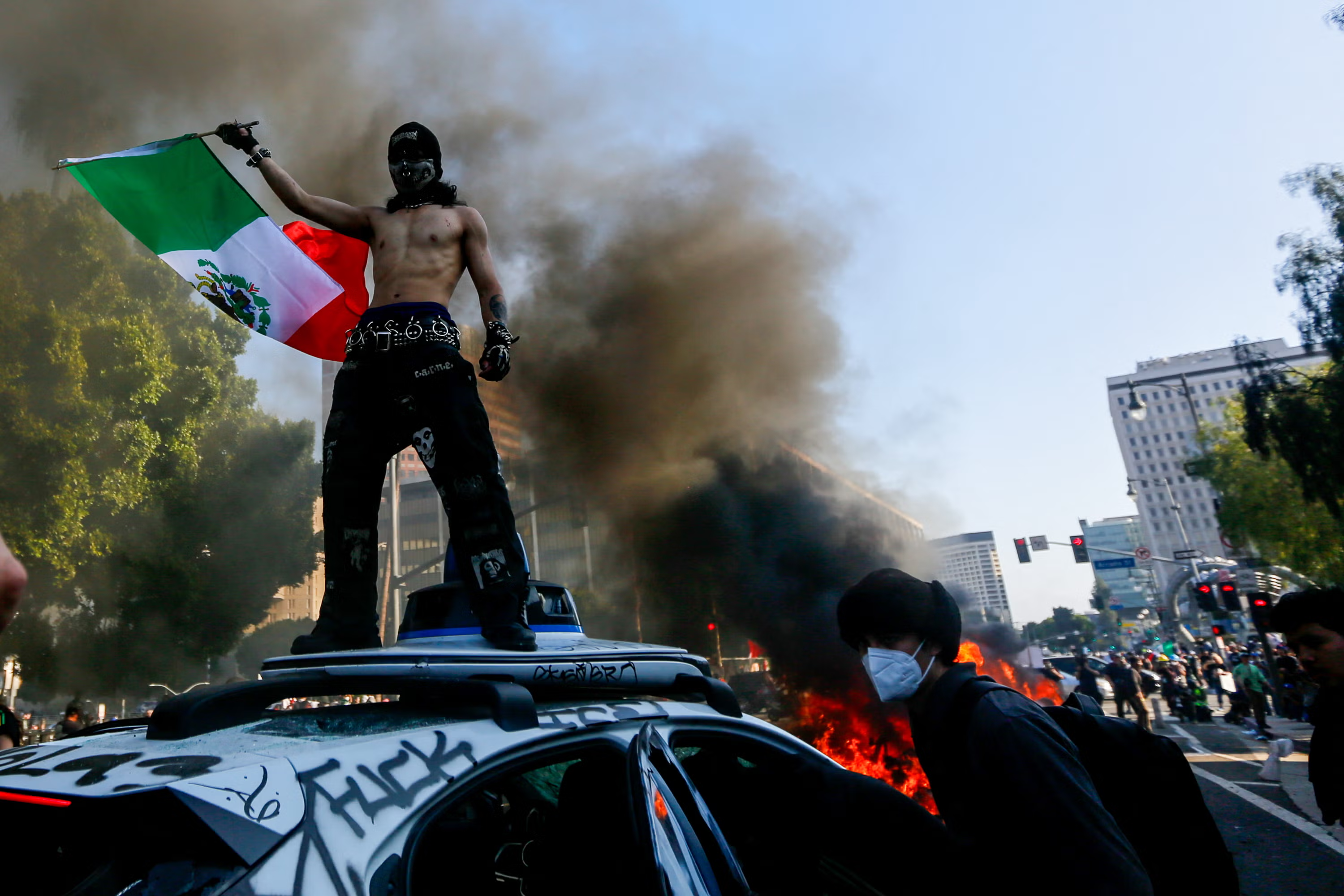
For my part, as I watched Waymo cars burning as Mexican flags fluttered in the foreground, I couldn’t help but be reminded of sociologist Pierre Bourdieu. In the documentary Sociology is a Martial Art, he emphasized, “I don’t think it’s a problem that young people are burning cars. I want them to be able to burn cars for a purpose.”
It is, indeed, possible for burning cars to serve a purpose. However, it matters immensely who is perceived to have lit the fuse.
Surveying the social science literature on social movements, violence and public perceptions, there are three core facts that stakeholders should bear in mind in trying to evaluate the efficacy of protests.