we have never been woke paperback banner

Category: Featured

  • On Protests, Violence and Public Support

    On Protests, Violence and Public Support

    On June 6, Immigration and Customs Enforcement (ICE) conducted aggressive raids in Los Angeles, sweeping up gainfully employed workers with no criminal record. This lead to demonstrations outside of the Los Angeles Federal Building. During these protests, David Huerta, president of the Service Employees International Union California, was arrested alongside more than 100 others – leading to even larger demonstrations the next day.

    Donald Trump responded on June 7th by sending federal troops to Los Angeles to quell the protests without any consultation with California governor Gavin Newsom and, in fact, in direct defiance of Newsom’s wishes. This dramatic federal response, paired with increasingly aggressive tactics by local police, lead to the protests growing larger and escalating in their intensity. They’ve begun spreading to other major cities too.

    Cue the culture war.

    On the right, the response was predictable: the federal clampdown was largely praised. Hyperbolic narratives about the protests and the protesters were uncritically amplified and affirmed. On the left, the response was no less predictable. There is a constellation of academic and media personalities who breathlessly root for all protests escalate into violent revolution while another (“moderate”) faction claims to support all the causes in principle but somehow never encounters an actual protest movement that they outright support.

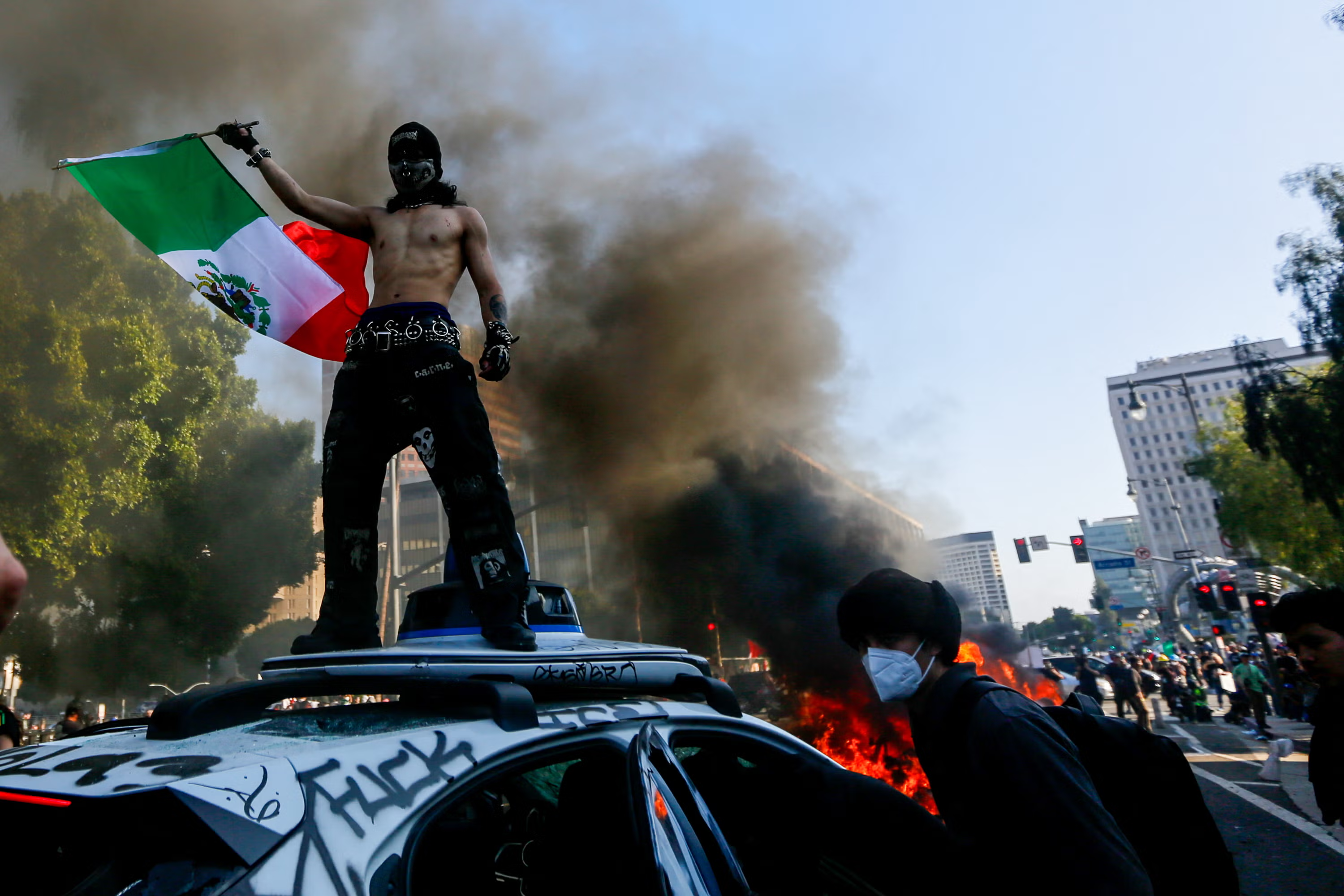
    For my part, as I watched Waymo cars burning as Mexican flags fluttered in the foreground, I couldn’t help but be reminded of sociologist Pierre Bourdieu. In the documentary Sociology is a Martial Art, he emphasized, “I don’t think it’s a problem that young people are burning cars. I want them to be able to burn cars for a purpose.”

    It is, indeed, possible for burning cars to serve a purpose. However, it matters immensely who is perceived to have lit the fuse.

    Surveying the social science literature on social movements, violence and public perceptions, there are three core facts that stakeholders should bear in mind in trying to evaluate the efficacy of protests.
    #1: Most successful social movements entail some form of violence or coercion — either carried out by the demonstrators, or on their behalf, or against the demonstrators (who often willfully sought to provoke this violence).

    (more…)
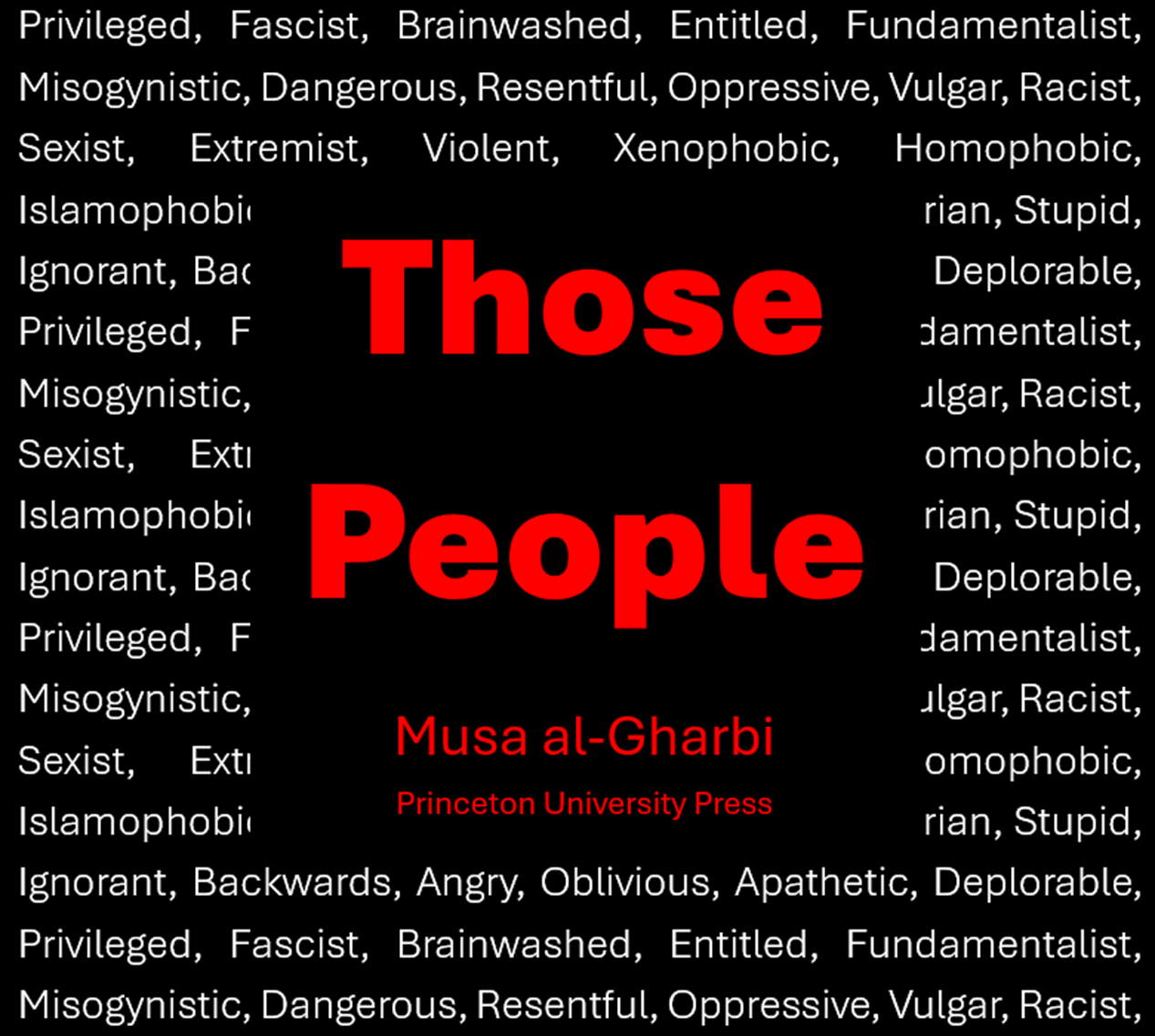
  • Book Announcement: Those People

    Book Announcement: Those People

    Increased stratification and declining social mobility. A crisis of expertise. The rise of “populist” leaders. Heightened tensions around “identity politics.” Growing affective polarization. Political dealignments and realignments. These are not separate phenomena, they’re fronts in a broader struggle over which communities, stakeholders, lines of work, lifestyles and cultures are valued in contemporary society – and which seem destined for the dust heap of history.

    This is the argument of my second book, Those People, now officially under contract with Princeton University Press.

    I’ve immensely enjoyed working with PUP over the last four years (since We Have Never Been Woke was first put under contract). To my mind, no one does the crossover (academic + trade) book better than Princeton University Press. The whole team is really fantastic – from the editorial side to the marketing side and beyond. Thanks to their efforts, We Have Never Been Woke has been a major critical and commercial success. I’m eager to see what we can cook up together the second time around.

    A big thanks to my literary agent, Andrew Stuart, who negotiated the deal. Credit to PUP editors Eric Crahan (who got the dialogue rolling on the second project and shepherded We Have Never Been Woke across the finish line), and Rachael Levay (who will oversee the development and publication of Those People and took the lead in ironing out an agreement with Andrew). Additional thanks to the Open Society Foundations, whose generous support will allow me to have a reduced teaching load for the upcoming academic year that can facilitate research and writing.

    Completing the Picture

    In the original proposal for my first book, I planned to spend the first half of the project looking at symbolic capitalists, our history and culture, the communities and institutions we congregate in, and the ways “social justice” discourse get bound up with our bids for power, status, resources and opportunities. In the back half of the book, I planned to turn the analytic lens the other way, from the “winners” in the symbolic economy towards those who perceive themselves to be the “losers.” I wrote the book as originally envisioned, but it was far too long for a single text, clocking in at over 200k words. The book was instead split into two volumes.

    The first half was adjusted to stand without the back end. It was published in October 2024 as We Have Never Been Woke: The Cultural Contradictions of a New Elite (although I signaled to the phantom content in the conclusion, pp. 308-309). I’m now in the process of reworking the content from the second half of the original manuscript into its own freestanding volume, Those People.

    (more…)
  • It’s Easy to Misunderstand Antisemitism in America

    It’s Easy to Misunderstand Antisemitism in America

    According to many popular contemporary narratives, American society is rife with antisemitism. Institutions of higher learning are purportedly hotbeds of anti-Jewish animus, indoctrinating impressionable young people into a leftist ideology that paints Jews as extraordinarily privileged, Israelis as oppressors, Hamas as brave freedom fighters and Palestinians as blameless victims. Many people I deeply respect have embraced claims like these in recent weeks. However, I believe these narratives are demonstrably mistaken. 

    This is an issue that is near to my heart. As a Muslim who has done a lot of work on interfaith engagement, I view it as an imperative to stand with other “people of the book” — especially when they face persecution on the basis of their identity as Jews or Christians. On a more personal level, I have been supported throughout my intellectual journey by Jewish scholars who saw something in me that others did not, who helped me flourish as an academic and human being.  I would not be where I am today, indeed, I would not be who I am today, were it not for Jewish mentors and colleagues who stood with me every step of the way. 

    As a consequence of these experiences, relationships and commitments, I take antisemitism very seriously. As a sociologist of knowledge, however, I am acutely aware that fighting any problem requires an accurate picture of what’s actually going on. And surveying the best available nationally representative data, we can see that while antisemitic sentiments and behaviors do appear to be on the rise, there does not seem to be a major antisemitism epidemic in the United States, on colleges campuses or on the left. In fact, in all of these are contexts, antisemitism is exceptionally rare relative to the alternatives.   

    But before we get into that, it might be helpful to briefly define what is, and is not, antisemitism.

    (more…)
  • Contextualizing Ideological Gaps in Mental Illness and Well-Being

    Contextualizing Ideological Gaps in Mental Illness and Well-Being

    In a recent essay for Social Science & Medicine – Mental Health, epidemiologist Catherine Gimbrone and co-authors identified a significant gap in depressive attitudes between liberal and conservative teens. This gap was present in all years observed in the study (2005-2018). However, it grew significantly starting in 2012, as depressive affect unilaterally spiked among liberals. Three years later, conservatives also began reporting increases in depression – although that rise tapered off relatively quickly while the increases among liberals continued unabated. 

    Liberal girls tended to be significantly more depressed than boys, particularly after 2011. However, ideological differences swamped gender differences. Indeed, liberal boys were significantly more likely to report depression than conservatives of either gender.

    The authors also found that the more educated a teen’s family was, the more likely the young people were to be depressed, and the more dramatic their rise in depression was after 2012. 

    depression well-being ideology

    Why is it that liberal teens are more consistently depressed than conservatives? Why might familial education correlate with heightened depression for liberal youth? Why was there a spike in depression (and a growing ideological divergence in depressive affect) post 2011, corresponding with the onset of the ‘Great Awokening’?

    This essay will provide a deep dive into the literature on the relationship between ideology and subjective well-being in the hopes of shedding light on possible answers to these questions. The links will near-exclusively direct readers to peer reviewed research or (occasionally) preprints. It is my hope this essay serves as a one-stop shop for work on ideology and well-being in much the same way as a previous essay of mine has served as a key resource for understanding the (in)efficacy of diversity training. Let’s dive in.

    (more…)
  • The ‘Great Awokening’ Is Winding Down

    The ‘Great Awokening’ Is Winding Down

    Beginning in 2011, there was a rapid shift in the ways people associated with the knowledge economy talk about, and engage on, ‘social justice’ issues.  

    Those who work in fields like tech, finance, education, journalism, arts, entertainment, design and consulting (and students who aspired to these professions) grew much more politically ‘radical’ over the last 10 years and increasingly intolerant of dissent. The shifts were especially pronounced on matters pertaining to ‘identity’ (e.g. sexuality, race and gender).

    A lot of the public discussion of the ‘Great Awokening’ focused on ‘vibes’ and unrepresentative anecdotes. However, as I illustrate in my book, We Have Never Been Woke: The Cultural Contradictions of a New Elite, it’s possible to measure the changes that have taken place among knowledge professionals in a more systematic way. Interestingly, many of the same types of data that substantiate a significant transformation in discourse and norms after 2011 now seem to suggest that the ‘Great Awokening’ may have run its course.

    For instance, post-2011, there was a notable surge in protest activity, concentrated in knowledge economy hubs and driven by knowledge economy professionals – beginning with the Occupy Wall Street Movement, continuing through the post-Trump #Resistance movements, and culminating with the 2020 protests following the murder of George Floyd.

    There was significant unrest within knowledge economy institutions as well – from campaigns to get people fired for saying the wrong thing, holding the wrong views, or minor behavioral infractions to internal movements demanding that institutions issue strong statements on contentious political issues, donate to activist organizations, expand DEI initiatives, and so on.

    There were dramatic shifts in knowledge economy outputs as well. For instance, there was a rapid increase in terms referring to various forms prejudice and discrimination in print and television news outlets, in books, in academic scholarship, in video games and beyond.

    Even before the election of Donald Trump, art has grown increasingly political since 2010. After the 2016 election, political art became the only work perceived to ‘matter.’

    Entertainment outputs followed a similar trajectory. As New York Magazine columnist Molly Fischer observed, content produced by entertainment companies not only grew more political over the last decade, and grew more intensely focused on ‘identity’ issues (race, gender, sexuality), it also increasingly adopted “a tone along the lines of an after-school special.”

    Within the arts and entertainment industries, works that failed to tow the preferred line or conform with the newly-imposed norms and expectations on social and political issues grew increasingly difficult to produce, and regularly faced cancellation campaigns post-publication when they were published over the protest of progressive staff.

    There were also dramatic changes in expressed attitudes on contentious topics, and in the political alignments and behaviors of knowledge economy workers.  

    Most knowledge economy professionals in the U.S. are highly-educated whites who self-identify as liberal. Polls and surveys show that, post 2011, there was a rapid shift in how highly-educated white liberals responded to questions related to ‘identity’ issues — they became significantly more likely to strike the maximally ‘left’ posture on questions pertaining to ‘cultural’ issues.

    Whites affiliated with knowledge economy fields also became much more likely to self-identify as ‘liberal’ and to vote for the Democratic Party over the past decade. This, in turn, significantly reshaped Democratic Party’s priorities and rhetoric, often alienating non-white, less educated, and less affluent voters.

    The times, they are a-changin

    It’s been ten straight years of heightened unrest among knowledge economy professionals and within knowledge economy institutions and knowledge economy hubs. However, it seems like the wave is now beginning to crest.

    (more…)

    Pages: 1 2 3

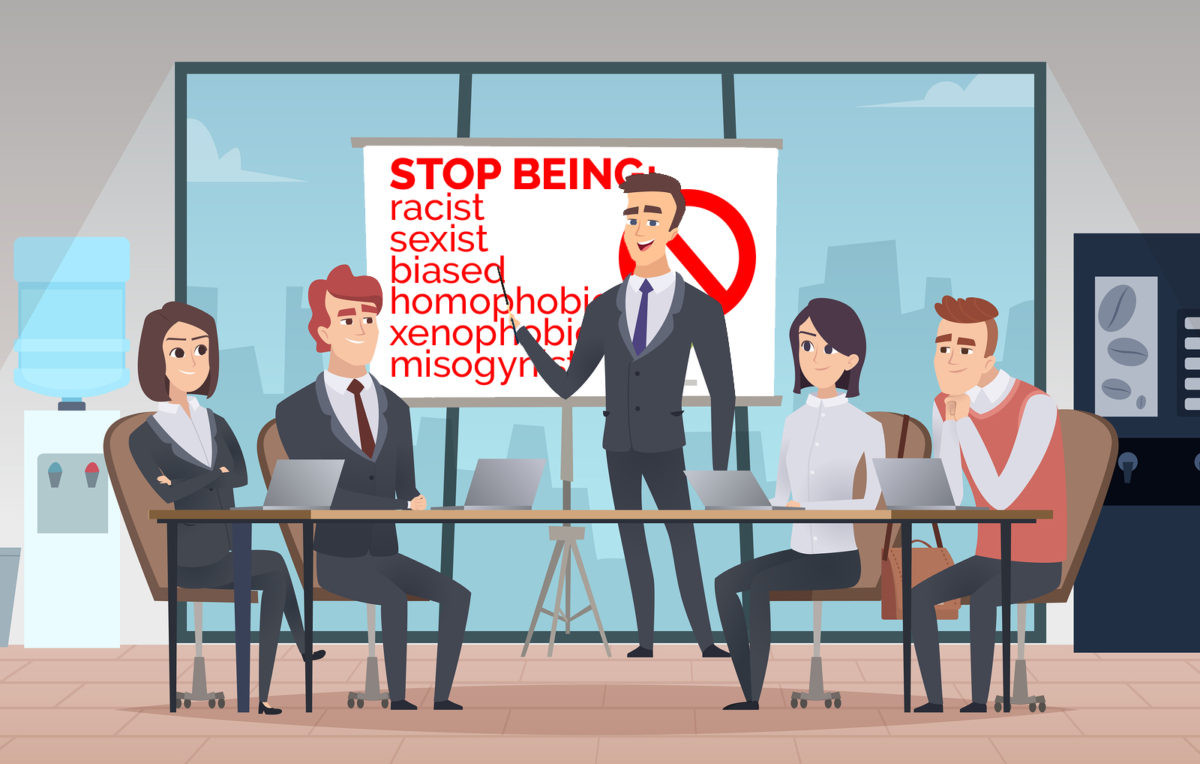
  • Diversity is Important. Diversity-Related Training is Terrible.

    Diversity is Important. Diversity-Related Training is Terrible.

    In wake of George Floyd’s murder and the protests that followed, many colleges and universities have been rolling out new training requirements – often oriented towards reducing biases and encouraging people from high-status groups to ‘check their privilege.’  The explicit goal of these training programs is generally to help create a more positive and welcoming institutional environment for people from historically marginalized and underrepresented groups.

    As I have explained elsewhere, there is a long literature on the benefits of diversity on knowledge production. However, many of the approaches to training people how to navigate and utilize diversity were implemented by corporations, non-profits and universities before their effectiveness had been tested rigorously (if at all).

    Although the precursor to contemporary diversity training, sensitivity training, actually dates back to the mid 1940s,  diversity training became especially important beginning in the mid-80s to early-90s. Why? Starting in the late 70s through early 80s (as a result of affirmative action and related legislation), universities began enrolling significantly higher numbers of women, minorities, and people from middle-class and lower-income backgrounds. Soon thereafter, employers found themselves with a much more heterogenous labor pool. They had to face, often for the first time, some of the challenges that come along with the benefits of diversity — as people with increasingly divergent backgrounds and perspectives were put side by side and tasked with common goals. Diversity training was intended to help mitigate those challenges.

    Due to their lack of validation, however, it was difficult to gauge how effective these programs were with respect to their stated goals. Over the decades that followed, it became increasingly obvious that many of the problems that diversity-related training was supposed to help mitigate seemed to be persisting or growing worse, raising the prospect that many widely-used interventions may be ineffective or even harmful. And so, beginning in the mid-90s, social scientists set out to systematically test the actual outcomes of these trainings.

    In the years that followed, a robust empirical literature was built up measuring the effectiveness of diversity-related training programs. The picture that has emerged is not very flattering.

    Resources on these points:

    The limited initial research suggesting diversity-related training programs as efficacious was based on things like surveys before and after the training, or testing knowledge or attitudes about various groups or policies. And to be clear, the training does help people answer survey questions in the way the training said they ‘should.’ And many people who undergo the training say they enjoyed it or found it helpful in post-training questionnaires. 

    However, when scientists set about to investigate whether the programs actually changed behaviors, i.e. do they reduce expressions of bias, do they reduce discrimination, do they foster greater collaboration across groups, do they help with retaining employees from historically marginalized or underrepresented groups, do they increase productivity or reduce conflicts in the workplace — for all of these behavioral metrics, the metrics that actually matter, not only is the training ineffective, it is often counterproductive.  

    (more…)

    Pages: 1 2 3