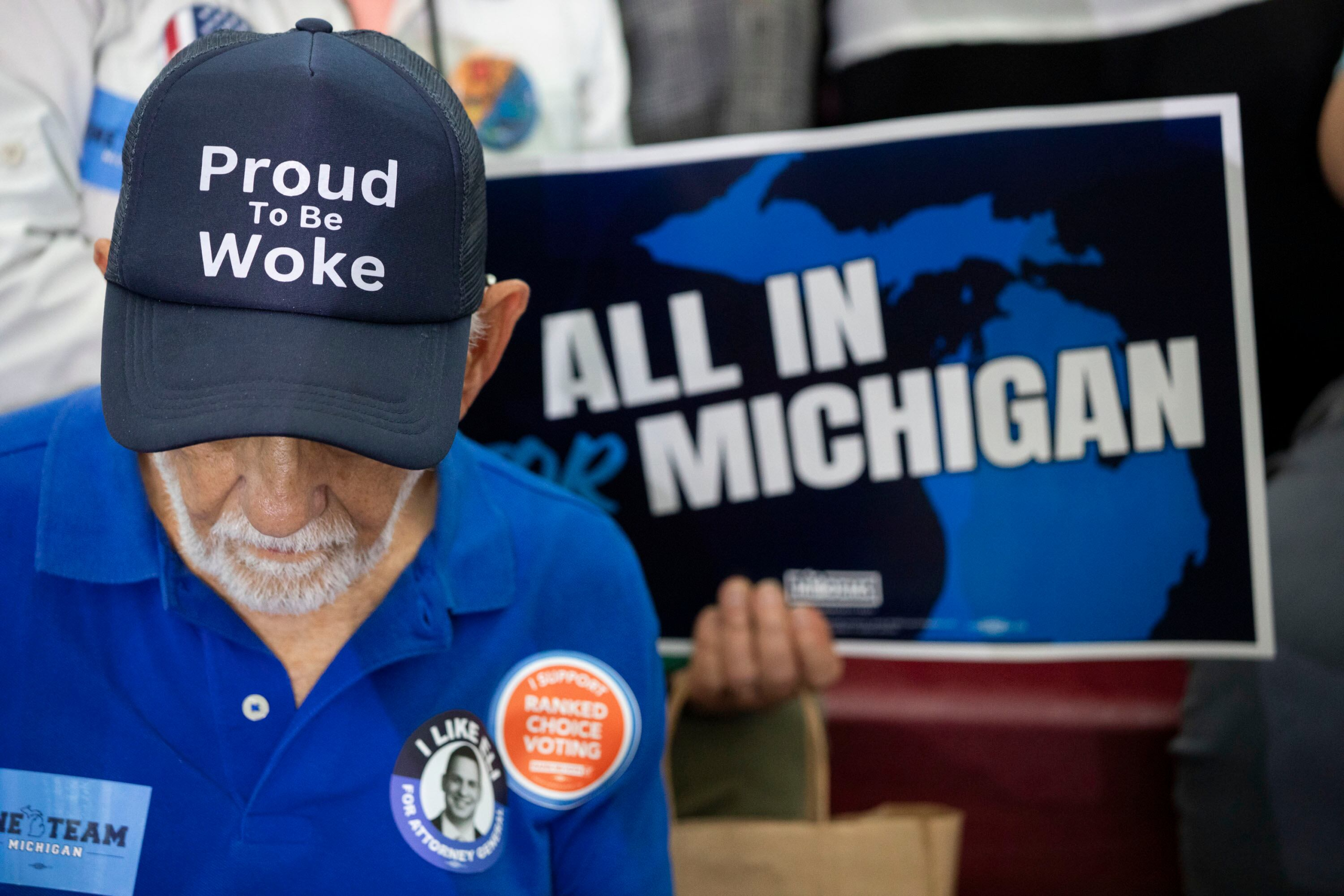
Going into the Michigan Democratic primary elections earlier this month, polls showed Dr. Abdul El-Sayed with a significant lead over Representative Haley Stevens. However, elections aren’t decided by public opinion surveys, but by who shows up to vote on election day.
Unfortunately for El-Sayed, younger voters drove his lead in the polls, and they are notoriously inconsistent about showing up on election day (especially for off-cycle races like midterm primary elections). So, the actual election ended up being much closer than polls suggested: He barely edged out his rival, setting up an interesting dynamic for November’s general election.
Over in Wisconsin, these same electoral tendencies led DSA ally Francesca Hong to a narrow loss against establishment David Crowley this week, despite her lead in the polls. In Missouri, original “Squad” member and DSA candidate Cori Bush was running to reclaim her seat from incumbent Wesley Bell, who displaced her in 2024. Internal polling showed Bush trailing by 4 percentage points. She lost by more than 20. It was a total blowout.
In many respects, these elections were a microcosm for deep divides in Democratic politics: first, a division between white collar professionals and other constituents and, within these professions, a schism between those earlier and later in their careers.
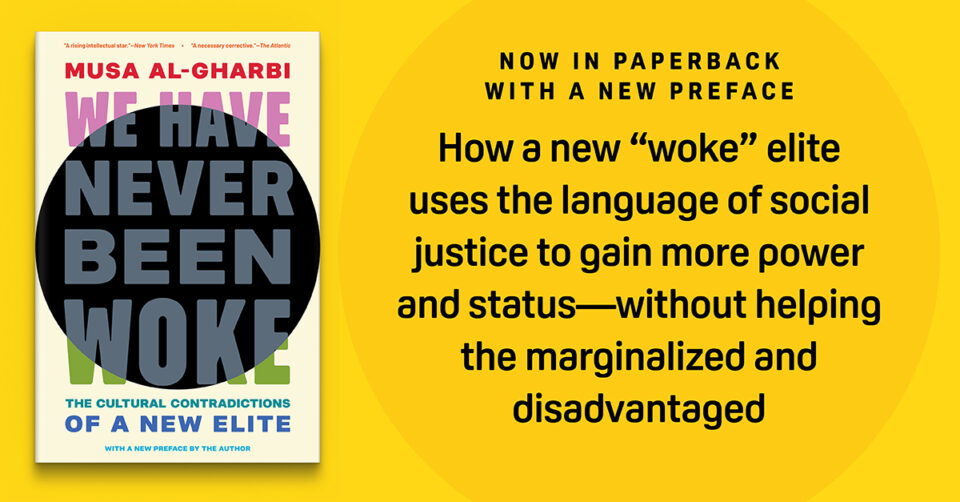
My recent book, We Have Never Been Woke, demonstrated that Occupy, #MeToo, Black Lives Matter, the March for Science and adjacent social movements were not independent events. They were part of a larger social phenomenon, a “Great Awokening” that started around 2010.
The Awokening was driven by a narrow and idiosyncratic slice of society: highly-educated, relatively-affluent, urban and suburban white liberals. More specifically, these movements revolved around symbolic capitalists – i.e. professionals who provide no direct physical goods or services to others but instead make a living based on what they know, who they know, and how they’re known. Think: lawyers, consultants, educators, entertainers, journalists, analysts, researchers, artists, administrators, communications professionals and so on.
One interesting finding from my research was that, despite the ubiquity of “kids these days” narratives, the Awokening was driven primarily by mid-career professionals – i.e. folks in their late 20s through early 50s. Contemporary young people came of age in the context of this Awokening and had to contort themselves into the (politically) correct image to please the older gatekeepers who controlled their access to admissions, scholarships, jobs, etc.
Meanwhile, older professionals, eager to prove their continued relevance and preserve their legitimacy, responded to the insurgency of their erstwhile successors by trying to prove that they were “with it” too. As a result, there was a rapid shift throughout these professions driven by aggressive maneuvering in the middle career stage.
Now, looking at numerous empirical indicators, it’s clear that the post-2010 “Great Awokening” has crested. Mid-career professionals have become more focused on their pocketbooks and careers, and moderated or disengaged on many other cultural and political fronts.
Normie voters’ alienation with the extremism of these symbolic capitalists allowed reactionaries under the MAGA power to gain political power under the auspices of bringing these professionals and institutions back under control. In my view, this was the main story of the 2024 election. However, at this point, the energy behind this countermovement seems largely spent as well.
With mid-career professionals easing up on aggressive activism — social justice warriors and reactionaries alike — an interesting age bifurcation has emerged within the Democratic Party’s core constituency about how to respond to the political moment we now find ourselves in.
There have been large protest movements in reaction to Trump’s second administration. They continue to be driven primarily by symbolic capitalists. Research by sociologist Dana Fisher shows that the “People’s March,” “No Kings” protests and anti-ICE demonstrations are overwhelmingly comprised of the same constituents who drove all the other Awokening demonstrations: 86 percent of participants were white, 76 percent had a BA degree or higher, 94 percent identified with the left and the Democratic Party.
However, there was one striking difference between these movements and the ones that preceded them: the age of participants. The #Resistance2.0 protests have been led primarily by later-career professionals and retirees. The median age of organizers for these protests was 67 years old. Older Americans have showed up in force across the country. Young people have been largely M.I.A.
Social commentators have come up with many theories to explain this lack of participation. Maybe young folks don’t fully appreciate the importance of the programs and norms being scorched, or how much work went into their creation. Maybe contemporary young people are overly invested in online and purely symbolic forms of protest instead of showing up in the streets. Maybe young people have become too demobilized, demoralized and disillusioned to participate. And so on.
In reality, younger symbolic capitalists are also deeply engaged in political action. They’re just channeling their attention and efforts towards democratic socialism.
As with the #Resitance2.0 protests, the core constituency for democratic socialist candidates is also highly-educated, relatively-affluent urban and suburban white liberals. However, unlike the recent anti-Trump protest movements, most support for democratic socialist candidates has come from voters under 50, with the strongest support from Americans under 30 years old.
Membership in the Democratic Socialists of America (DSA) is skewed in the same direction. Eighty-five percent of members are non-Hispanic white. Over 80 percent of members over 25 have BA degrees or higher. Most of those under 25 are in college. Only 10 percent of members work in blue-collar, retail or food-service jobs (and another 15 percent are unemployed, disabled or retired); the rest are symbolic capitalists or college students (i.e. aspiring symbolic capitalists). In terms of age, 73 percent of DSA members are under 50 years old; 33 is their median age.
Far from being demoralized or disillusioned by politics, these constituents seem to have believed they had “won” when Trump was voted out the first time. The DSA saw an explosion in membership after Trump first took power in 2016, but this was followed by a rapid collapse in 2021 after Biden took office. Total membership fell by more than a third from the 2020 election through 2024. However, once Trump reclaimed the presidency, membership began to pick up again. This growth was supercharged when Zohran Mamdani entered the national stage.
DSA membership has roughly doubled since Trump returned to the White House. And, thanks to the support of highly-educated, relatively-affluent, urban and suburban, white liberal professionals, DSA candidates have been winning primary elections in symbolic economy hubs nationwide, including college towns like Ann Arbor and East Lansing that helped power El-Sayed’s victory, positioning the DSA-candidate for a possible statewide office (although, with their coalition so heavily oriented around young people, who are less consistent about follow-through, these candidates chronically underperform at the ballot box relative to polls).
Put simply, although they’re largely absent from the streets, early-career symbolic capitalists are not disengaged. It’s just that, instead of joining demonstrations, they’re working aggressively to transform the Democratic Party.
The need for reform is significant.
Although there are many disagreements about which direction the Democratic Party should head, there is broad agreement across America that its current form is terrible. In one recent poll, the Islamic Republic of Iran was the only political entity ranked lower among Americans than the Democratic Party. Even Democrats are lukewarm about their party and its leadership. Among those who provide pollsters with reasons for holding the Democratic Party in such low esteem, the top reason offered was perceived feckless in the face of Trump. Notably, this was followed closely by views that the party was too focused and too extreme on niche cultural issues.
Frustration with the Democratic Party is particularly acute among early-career and aspiring professionals. Younger voters rallied strongly behind the Democrats in 2018 but then became less likely to vote, and shifted increasingly towards the GOP, in every election since. Given Trump’s consistently dire favorability ratings among these voters, that trend seems to be driven more by increased alienation from the Democratic Party than growing affinity with Trump.
Critically, even as younger voters moved away from the Democrats since 2018, voters over 64 have moved towards the party from 2020 forward.
The Democratic Party’s leadership is increasingly gerontocratic and has grown increasingly appealing to older voters. However, the party itself seems sclerotic – unable to check Trump’s growing authoritarianism, corruption and incompetence – even as party leaders have grown further out of touch with shifts in mainstream attitudes on foreign policy issues, economic preferences, and beyond. Seeing modest growth with senior citizens while increasingly alienating the rest of the public is not a formula for long-term relevance or success. Something must change. The good news is, we’ve been here before.
What Congresswoman Alexandria Ocasio-Cortez (AOC) diminutively referred to as “Woke 1” was, in fact, “Woke 4” (with “Woke 5” bound to occur sooner or later).
As my book details at length, there were at least three previous “Great Awokenings” — periods of heightened contestation around “social justice” activism and the symbolic professions — since the beginning of the 20th century. The Democratic Party was radically transformed in the aftermath of each of these previous cases as well… for better or for worse.
In the aftermath of the first Great Awokening of the 1920 and 1930s, FDR took the wind out of socialist parties and movements in the U.S. by integrating their best policies into the New Deal. In the process, he successfully converted most American socialists into banal Democrats while also improving the lives of most Americans and significantly broadening the appeal of the Democratic Party with normie voters. In so doing, he established a political paradigm that led to enduring success for the party and even reshaped the GOP for a generation. Almost all politics until the 1960s occurred within the confines of the New Deal and Keynesian economics.
In the wake of the second Great Awokening from the mid-1960s through early 1970s, young professionals carried out a successful coup and attempted to reposition the party around the values and interests of people like themselves. They failed to consolidate these constituents but did alienate working class voters, leading to the party into decades in the political wilderness.
Between 1969 and 1993, Democrats only held the presidency for four years — in the immediate aftermath of the Watergate scandal and Richard Nixon’s resignation. Over the course of the entire 20th Century, there was only one time a party took power but failed to keep the White House for at least 8 years: Jimmy Carter from 1977-81. Long story short: the Democrats took a wrong turn in the late-1960s and were left in terrible shape for a long time.
However, in the aftermath of the third Awokening of the late 1980s through early 90s, the party was revolutionized once again, this time at the hands of Bill Clinton.
“Bubba” focused aggressively on pocketbook issues, and in a manner that radically enhanced the position of symbolic capitalists relative to other workers. He expressed sympathy towards minority populations and the poor but repudiated left-wing extremism on ‘cultural’ issues without hesitation. Simultaneously he emphasized public safety, public order, and border control. He was highly-educated but talked in a direct and plainspoken way.
Through adopting this posture, Clinton was able to absorb normie backlash to the third “Great Awokening” and funnel it into the Democratic Party – allowing him to see political gains even in the midst of public reaction against the left. Indeed, he became, himself, an avatar of the pushback against “political correctness” and leveraged public frustrations with the left to consolidate his own power within the Democratic Party and to push through his reforms.
Conceding to normie voters on cultural positioning allowed Bill Clinton to hold Democrats’ margins with minorities and partially reverse attrition with working-class voters. His simultaneous and ruthless pursuit of symbolic capitalists’ economic interests on trade policies and social safety net reform — which helped lower the price of goods and services professionals use most heavily while making life more precarious for blue collar and working-class constituents — this allowed Democrats to gain with relatively affluent and highly-educated voters (thereby, belatedly realizing the objectives of the late 1960s coup: their mistake was focusing on symbolic capitalists’ cultural views instead of their pocketbooks. As my book elaborates, when the two come into conflict, it’s usually the latter that runs the show).
Bill Clinton’s recipe that proved highly-effective and subsequently guided Democrats all the way through Barack Obama’s first term.
However, by 2012, it was clear that a dramatic change was underway amongst symbolic capitalists – putting these professionals increasingly out of step with the rest of society. Unfortunately, the Democratic Party shifted radically in tandem with us (I am, myself, a symbolic capitalist), mirroring our increasingly idiosyncratic tastes on policies, messaging and candidates, leading to an unstable and ultimately unworkable electoral coalition.
At present, though Americans continue to hold the party in low esteem, and despite their ongoing internal dysfunction, Democrats will likely see gains this November. If they do manage to win back one or both houses of Congress, it would be a mistake to interpret this as a sign the party is doing fine.
Rather than growing affinity with the Democratic brand, any gains are likely to be driven by regular thermostatic electoral movements interacting with Trump’s deep unpopularity. Coasting these negative partisanship currents might work fine for the midterms, but it’ll likely be insufficient to carry the Democrats into the White House in 2028. If the party, its priorities, its messaging and its eventual presidential nominee continue to be held in low esteem, the consequences could be dire. This leads us back to the aforementioned age divide within the symbolic professions.
Given the lack of a genuine opposition party, America needs citizens to check executive overreach in the short term to preserve the conditions for liberal democracy downstream. Older activists are providing a true public service in pushing back against these encroachments. It would be better if a broader coalition of Americans joined them (although they’d likely have to make the protests a bit less kooky to achieve that goal).
That said, in Michigan and beyond, older Democrats have largely rallied behind an unsustainable status quo. To defang the threat to liberal democracy in the longer term, there needs to be an opposition party to Trump’s GOP that is actually appealing. Younger activists are correct to dedicate their energies to this broad goal. It is an open question as to how appealing the DSA-inspired alternative will be nationwide, but proponents are correct in their assertion that the party must evolve.
How the establishment responds to these demands for change will determine if the Democrats transform in a manner that is closer to the 1930s, 1970s or 1990s: will they attempt to co-opt the backlash against “wokeness” like Bill Clinton? Will they embrace the best ideas of the insurgents and try to establish a new social contract like FDR? Or will they fail to rise to the moment and, as a result, get routed by the insurgents, throwing the party and its coalition into protracted chaos once again?
Here’s to hoping they choose wisely.