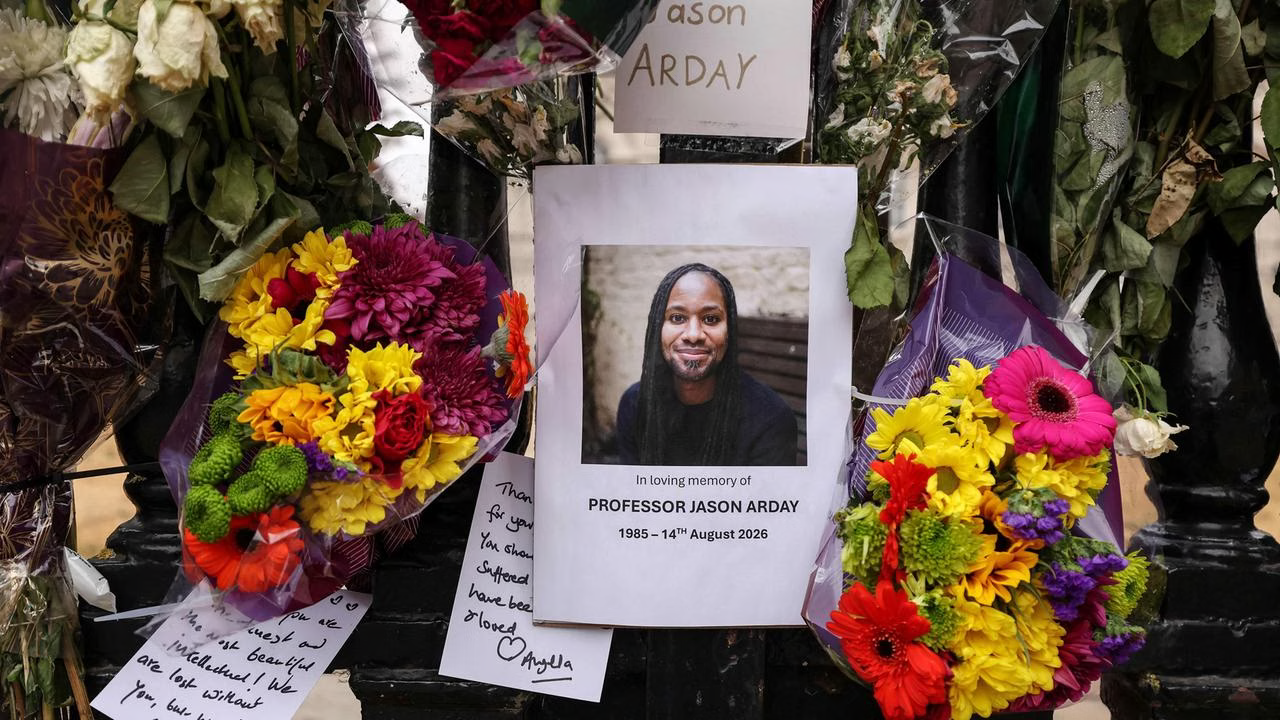
The life and death of Jason Arday hit really close to home for me.
Both of us are black scholars. Both of us were from non-traditional academic backgrounds and had unusual pathways into our professorships. A lot of Arday’s biographical claims were clearly fake, but I don’t think anyone disputes that he was born to working class Ghanaian immigrants and grew up in South London and then maneuvered his way into progressively more prestigious institutions and roles in the academy.
I was trained as a sociologist but was unable to get a job in that field. Arday was never trained in the discipline but was able to nonetheless secure professorships in sociology at multiple prestigious universities. I’m still trying to figure out what this says about the discipline and myself – nothing good, I suppose, either way – but things worked out for me just fine in the end too. I have a position at a R1 research university (albeit in a different field) and I’m going up for tenure as we speak. Our broad trajectories, in short, have a lot of overlap.
There’s another thing Jason Arday and I have in common: We both remade ourselves in pretty radical ways. In my case, struggling with melancholy and meaninglessness, but inspired by Don Quixote, I completely reoriented my life around the foundations of faith and (later) family. I managed to “fail upwards” over and over; I ended up a graduate of an Ivy League school because I literally couldn’t gain admission to less prestigious programs or get a viable normie job.
In Arday’s case, it seems like he was set on being an elite earlier in his life and viewed academia as a path to achieving this goal. Keenly recognizing the norms and incentive structures of higher ed institutions – much more clearly than I did at the time – he just made stuff up to get where he wanted. With respect to his life story, his “scholarship,” and so much more, he faked it until he made it.
There are also some darker parallels in our life stories. Both of us have been cancelled … and both our cancellations nearly ended the same way.
By the time I finished my MA degree in 2013, I was done with higher ed. However, I had trouble finding gainful employment in my hometown and soon began teaching courses at the local annex campus of the state school to supplement my meager income.
Adjuncts most typically teach one class per semester (occasionally two). I was the same. The pay wasn’t exceptional but the additional revenue was very helpful. And I was pleased to discover that, although I hated being a student, I really loved teaching. Fortunately, although adjuncts don’t have permanent or guaranteed employment, the default is to just re-up one’s contract so long as the courses still need to be taught and the students continue to respond well to the instructor. I taught core courses for the GPSV major (covering national security and foreign policy) and had strong teaching evaluations, so I anticipated continued work for the foreseeable future.
In fall 2014, I was working as an adjunct instructor at the University of Arizona South and holding out hope that I might be converted into a more permanent and remunerative full-time lecturer position sometime down the line. However, before the semester was over, a Twitter dispute with a right-wing influencer would spiral into a Fox News-led campaign to get me fired. Successfully.
This was my first rodeo with being cancelled. The term itself was just beginning to be used to refer to the type of campaign that would be waged against me in the days and weeks to come.
One of the most disturbing things about how this campaign played out was how detached it was from any substantive facts. The goal was to get me fired from my positions at the university, but there were no claims made at all about problems in my teaching or published scholarly research. No one had anything bad to say about how I performed my actual jobs at U of A. Instead, the smear campaign focused on my public writing. But even here, right-wing media outlets didn’t identify and focus on factual inaccuracies in anything I wrote. They didn’t refute any specific arguments I made. They just presented bits and pieces of various essays out of context, interspersed with pearl-clutching from right-aligned influencers, in order to portray me as an anti-American Muslim extremist and a tax-payer subsidized corruptor of the youth.
Of course, they didn’t provide me any space in their coverage to contest their characterization. And they conveniently failed to present basic information that would have prevented the mob from making incorrect assumptions about my background and motives.
For instance, I hail from a military family. Generations of my family have fought for this country. I lost my twin brother in Afghanistan. My step brother lost a foot in the army. My mother was a victim of sexual violence at the hands of her fellow soldiers, leaving her with PTSD, and leaving us with a very rough childhood; she testified before Congress about her experience in 2015 (which is the only reason I’m comfortable talking about this publicly myself). Put simply: my family has sacrificed a lot for America.
Although I was disinclined to join the military personally, I hoped to serve in my own way. My research was explicitly oriented towards improving U.S. foreign affairs and national security policy. At the time, in addition to publishing research and teaching classes in the department of government and public service, I was managing an academic consortium that brought together combat veteran students with students from war-affected region to study conflict in the Middle East collaboratively. In 2013, MA fresh in hand, I was hired as a contractor for the U.S. Army’s TRADOC Culture Center (unfortunately, this position evaporated shortly after I was hired because the company that hired me lost their contract and then the role itself was reconceived by the new contractor into being a gig-style arrangement: non-permanent, non-full-time, remote and modular).
Far from hating my countrymen or my country, my public-facing work was always overtly rooted in my confidence that regular Americans can make good democratic decisions if equipped with solid information delivered in an approachable way. My goal was to help other families in the U.S. and abroad avoid the type of tragedy that my own family was working through.
I grew up in and was still living in a smallish military town outside the coastal beltways. Fox News, meanwhile, was broadcasting from Manhattan. Its pundits lived worlds away from the viewers they purported to represent.
In short, the idea that I’m an anti-American and troop-hating radical would be transparently ludicrous if readers were given rudimentary facts about my background. And so, right-wing media structured their stories to ensure that audiences would rush to judgement without encountering any narratively inconvenient details like these.
At the very least, however, I had assumed my university would recognize these outrageous depictions as “fake news.” It also seemed obvious to me at the time that if leaders just chose to do nothing, the mob would get distracted by the next outrage campaign soon enough. Instead, the university decided to distance itself from me rhetorically before discreetly severing ties with me professionally.
In the interim, every department and institution I was affiliated with got flooded with threats and hate mail. Right-wing influencers tried to find and crash my classes. Every online channel or platform I was associated with was spammed with the worst kind of vitriol: real bottom-of-the-barrel racism, anti-immigrant sentiment and Islamophobia. There was even an article published in the National Security Law Journal that argued that I specifically, and other “fifth column” professors, should be legally classified as “unlawful enemy combatants” and be subjected not just to professional termination and blacklisting, but also extrajudicial surveillance, imprisonment and possibly even assassination.
It was unmistakably clear that most of those taking part in this witch hunt had never read a single essay of mine from start to finish. There were no attempts to rebut any particular arguments or present countervailing facts and so on; the specific content of my essays was even less relevant to the mob than to the media outlets that whipped them up.
Fox News’ characterization fed into culture war narratives about college indoctrination, the purported dangers of Islamism and immigrants, and the alleged depravity of the contemporary left. The mob’ response was, in turn, guided primarily by their distaste for Islam and fact-free assumptions about my ethnicity and immigration background (I was spammed with lots of racist stuff about Arabs and immigrants despite the fact that I am not an Arab or an immigrant), reinforced by the illogical assumption that criticism of an institution or one’s country must be driven by hatred of the same.
I was reduced to a symbol of everything the mob hated about America (that must be destroyed), regardless of whether I actually fit the mold they were trying to stuff me into. The concrete details of my biography, my intent, and the specific content of my essays were completely beside the point and were barely engaged with at all.
It was mad and it was maddening. Once you’re enveloped in this sphere of unreality, it can be easy to lose yourself… perhaps permanently.
To escape the unending torrent of completely misinformed and uninformed vitriol, I largely avoided the internet. I quickly realized that it was futile to try to push back against a mob on my own. And I was, I discovered, completely alone.
No one publicly defended me in any way. I got a few private messages of encouragement — “It’s terrible this is happening to you. Hang in there!” – but even those were sparse. My university threw me under the bus without any due process. Up until that moment, I’d believed I had friends and allies who would support me in a time of need. Even though I wasn’t a tenure-line professor, I believed I had academic freedom. It turned out I was wrong on both counts.
Research shows that experiences of “institutional betrayal” — being abandoned or punished in times of crisis by the very communities and organizations that one was counting on for support – durably changes one’s relationship to the institutions, professions and peers in question. You can no longer trust them or invest in them in the same way, even if you maintain ties by necessity or choice. In the short term, institutional betrayal, and the resultant alienation and despair, often leads people to very dark places. It certainly did for me.
There’s never really a good time to be cancelled. But my own cancellation happened to come at a really bad time in my life.
As I was getting shafted by my university and facing mountains of hate online, my daughter was born. She had multiple heart conditions. A few weeks after we took her home, we had to take her back to the hospital for a surgical procedure. It was a stressful time, to put it mildly.
On the professional front, things went poorly in the months that followed. I applied to an insane number of other jobs. I didn’t care whether they were physical or clerical. I didn’t care if they required a degree or not. I didn’t care what sector they were in. I applied not just in my own community, but in neighboring towns as well. I didn’t have high salary demands: any job paying $35k or more would have been acceptable to me. But nothing came through. I washed out over and over again. I couldn’t even be hired as a manager of the department store I’d been working at because the district manager viewed me as overqualified and unlikely to stick around.
So I applied to PhD programs, thinking maybe getting still more credentials could somehow help. I only targeted what I viewed as “safety” schools and departments, but I got rejected from every single one of them.
From my current vantage point, I view these outcomes as God closing off paths that were not mine to walk. At the time, however, it seemed more likely that I was just a loser with no prospects, a drain on society, and a curse on the people and institutions who were foolish enough to throw their lot in with me. I didn’t seem to be the only one coming to this conclusion: my inability to support my family was straining my marriage, too. It was difficult to get out of bed each morning. Trying to turn things around felt increasingly futile. Each new rejection grew progressively heavier to bear.
There were people close to me who’ve taken their own lives and others who’ve suffered different deaths of despair. Research shows that suicidality tends to spread within social networks, particularly among close family and friends of the deceased.
In my experience, the cruelest part of having someone you’re close to commit suicide is that it permanently implants a question in your mind: what if the error didn’t lie with them? What if they saw the world clearly and it’s me that’s delusional in continuing to soldier on? It changes a person to see clearly, up close and personal, that dealing with all the obstacles, pain and anxiety of life is a choice. No one chooses to begin their life, but it is within the power of most people to end it at any time.
Suicide, to be sure, doesn’t solve any problems. But then again, whether or not problems are truly solved is a matter for the living. Once you pass, it is no longer your concern how these issues shake out. The dead have no concerns. The dead have no problems. And once you start thinking like a dead person, it can be really, really hard to stop. Even today, well over a decade removed from this loss, and despite my personal flourishing and financial success, Hamlet’s “to be or not to be” often flits through my mind as a genuine question.
The sociologist Emile Durkheim theorized suicide as a product of anomie, a condition where the relationship between the self and society is off-kilter thereby preventing a healthy sense of meaning, purpose and connection. Getting cancelled is a fast track to anomie.
In my case, the issue wasn’t that I couldn’t imagine a life worth living outside the academy. It was a struggle to envision a place for myself in the Ivory Tower to begin with. My problem was that higher ed wasn’t alone in rejecting me: everywhere else did the same. The verdict on my value seemed unequivocal and universal. I found it increasingly hard to resist the conclusion that the world and my family may be better off without me.
Ultimately, my Islamic faith and love for my family stayed my hand long enough for me to make it through the darkest periods. But even when I was no longer actively considering ending my life, I remained very much at peace with my own mortality. I’d done a final Hail Mary pass at elite PhD programs but resolved that, in the likely event this didn’t pan out, I’d stop resisting and join the military like most others in my family. I might still perish in the near future as a result (the “War on Terror” was still being waged at this point), but my death wouldn’t be by my own hand, and my family would be left with generous benefits to support them if I fell. But then, a committee of scholars at an Ivy League school put me on a different path entirely.
In 2016, I was admitted into the sociology PhD program at Columbia University with a solid package to support us in New York.
I can definitely spin a meritocratic story for how I ended up at an Ivy League school: I had a genuinely strong research profile. I’d published articles in respected journals and helped advance and amplify the research of the academic consortium I managed. I had a well-developed scholarly agenda that was aligned with the strengths of the department. My standardized test scores were strong. I had a lot of teaching experience. And so on.
But it was not lost on me then or now that race was another big factor in my appointment. In my PhD cohort of roughly a dozen, I was the only black person. It would be unacceptable for a school like Columbia and a department like sociology to form such a large cohort without any black students, so committees generally work to ensure that at least one black candidate is accepted and matriculates into the program for any reasonably large admitted group. In order to get an offer, then, I didn’t have to be the best out of all the applicants in the pool, I just had to outshine the other black students. All else equal, competing against a much smaller pool, my odds were better than most.
My non-traditional background probably made the committee more interested in me too. Although I didn’t grow up poor, I didn’t grow up easy either, and I’d spent the last decade-and-change working normie jobs to support myself. As I’ve detailed elsewhere, students like me serve a very important function at schools like Columbia, reinforcing everyone’s meritocracy myths, which makes it very appealing to admit a few when possible.
This leads to another thing I share with Jason Arday: Elite schools gravitated towards both of us, in large part, because we added “diversity” to the school. Was I just a diversity choice? Likely not. But at the end of the day, I didn’t really care much why the committee selected me; I was just grateful to have been chosen. I remain deeply grateful today. Graduating from Columbia totally changed my life. Admission to the program might have even saved my life.
Yet, in Arday’s case, being pulled into elite circles didn’t pull him out of a downward spiral; it seems to have hastened his demise.
Arday was less Don Quixote than Great Gatsby (a reference dear to the heart of any Long Island based nerd like myself). Gatsby was a crook and a liar. But he was much more than that: He was a nobody who decided to become somebody, even if he had to cut some corners along the way. There was something beautiful in the illusion Gatsby created, intoxicating to everyone around him, even though it was all a façade enabled by a life of crime. Gatsby was not a great guy, but the “legitimate” members of high society weren’t much better. It’s clear from the outset that his story can’t end well, yet, despite yourself, you end up rooting for him anyway.
As I watched the Arday scandal unfolding, I had a similar feeling. Yes, he committed academic wrongdoing on an industrial scale. But as Sam Kriss powerfully described, there was also something genuinely impressive about what he’d managed to pull off. The audacity of his claims. The unbridled ambition. The brazenness of his misconduct. The extravagance of the details (“I ran a marathon a day for roughly a month despite a fractured leg and epileptic seizures and raised vast sums for charity in the process”). In his own self-description, he was Icarus flying straight into the sun. He was more Nietzschean than Nietzsche himself.
Friedrich Nietzsche, after all, died lonely and mad. He was appreciated posthumously more widely than when he was alive. Arday is the opposite: No one will remember him six years from now. But in life, he was rich, famous, fit, he had lovers and kids. He was living the dream, in every sense of the phrase. He built this life out of literally nothing – absolutely no substance — just pure will to power. Unconstrained by conventional morality or concerns about “truth” or “falsehood,” he reached the pinnacle of the UK academic scene in record time and was preparing to conquer the rest of the world with his book.
But the thing about unbridled ambition is that, inevitably, one’s reach will someday exceed one’s grasp.
Upon being exposed, Arday could have launched a lucrative second career by declaring that his entire first career was performance art – an expose to put the “Grievance Studies” hoax to shame – an attempt to see how far he could climb by telling the “correct” stories to white liberal gatekeepers. He could claim he’d planned to reveal the truth all along eventually. He could’ve been a hero in anti-woke spaces by insisting that his interviews and writing were all intended to parodies. In some ways, this might be more believable than what actually transpired. But, like Gatsby, it seems like Arday wanted more than anything to be taken seriously. And so, he could not simply declare his scholarship and appointment to be a farce (even if it was).
More critically, although an anti-woke pivot could have worked to skim money and support from reactionary types, it’d probably be a harder sell with his family. After all, it’s unlikely that Arday brazenly lied to the public but told his (ex) wife and kids the truth. His exposure as a fraud likely wasn’t just devastating for his professional aspirations but his personal life too. Overnight he was transformed from a hero to his kids who was celebrated nationwide into a joke — a person more likely to bring mockery and harassment on his loved ones than esteem. That’s likely a big part of why things shook out as they did.
Jason Arday didn’t commit a capital crime. In an ideal world, he’d still be with us today. However, he’d also be living with the consequences of his actions.
Arday positioned himself as an advocate for people with disabilities, but he seems to have falsely claimed multiple conditions and told stories about his experiences and treatment that were clearly untrue — in the process misleading families of people with genuine conditions about the options open to their own children.
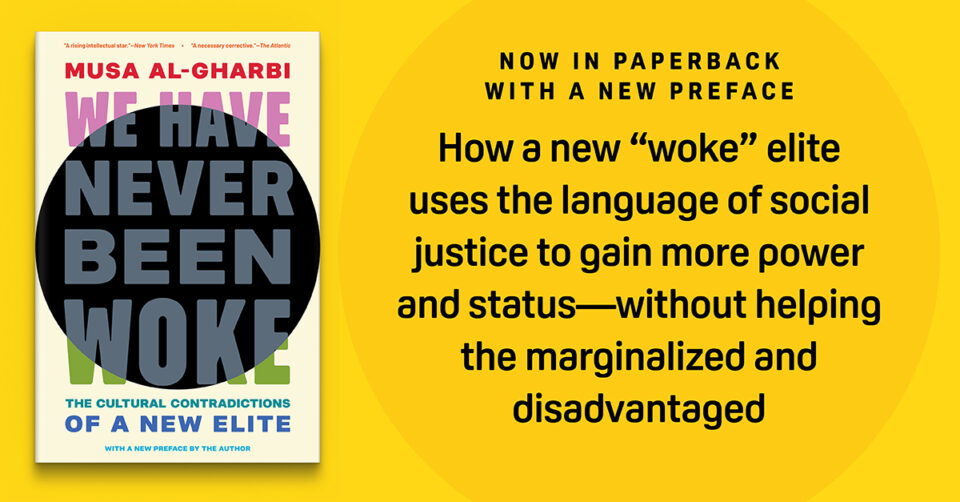
This is objectively terrible. However, Arday is far from the only academic to make false or deeply misleading claims about their disability status, ancestry, class background or sexual orientation. As I explore in depth in Chapter 5 of We Have Never Been Woke, norms and policies intended to rectify historical and ongoing injustices have led to a commodification of victimhood. Institutional incentives drive many to seek out “totemic capital” through less-than-honest means.
Meanwhile, well-intentioned taboos on questioning others’ claims about their identity and their “journey” make it easy to engage in brazen misrepresentation with minimal fear of consequence. To question the veracity of others’ identity-based claims, or to challenge the behaviors, credibility or qualifications of scholars who identify with the “wrong” groups is to open oneself up to charges of all the “isms” and “phobias” that can be summoned against you by as many stakeholders the accused can possibly mobilize to make your life hell. And so, many who have concerns just keep them to themselves, or discuss them backchannel with likeminded peers, allowing others to engage in egregious misconduct with little open pushback or institutional accountability.
There are more banal versions of Jason Arday across academia and throughout the symbolic professions. This is something everyone knows, but that no one can talk about under normal circumstances. The fact that Arday was such a prolific exemplar of these adverse tendencies has been a pressure valve for many to vent their frustration. But to what end? There will be more Ardays tomorrow and for as long as the institutional structures and norms that incentivized and enabled him remain in place. If anything, his example might have raised the bar for what others may aspire to get away with in the future.
Like many academics, Arday claimed to be fighting inequality. The fact that so much of his work was plagiarized, fabricated, or bullshit shows that egalitarian commitments, however sincere, ranked low on his list of priorities. For those concerned about tangibly improving the lives of people in desperate situations, facts actually matter. Accurate understandings of the social world can be the difference between life and death, success or failure, harm or help. Moreover, for those who want their work to have meaningful and positive impact, it is important to protect the reputation of yourself, your institution and your field by conducting yourself in a professional and ethical manner. This is critical for cultivating credibility and trust or building consensus with diverse stakeholders to address social problems. Arday’s nihilistic actions didn’t just set his own career ablaze, he burned the institutions, fields and causes he was affiliated with in the process.
But here too, I’m forced to reckon with how pervasive these forms of duplicity and indulgence are. In my field, many other scholars likewise describe their work as oriented towards “social justice.” In practice, though, very little sociological research is geared towards solving concrete problems for actual people in specific contexts here and now. Sociology is not an outlier in this regard. Across fields, most papers are not written to be read or put to use. They’re composed “for the file” – that is, to enhance one’s professional reputation and prospects. The work is irrelevant by design, written in obtuse language and locked behind paywalls. And as a result, most scholarly work is barely read and never cited, let alone utilized in the service of practical ends.
Sure, Arday was a brazen fabulist, but as Stuart Ritchie vividly illustrated, fraud, hype, misrepresentation and negligence are endemic in social research fields. John Ioannidis famously argued that most published research findings may be false. And this is just for work that meaningfully turns on empirical facts. Lots of scholarship is so many levels removed from the world of our experience that its claims cannot even be said to be false – the distinction is practically irrelevant – as is most of this work itself (“radical” or “social justice” pretensions notwithstanding).
In a world where scholars prioritized helping real people solve concrete problems, they would be more deeply concerned about rigor and accuracy. They would mobilize their affirmative capacities alongside their critical ones; they wouldn’t just explore problems but also success stories and models to draw from. They would conduct themselves in a manner that wouldn’t predictably alienate huge swaths of society. They would work to make their research and data available to, and usable by, the public. They would bring that information directly to the public through outreach in the community and media channels. They would work to build relationships with local, regional and national stakeholders in the government, non-profit and private sectors and consult them on matters pertinent to their areas of expertise, or work in partnership with these stakeholders to understand problems or design and test interventions.
Very few scholars do any of this. Most instead churn out niche papers to pad their CVs, doing very little good for anyone but themselves while nonetheless exuding self-righteousness about the work they do.
In these and other respects, Jason Arday was just an exaggerated version of the typical academic. He was cancelled not because he was alien to us, but because he was one of us, through and through. In being exposed, he also exposed the rest of us to scrutiny we would like to avoid.
Arday’s eventual firing would have allowed all of us to pretend that he was an isolated “aberration,” dealt with sharply by an institution that takes integrity very seriously. His death has proven even more useful for delaying a broader reckoning that is long overdue and probably inevitable in the long run. Efforts are already underway to turn the page, as it’s impolite to speak ill of the dead (and so we shouldn’t speak ill of the systems, institutions and decisionmakers that incentivized and empowered him either). Some have gone so far as to argue that it was wrong for this scandal to have emerged in the first place. And there’s a sense in which I agree: this could all have been prevented.
As an exposed serial fabulist and plagiarist, obviously Arday had to be pushed out of Cambridge, be it by sacking or resignation. An investigation obviously had to be launched, and its findings were a foregone conclusion given the evidence that has surfaced up to now. But it also seems clear that Jason Arday shouldn’t have held this post to begin with. I’ve seen multiple talks and interviews of his. Many are vapid; some are literally meaningless. His academic portfolio was thin for this type of appointment – significantly weaker than candidates passed over in his favor (but who had less inspirational “life journeys”). The academic integrity problems with his work were evident to anyone who bothered to pay attention – even his resignation letter seems to have been AI generated. Although he was nominally a professor of education, he basically didn’t teach or mentor. In short, he didn’t have a lot going for him other than his biographical claims and those, too, were clearly dubious.
It was appropriate to give Arday’s misconduct and deficiencies widespread attention because he, himself, relentlessly pursued the spotlight. The accuracy of his story matters because he sought fame and riches directly on the basis of his “biography,” and Cambridge and his former employers quite overtly recruited, celebrated and defended him on the same grounds (at least, so long as these stories continued to be an asset instead of a liability; once the scales tipped the other direction, he was on his own like I was).
Arday’s posthumous allies seem to be striking the position that public attention to his “journey” and research was fine, but only when it suited his own interests; he should be a subject of conversation, but only on his own terms; he deserves media coverage, but only when it flatters him. That’s just not the way the game works. If you’re in the spotlight, you’re in the spotlight. Arday wanted to be the center of attention. He got his wish. In his own self-description, Jason Arday was a preeminent scholar at one of the top universities in the world. The idea that he should not be subject to public scrutiny for blatant misconduct is outrageous. The scandal wasn’t his coverage or being pushed out, it was his hiring and promotion.
That rot, of course, doesn’t stop at Cambridge. Arday previously held posts at University of Roehampton, Durham University and University of Glasgow without anyone on the respective hiring committees attending to the obvious problems with his candidacy. Lots of academic journals published his papers with fake data, plagiarized content, and other glaring issues – a clear failure of peer review and editorial oversight. Many others cited these garbage papers without being able to detect, not just the misconduct, but the lack of contribution.
A book publisher paid enormous sums for his obviously dubious memoir and then proceeded to publish and distribute the book despite concerns about its veracity — with no notes on the publisher’s website or the text itself about its sketchiness.
For most of Arday’s life, journalists published glowing stories and softball interviews amplifying his claims without bothering to fact check his extraordinary assertions or even reckon with their face validity. Worse, when a mainstream journalist bucked these trends, he was immediately threatened with lawsuits, visited by the cops, and subsequently instructed by his editors to bury the story – and he sheepishly complied. Arday was exposed by a “race realist” on Substack (who is now in the process of being cancelled himself… again) because reporters wouldn’t cover the story until after it had already become common knowledge. It seems to defeat the purpose of the journalistic profession to just tell people what they’ve already learned by other means, but that was the position UK media outlets and journalists took: radio silence until “others” started the conversation. And, somehow, the main lesson many seem to be taking from the way things played out is that we need even more media censorship downstream.
Meanwhile, lots of pundits have twisted themselves into pretzels trying to resist the conclusion that he was a serial fabulist. Others have proposed that there’s nothing wrong with willfully and blatantly lying about one’s life story. Some academics have gone so far in defending Jason Arday that they’re literally defending plagiarism outright, insisting that it’s fine, actually, to repeatedly copy others’ exact words verbatim without any attribution (notwithstanding their own universities’ explicit and longstanding policies to the contrary).
Shameful stuff, up and down the symbolic professions. There are no heroes in this story. Villains, however, abound.
It was not a “cancellation” for Cambridge University to (belatedly) investigate whether one of their scholars engaged in serial violations of its own academic integrity policies throughout his antecedent career and then blatantly misrepresented himself to the committee that hired him. Journalists (belatedly) reporting on a significant public figure in a factual and fair-minded way is not “cancellation” either. Likewise, it would not have been a “cancellation” for Simon & Schuster to decline to publish a “memoir” they’ve come to realize is mostly false. Nor would it have been inappropriate to sue Jason Arday to recoup their advance and any other costs incurred from the author selling them an “autobiography” but delivering a work of fiction instead. None of these events would constitute “cancellation.”
Jason Arday was cancelled when the mob, responding to blood in the water, sought to devour him entirely. He was a flawed but multidimensional person who was reduced by the culture wars into either 1) a symbol of everything that’s wrong with higher education and the left or 2) a saint and an inspiration persecuted purely on the basis of his race — a dehumanization in both instances. He was “cancelled” when the actual details of who he was and what he did grew increasingly marginal to the discourse about him. Jason Arday, the actual person, had vanished long before he took his own life – initially obscured by his own tall tales before being outright obliterated by the outrage machine.
Journalist Jon Ronson wrote an excellent book on the afterlives of those who’ve been chewed up and spit out by the culture wars – folks who were obscure until they became the “main character” and who were abruptly cast aside when the mob found a new target, left to sift through the wreckage of their lives while everyone else forgets they ever existed to begin with. I’ve seen first-hand how disorienting this is.
In my own case, I took an unusual path to putting my life back together: In response to getting cancelled by Fox News, I chose to engage more deeply with the right. This eventually led to me being invited on Fox News, this time to talk about my research on the Ingraham Angle.
It shocked me at first that everyone I interacted with was super nice, both over email and in-person (at Fox News’ Manhattan headquarters where I recorded my segment). It quickly became apparent that nobody there knew or cared that I had been the target of a smear campaign by this very network four short years before. Now that I teach television production and have deeper connections to professionals in the field, it’s even clearer to me that my cancellation was, truly, nothing personal. The network needed content to fill the time when they were waiting for the 2014 midterm election results to come in. I was content. They casually derailed my life and sowed chaos in my institutions and social networks just to fill the time. Of course they didn’t remember the incident: it was a non-event to them, just another day at the office.
This was worse, in a way, than if they’d acted with malice. If someone is going to wreck your life, it seems better if it was at least meaningful to them. Instead, casual nihilism and sociopathy lie at the core of the culture wars.
Jason Arday did, in fact, violate academic integrity standards and lie rabidly about his life. I was not, in fact, an anti-American radical. But it really doesn’t matter. The outrage factory that grinds people up and immediately forgets them has no interest at all in whether someone is innocent or guilty.
Whether the accusations are well-founded or misplaced, whether the alleged violation was severe or trivial, willful or unintentional, whether the instigating incident was exaggerated, misunderstood, taken out of context or completely made up – these are facts that reporters should convey on stories of genuine public interest. But in practice, once the culture war ball gets rolling, the details don’t change anything about how things play out.
As I learned first-hand, calling attention to these details won’t stop your friends and colleagues from disassociating from you. They won’t prevent your institution from handing your head to the mob. They won’t stop pundits who don’t know anything about you or your situation from offering half-baked takes about what your case allegedly “represents.” They won’t stop strangers from all over the world from threatening and harassing you and your loved ones or digging through your life for even more dirt to expose. Indeed, even if the initial accusations are shown to be clearly false, in almost all cases of intense and crowdsourced scrutiny, the mob will find something to retroactively justify the campaign they already committed to.
Truth and falsity have no place here. Worthiness or unworthiness is completely beside the point. It doesn’t matter if the target is a legitimately newsworthy figure like Arday or an adjunct instructor for the annex campus of a state school (like myself at the time) or a random janitor targeted by rich kids for doing his job. All that matters is producing more content and generating more engagement or notching perceived victories against abstract and impersonal forces by behaving inhumanely towards one’s fellow human beings. The targets don’t even register as people for the purposes of “the discourse.” Even their death is, at best, a B-plot.
Jason Arday is far from the only life lost to the culture wars. Antonio Calvo, Alexander Rogers, Richard Blikszto, David Bucci, Mike Adams and many other scholars also took their lives after being subjected to intense public scrutiny, ridicule and ostracism. If their names don’t ring a bell, that’s precisely the problem.
I wasn’t the only near-miss in this graveyard: Phil Jones, Sarah Braasch, and innumerable others considered ending their lives too. Many participants in these culture war campaigns explicitly urge their targets to kill themselves. Or, should they express suicidal ideation, their tormentors respond with indifference, dismissal or mockery. It’s incredibly damaging to go through, even for those who manage to ride it out. That which fails to kill us doesn’t always make us stronger.
For his part, Jason Arday doesn’t strike me as a particularly good person. But he was a person, and as such, he was capable of learning, growth, repentance and redemption. It’s a genuine tragedy that he could not perceive or believe in this possibility or that he was simply not interested in pursuing it.
Jason Arday had a family. It’s hard to know why his marriage ended in 2019. Perhaps his ex-wife discovered he’d been lying to her and the rest of the world and decided to separate herself from the equation without going public (and thereby, messing with her money). Perhaps other factors drove the dissolution of their marriage and she’s as shocked as everyone else by the accusations against her ex. In any event, there’s no evidence that his kids had any knowledge or complicity of his crimes. It’s likely that many of his close friends and colleagues likewise bought into his narratives (and many, apparently, continue to buy in). Now they’ll all have to live in the shadow of this scandal and the culture war around it — all while mourning the loss of their loved one and working to contain any suicide contagion effects. This struggle will define their lives for the foreseeable future. But for the rest of us, Arday and his kin will be completely forgotten in a few months at best.
This is, perhaps, the biggest scandal of all.