we have never been woke paperback banner

Category: Analyses

  • Who Cares About Bernie Sanders’ Historic Candidacy?

    Who Cares About Bernie Sanders’ Historic Candidacy?

    In March 2016, the Green Party nominated Dr. Jill Stein as their candidate for President of the United States. They have had female vice-presidential nominees on every single ticket since 1996, and ran all-female tickets in 2008 and 2012. But unfortunately, the highest the Green Party has ever performed in a general election was in 2000, when they garnered nearly 3% of the popular vote. The party was relegated to obscurity thereafter—decried as spoilers who bear responsibility for the election of George W. Bush and everything that followed.

    And while both the Democratic and Republican parties have previously nominated a woman to be their vice-presidential nominees (Geraldine Ferraro and Sarah Palin, respectively), Hillary Clinton is the first woman to appear at the top of one of the major party tickets—making her the first viable female presidential candidate in U.S. history. The U.S. has lagged far behind many other countries in achieving this milestone. For perspective, there have been 11 women from Muslim-majority nations that have served as PM or President, and about 1 out of every 10 contemporary governments has a female head of government or head of state.

    The significance of Clinton’s achievement transcends mere symbolism: As a black man, the presidency of Barack Obama has impacted me in ways that are hard to describe, despite frequent political differences. Similarly, while adamantly opposed to Hillary’s nomination, I appreciate how meaningful it could be for a generation to grow up experiencing a woman as the “leader of the free world”—even more so at this moment, when women seem poised to simultaneously head up Britain, France and Germany as well (the implications of the fact that most of these are center-to-far right leaning politicians is a matter for a different essay). However, throughout this political season I have also found myself both perplexed and outraged by how little discussion there has been about the historic nature of Ms. Clinton’s principal Democratic rival, Bernie Sanders.

    Now, with the Democratic primary officially concluded, following Sanders’ concession to Hillary Clinton and his full-throated convention endorsement—it is worthwhile to take a moment to reflect on just how significant his campaign has been, and what Sanders’ supporters can take from it going forward. (more…)

  • One Thing Trump Gets Right About Muslims, Terrorism (Kind of)

    One Thing Trump Gets Right About Muslims, Terrorism (Kind of)

    Let’s start with all the usual caveats: Trump is a demagogue. He and his advisory team are painfully ignorant about Islam—and as a result, most of his policy proposals and rhetoric about Islamic terrorism have been ill-informed and counter-productive.

    But for all that, Trump has repeatedly emphasized a point which many of his rivals and critics are perhaps a little too eager to gloss over—namely that in many instances, a would-be terrorist’s family, friends or religious advisors know that their loved one is heading down a dark path, but fail to report it.

    Trump’s insinuation, of course, is that the reason friends and family fail to report it is because they are, themselves, sympathetic to ISIS or al-Qaeda and want to see terror plots succeed. And certainly, there are instances of this: the San Bernardino attacks were carried out by a husband and wife, the Paris attacks by two brothers and a couple they were friends with, the Boston Marathon bombings by the Tsarnaev Brothers. Often people travel to ISIS territory with their lovers, siblings or best friends, and typically people are brought into ISIS’ orbit by someone they know who has previously committed to the group.

    Nonetheless, according to the New America Foundation’s records, 84% of disrupted jihadist plots were foiled as a result of someone “seeing something and saying something” (28% of the time information was volunteered by concerned family, friends, other community members; 47% of the time intelligence was provided by a paid informant; in 9% of cases authorities were given a tip by a stranger who observed suspicious activity). For comparison, only 42% of non-jihadist terror plots are disrupted by this kind of reporting—meaning the social networks of Islamic extremists are relatively more cooperative with authorities than those of non-Muslim extremists (about twice as cooperative, in fact).

    However, these statistics just reflect the 330 Muslims (and 182 non-Muslims) who have been indicted over the last 15 years for supporting terrorism. There are thousands of other ISIS sympathizers within the United States—and law enforcement agencies are hungry for more fine-grained information to determine which of these are most likely to act on their convictions (or are actively plotting attacks). In order to close this intelligence gap, it is critical to understand why family, friends and associates who may be deeply concerned about a loved one’s trajectory are often also reluctant or unwilling to cooperate with authorities.

    (more…)

  • Epistemological Pluralism, Cognitive Liberalism & Authentic Choice

    Epistemological Pluralism, Cognitive Liberalism & Authentic Choice

    Originally published in Comparative Philosophy, Vol. VII, No. 2 (Fall 2016)

    Print version available here.


    In “Perfectionist Liberalism and Political Liberalism,” Martha Nussbaum (2011) persuasively argues that political liberalism is superior to its perfectionist cousin. However, her critique of perfectionism also problematizes Rawls’ account of political liberalism—particularly as it relates to his account of “reasonableness” vis a vis comprehensive doctrines (CDs) and life plans (LPs). In response, Nussbaum attempts to refine Rawls’ account to make it more inclusive—however, her alternative conception of political liberalism may actually be more parochial than that of Rawls, and seems to rest uneasily atop a series of profound contradictions. Yet, if we render her position more consistent, while the inclusivity problem is largely addressed, the normative force of political liberalism seems to be severely undermined—especially in contexts which are not already predisposed towards liberal ideologies, systems and institutions.

    This dilemma arises out of the brute reality that, in many instances, there is not a clean correspondence between promoting the will (or even the interests) of a given population and advancing liberal practices and institutions therein. In the event of such a conflict, the internal logic of political liberalism seems to not only allow, but to mandate, deference to the former—even if the resultant society exceeds the bounds of liberalism, per se.

    (more…)

  • Why 2016 May Be Donald Trump’s Race to Lose

    Why 2016 May Be Donald Trump’s Race to Lose

    As the 2016 presidential primaries got underway, there seemed to be a couple incontrovertible truths: Hillary Clinton’s nomination was inevitable, and Trump stood no chance (it was going to be Jeb or Rubio). Yet, here we are six months before the election, and Trump has seized the Republican nomination while Clinton is still working to box out Bernie Sanders’ insurgency (without losing his voters, who it turns out, may be ripe for Trump to peel off after all).

    Nonetheless, the prevailing narrative is that while there is now a chance that Trump could actually win in November, it’s basically Hillary Clinton’s election to lose. Pundits focus on “fundamentals,” like Hillary’s superior fundraising, analytics, or ground game; however, these haven’t proven terribly predictive this cycle. And by focusing on conventional elements, analysts seem to be overlooking novel dynamics which are likely more important—specifically, the public’s persistent and negative perception of Hillary Clinton, the third-term incumbency handicap, and a phenomenon I call “negative intersectionality.” (more…)

  • Hillary Clinton Is No Friend of Black Empowerment

    Hillary Clinton Is No Friend of Black Empowerment

    As an African American, I have struggled to understand why so many of brothers and sisters seem to prefer Hillary Clinton over Bernie Sanders.

    Some have argued that black people are terrified at the prospect of a Trump presidency, and so they rally around Clinton under the belief that she is more electable in the November general contest. However, looking at the election results so far it seems clear that Bernie Sanders actually stands the best chance of prevailing over Trump, while Hillary would likely lose.

    Then there’s the notion that Hillary Clinton is somehow preserving Barack Obama’s legacy: just a few short months ago she was going out of her way to distance herself from the Obama Administration because she believed it was politically expedient to do so. Now, under threat from Sanders’ insurgency, she is cynically trying to sell herself as Obama’s right-hand. But of course, the moment she locks down the nomination she’ll go back to drawing contrast–the Clintons have always been leaders at “vote capturing.”

    But perhaps the most disturbing of all is the insinuation that Hillary Clinton has some kind of proud and storied legacy in the service of black empowerment. She doesn’t. Consider the comparative records of Hillary Clinton and Bernie Sanders: (more…)

  • On the Philosophical Underpinnings of Conservativism

    On the Philosophical Underpinnings of Conservativism

    What do conservatives stand for?

    One popular narrative is that conservatives cling to tradition and resist change. There is an element of truth to this description in that conservatives do value tradition–albeit not for its own sake. Rather, out of the conviction that systems and institutions which have proven themselves over the course of generations should not be hastily cast aside in favor of the untested (and typically ill-fated) vogue. But ultimately, this is a feature of conservativism rather than its essence.

    Conservativism is a response to progressivism. The point of divergence between them relates to the (im)perfectability of man–a centuries-long debate with theological origins but profound political implications:

    Progressives tend to view history in a more-or-less linear fashion. It is held that as a result of mankind’s essential goodness (or rationality), or else as a result of immutable suprahuman forces, humanity is on a trajectory towards some “end of history” (the notion of progress is incomprehensible absent an end-state. For instance, what would constitute “progress” on an infinite line?).

    Insofar as this (implicit or explicit) climax is viewed as utopian in nature (as is usually the case), progressives believe it is their responsibility to hasten this outcome, or even instantiate their ideal in the here-and-now. They typically view governments as a means to achieve these ends, appealing to some conception of the Good which the state is supposed to realize, often by means of some presumed universally-superior mode of societal arrangement. It is this impulse which undergirded the Enlightenment, Marxism, and myriad other revolutionary movements (most of which did not end well) — and its negation forms the basis for conservativism.

    (more…)

  • The Myth and Reality of American Entrepreneurship

    The Myth and Reality of American Entrepreneurship

    Entrepreneurship is often hailed as a cornerstone of American society. From Mom & Pop stores to Silicon Valley startups, it has been held up as the key to self-reliance and social mobility. Unfortunately, as American society has become more stratified and social mobility has stalled, these narratives have taken on an increasingly mythological character.

    For instance, today only 21% of America’s wealthiest families earned their income through entrepreneurship–about half the worldwide average. As compared to the rest of the world, Americans are far more likely to have achieved success by rising to the top of a large and established enterprise than by starting their own.  In fact, entrepreneurship is actually on the decline in America.

    In a similar manner, politicians frequently assert that small businesses are responsible for most new jobs in America. While technically true, the claim is misleading: businesses with less than 50 employees only employ about a third of the labor force. And not only is the quantity of small business jobs overstated, so is the quality of these jobs. As compared to their large corporate competitors, jobs created by small businesses tend to be relatively low paying, have smaller benefits packages and little room for advancement. Moreover, they often prove temporary as only 1 out of every 3 business ventures survives for five years or more, and even fewer manage to “scale up” into large, expansive enterprises (which is how new businesses really add energy to the economy).

    Perhaps most troubling is that rather than being a ladder for social mobility, it turns out most successful entrepreneurial enterprises are headed up by people who hail from wealthy families. In other words, entrepreneurship is generally not a means by which low or middle income earners can improve their station in life—it is primarily a path for the next generation of social elites to maintain or grow their wealth. However, by exploring why it is that the already-wealthy are so much better at launching viable business concepts, it may be possible to glean insight into how to extend these advantages to a broader swath of American society.

    (more…)

  • Bernie Sanders is more electable than Hillary Clinton

    Bernie Sanders is more electable than Hillary Clinton

    Donald Trump is going to be the next president of the United States, and he will have the Democratic National Committee to thank for it. Much has been made of the “math” of the Democratic nomination, and how it favors Hillary Clinton—in large part due to her huge lead in unpledged “superdelegates” (whose decision will determine the election, given that neither candidate is likely to reach the requisite number of delegates to win outright). But for a moment, let’s set aside the math of the Democratic primary, and look at the big picture: What matters for the general election is who can win swing states and ensure high voter turnout and enthusiasm among the Democratic base. For this, we can look to who performs best in solidly blue states. On these measures, Bernie Sanders is clearly the more electable candidate.

    Swing States, Blue States

    The 10 closest races in 2012 were in Nevada, Colorado, Minnesota, Iowa, Pennsylvania, New Hampshire, Florida, Ohio, Virginia and North Carolina. Six of these have voted so far in primary contests. Of these, Sanders decisively won 3 (New Hampshire, Colorado, Minnesota), and they virtually tied in 2 others (Sanders narrowly losing Nevada and Iowa). So in terms of swing states, the edge appears to be with Sanders.

    As for solidly-blue states, only a handful have voted so far, but the outcome is clear: Bernie Sanders decisively won Vermont and Maine, pulled a huge upset in Michigan, and virtually tied Hillary Clinton in Massachusetts. Clinton has not decisively won even one single solidly-blue state. Instead, virtually all of her pledged delegate lead comes from handily winning in solidly red states which she (or any Democrat) would be highly-unlikely to win in a general election.

    Nonetheless, the constant presentation of these numbers (superdelegate votes almost always included in media analyses of the race) reinforces the notion that Clinton is the more electable candidate, and pushes many into her camp as the best choice against the Republicans; this further expands her lead and reifies the perceived electability disparity, ad nauseam. Hence the narrative that Bernie Sanders is the ideological candidate who inspires, and Hillary the pragmatist who can win. In reality, Bernie is both. However, barring a major grassroots revolt, Hillary Clinton will seize the nomination. And she will lose to Donald Trump.

    (more…)

  • What Happened to Black Republicans

    What Happened to Black Republicans

    It is often remarked that the Republican Party was founded by Lincoln, who oversaw the defeat of the Confederacy, the emancipation of slaves, and laid the foundation for the civil rights movement. But the Republican history of civil rights is much richer than this. Conversely, the history of the Democratic Party has been overwhelmingly pro-slavery and pro-segregation.

    Lincoln’s successor, Democrat Andrew Johnson, vetoed the Civil Rights Act of 1866 and strongly resisted the passage of the 14th Amendment (which ensured equal rights and protections under the law, championed by Republicans). The subsequent Republican Administration of Ulysses S. Grant saw the Enforcement Acts of 1870 and 71 which helped dismantle the KKK and protect black voting rights. This was followed by the Civil Rights Act of 1875.

    In contrast, the next Democratic President, Grover Cleveland, won re-election in 1892 by campaigning against the Republican-sponsored Federal Elections Bill of 1890, which would have strengthened Grant’s civil rights legislation. Not only did Cleveland successfully kill that bill, he helped launch a movement to repeal and undermine civil rights legislation across the country.

    His eventual successor, Democratic President Woodrow Wilson, declared that “segregation was not a humiliation, but a benefit.” Commensurate with this thinking, when the Racial Equality Proposal was overwhelmingly approved by the League of Nations in 1919, Wilson single-handedly killed the legislation in order to protect America’s own apartheid system (and Britain’s). This was one of the pivotal acts which helped push the Japanese out of the post-WWI international community, precipitating the Second World War.

    While FDR’s “New Deal Coalition” advocated a number of policies which were positive for African Americans, particularly through the establishment of the Fair Employment Practice Committee, his administration’s record on racial equality was mixed at best: he appointed J. Edgar Hoover to direct the FBI—who would abuse his position to surveille, intimidate and otherwise undermine civil rights activists throughout his decades-long tenure. He actively supported the internment of Japanese Americans. And while FDR pushed for integration in government contracting jobs, because his coalition was heavily dependent on rural white southerners, he said little about ending America’s apartheid system altogether. In fact, black agriculture and domestic workers (i.e. the majority of black workers) were explicitly excluded from receiving benefits from the Social Security Act, the Wagner Act, and the Fair Labor Standards Act. This whites-only welfare system, in turn, exacerbated socioeconomic inequality over generations.

    While Democratic President Harry Truman passed executive orders to eliminate segregation among federal employees, he faced a revolt from his Democratic colleagues and his electoral base as a result—and was largely unable to actually realize his edicts. It would be his successor, Republican President Dwight D. Eisenhower, who oversaw the implementation and enforcement of these provisions. Eisenhower would also champion the Civil Rights Acts of 1957 and 1960—the only major civil rights legislation passed through the Congress since Republican President Grant. In the wake of the Brown v. Board of Education rulings, Eisenhower federalized units of the National Guard in order to help force integration of schools and protect black students.

    In contrast, President Kennedy’s advocacy for civil rights was lackluster and inconsistent due to concerns about alienating his party’s base. The first real moral leader for the Democratic Party on civil rights would be LBJ, whose administration would oversee the passage of the Civil Rights Act of 1964 and 68, along with 1965’s  Voting Rights and Immigration and Nationality Acts, and the 1967 appointment of Thurgood Marshall to the Supreme Court. Of course, all of these efforts were stanchly opposed by the Democratic coalition headed up by George Wallace, and only passed as a result of coalitions the Johnson Administration built with Republican legislators.

    Unfortunately, in the aftermath of these moves by LBJ’s Administration, Republicans Barry Goldwater, Richard Nixon and Ronald Reagan would play to fears about the civil rights movement and the social unrest of the 60’s in order to consolidate support for the right among lower-income, blue-collar, and rural white Americans, particularly in the former Democratic stronghold of the south.  But they faced stiff opposition from the Republican coalition of George Romney, who relentlessly and confrontationally championed affirmative action, fair housing, and civil rights—arguing that the so-called “Southern strategy” was a cynical betrayal of conservative ideals and the Republican tradition.

    It is often emphasized how Reagan’s “War on Drugs” helped institute the mass incarceration state. Less known is that Reagan’s initiatives largely built upon a series of Democratic “law and order” policies (see Naomi Murakawa’s The First Civil Right: How Liberals Built Prison America). Or that Bill Clinton’s “tough on crime” laws were just as destructive as Reagan’s.  Similarly, while Republicans are often (rightfully) accused of gerrymandering districts to dilute or marginalize black voters, left out of the discussion is that for most of the country’s history it was the Democratic Party who pioneered these tactics. And of late, as the Democrats have increasingly come to take the minority vote for granted rather than seeing it as a threat, they have come to champion gerrymandering once again in order to concentrate the minority vote to create “safe districts.” The result of these bi-partisan efforts is a situation in which minority voters wield disproportionate influence in a small number of districts, and virtually no influence in most others.

    The Elephant in the Room

    Given this history, it seems almost incomprehensible that up to 95% of today’s African American voters are aligned with the Democratic Party (see Leah Wright-Rigueur’s The Loneliness of the Black Republican). But then again, the GOP has largely abandoned its own proud legacy of civil rights activism:

    (more…)
  • No, Ammon Bundy is NOT a terrorist.

    No, Ammon Bundy is NOT a terrorist.

    On Saturday January 2nd, citizens of Burns, Oregon held a rally protesting the sentencing of Oregon ranchers Dwight and Steven Hammond. The local demonstration was co-opted by a militia, led by Nevada-native Ammon Bundy, now calling itself “Citizens for Constitutional Freedom.” Following its participation in the planned protest, the militia seized and continues to illegally occupy the nearby Malheur National Wildlife Refuge—vowing to remain there unless and until the Hammonds are granted clemency.

    Many have been eager to brand Bundy and his militia as terrorists, referring to them as “Ya’ll-Qaeda,” “Yee-haw-dists” or “Vanilla ISIS.” And to be sure, there are similarities with Islamic militant groups. For instance, as with al-Qaeda, militants who drew inspiration from the Bundys have carried out atrocities that the family itself had to disavow.

    Like Al-Qaeda, Bundy and his associates hold views which most would consider extreme. In fact, they share ISIS’ admiration for slavery—with Cliven Bundy (Ammon’s father, and the head of the Bundy clan) having suggested that blacks may be better off today if they were still in chains; others affiliated with (and many more who support) the movement harbor neo-confederate beliefs; still others from the militia are known members of designated hate groups and extremist organizations.

    Moreover, while Bundy’s “resistance movement” is essentially driven by socio-political issues, chiefly land rights and perceived overreach by the federal government—their campaign is also religiously framed and motivated. This same dynamic holds true for ISIS, al-Qaeda and related groups.

    However, holding controversial views should not render someone a terrorist. Nor does religious inspiration–after all, activists of many causes, including civil rights, women’s rights, and environmental protection have been driven by their faith and framed their movements in religious terms.

    Ultimately, any similarities between the Citizens for Constitutional Freedom and Islamic terrorists are vastly outweighed by the differences between them. 

    (more…)

  • Iraqi, Syrian Refugees May be ISIS’ ‘Achilles Heel’

    Iraqi, Syrian Refugees May be ISIS’ ‘Achilles Heel’

    In the aftermath of the series of attacks in Paris, attributed to the Islamic State of Iraq and the Levant (ISIS), French President François Hollande has declared a three-month state of emergency. This measure enables the military and law enforcement to monitor, arrest, detain and interrogate persons, with little or no due process. These powers will be exercised primarily against France’s besieged Arab, Muslim, immigrant and refugee populations.

    Meanwhile, France has closed its borders and is calling for an indefinite suspension of the EU’s open-border (“Schengen”) system. Other EU states are calling for reducing the Schengen zone to exclude those countries most effected by the refugee crisis. Throughout the EU there is growing resistance to admitting or resettling refugees from the greater Middle East.

    Across the Atlantic, the U.S. House of Representatives has overwhelmingly voted to halt the already stringent and meager U.S. program to resettle refugees from Iraq and Syria. Thirty-one governors have warned that would-be migrants from the Middle East are not welcome in their states, and a majority of the American public has turned against accepting more refugees. One of the frontrunner candidates for president of the United States, Donald Trump, has even called for a “total and complete shutdown of Muslims entering the United States.” All of these maneuvers are playing into the hands of ISIS.

    ISIS has strongly condemned refugees’ seeking asylum in Western nations, repeatedly warned would-be expatriates that Muslims will never be truly accepted in the United States and the EU (hence the importance of an “Islamic State”).  In order to render this a self-fulfilling prophecy, ISIS ensured that one of the attackers carried a fraudulent Syrian passport, which was left to be discovered at the scene of the crime before its owner detonated his suicide vest.

    ISIS is counting on Western nations to turn would-be refugees back towards their “caliphate,” because this massive outpouring of asylum seekers poses a severe threat to the legitimacy and long-term viability of ISIS. Accordingly, if Western nations were truly committed to undermining ISIS, they should embrace and integrate refugees from ISIS-occupied lands.

    (more…)

  • On the Limitations of Air-Power for Counter-Insurgency/ Counter-Terror Operations

    On the Limitations of Air-Power for Counter-Insurgency/ Counter-Terror Operations

    Due to the intentionally vague language of the post-9/11 Authorization for the Use of Military Force (AUMF), both the George W. Bush and Obama Administrations have been empowered to interpret their counter-terrorism mandate broadly, to include targets from the Taliban, ISIS, Boko Haram and other derivatives and affiliates of al-Qaeda—anywhere around the world and indefinitely.

    A key component of these efforts has been the U.S. drone program, intended to eliminate high-value targets from these organizations and disrupt imminent terrorist plots against the United States.

    However, through open-source data mining, analysts have long known that those killed in the strikes were generally not high-value targets, but low-level militants—with “militant” (or “Enemy Killed in Action” [EKIA]) denoting virtually any fighting-aged male struck down in a campaign. In fact, most of the time the U.S. was not even sure who they were killing, what (if any) group the “militants” belonged to, what (if any) crime they committed which warranted execution or what (if any) threat they posed to the U.S., its personnel or its regional interests.

    A cache of military documents leaked to The Intercept confirms this picture by means of the Pentagon’s own statistics and internal reports. However, perhaps the most significant and least explored aspect of the leak is how the documents confirm that the program is not only fundamentally ill-suited to achieve its raison d’etre, it is actually counterproductive in many respects.

    (more…)

  • Creating Visionaries

    Creating Visionaries

    Education plays a pivotal role in cultivating excellence—although its function is largely misunderstood. Consider the case of entrepreneurs:

    Successful entrepreneurs tend to be both more intelligent than average, but also more confident. Perhaps for these very reasons, they are also far more likely to engage in disruptive or even illicit activity in their youth. Fortunately, wealthy children tend to grow up in an environment which helps them cultivate and productively channel these impulses:

    Elite schools generally respect students’ drive and intelligence rather than teaching to the lowest-denominator; they are not afraid to challenge students’ pre-existing beliefs, even at the cost of creating controversy or offense—nor are they afraid to teach ignorance and uncertainty. At the same time, these programs tend to have less testing, less busy-work, and less memorization or regurgitation of trivia. This enables students to explore course subject-matter with far greater depth, breadth and rigor. Overall, elite institutions tend to be less-structured, to prize inter-disciplinary pursuits and collaboration, and to give students a good deal of latitude in forming their course of study. In other words, it is the virtual opposite of what the rest of us experience. (more…)

  • Today’s Republican Party, neither Religious nor Conservative

    Today’s Republican Party, neither Religious nor Conservative

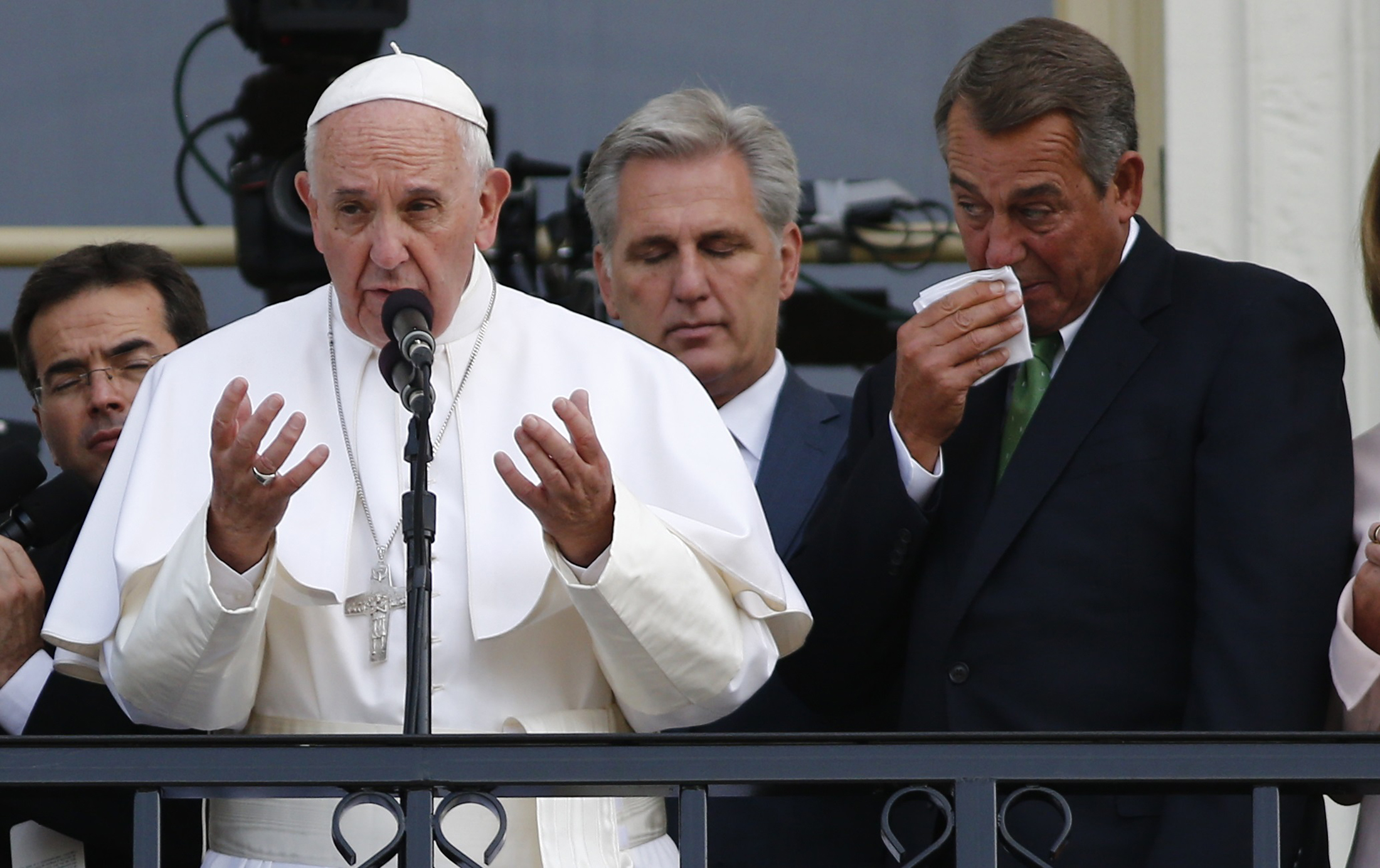
    Whistling “zippity doo da” as he stepped into the briefing room, House Speaker John Boehner announced that he would be vacating his position as Speaker, and also his seat in the Senate, at the end of October—after pushing through a bill to fund the government and ensuring there will be no government shutdown.

    The announcement followed the Papal visit to Washington D.C., including a powerful address to Congress that had a particularly profound effect on Representative Boehner. Of course, Boehner is known to be a sentimental guy—but what was written on the Speaker’s face at various points of the Pope’s address was absolute anguish. And indeed, in his press conference, Boehner acknowledged that his time with the Pope had been revelatory and cathartic—to the point where he considered resigning that very night. But he prayed on it, slept on it, and woke up even more resolute that his stepping down was “the right thing, and for the right reasons.”

    So it’s worth considering what would have motivated him, not only to vacate his post as Speaker (which he claims he is doing for the good of the House), but to also so immediately resign his seat as a Republican Representative from Ohio—and the implications for the RNC.

    (more…)

  • Don’t say Black Lives Matter, prove it.

    Don’t say Black Lives Matter, prove it.

    Let’s be clear: for various reasons a large swath of Americans support institutionalized racism, both actively and passively. And in light of the pivotal role the police have played, and continue to play, in preserving the systems, institutions and dynamics which undergird racial inequality in the U.S.–powerful backlash against Black Lives Matter was to be expected, as was a corresponding countermovement supporting the authorities.

    That moment has now arrived.

    There have been concerted efforts to tie the killing of Harris County Deputy Darren Goforth to Black Lives Matter; this despite the fact that the alleged shooter has not revealed any motive, and there is absolutely no evidence that he was affiliated with, or drew inspiration from, BLM (other than his skin color). Nonetheless, many are claiming that the uprisings in Ferguson and Baltimore have given rise to a climate of hostility towards law enforcement in which these crimes are more likely, with some going so far as to brand the movement a terrorist group.

    Even if it were true that policing has grown more difficult or dangerous in the wake of Black Lives Matter, it would be absurd to blame the movement for this. The problem is rampant abuse of authority and public trust by law enforcement, not that citizens have grown more vigilant against it. And the solution would be to reform these institutions and practices in order to address the causes of unrest, and for that matter, crime.

    But it turns out that the narrative is completely false: thus far, police fatalities actually declined by 17% in 2015 over the previous year—commensurate with a steep downward trend that has been ongoing since the early 80’s.  The #1 cause of death for cops is actually vehicular crashes (responsible for 40% of police fatalities), rather than shootings (responsible for 28% of police fatalities). But what is particularly stunning about these numbers is that police deaths in 2015 have fallen despite the fact that the overall number of murders is up significantly. The trend is unmistakable: be it relative to the number of casualties last year or the broader social dynamics of this year, policing has grown less dangerous in 2015.

    A total of 27 law enforcement officers were shot to death in the line of duty so far in 2015. Meanwhile, during this same period, the police have killed 762 civilians with their guns—overwhelmingly poor and disproportionately minorities–more than 1 in 10 of which were unarmed. That is, for every 1 police officer shot to death in the line of duty, cops shot 28 civilians; police are nearly 3 times more likely to kill an unarmed civilian than a civilian is to shoot a cop.  About 1 out of every 13 lethal shootings in 2015 have been carried out by police.

    In fact, given that there are 1.13 million full-time law enforcement officers in in the U.S., their overall homicide rate (3.4 per 100,000) is actually substantially lower than that of African Americans (17.5 per 100,000). Put another way, on average it is more than five times as dangerous to be black in America than to be a cop.

    The data is clear: there is no war on police. To the extent that Black Lives Matter is responsible for the number of police casualties in 2015, given that policing has actually grown relatively safer this year, it seems as though law enforcement should be thanking, rather than condemning, the movement.

    But of course, just because a narrative has no factual basis does not prevent it from being effective…or dangerous. It is clear that many are buying into the propaganda being manufactured to discredit BLM—and as we head into the election cycle the rhetoric, and the stakes, will only grow more dire. How Black Lives Matter navigates the upcoming 2016 race will have profound implications for the future of the movement and the reforms it seeks realize.

    (more…)

  • It’s Time to Stop Patronizing White People

    It’s Time to Stop Patronizing White People

    On average, whites are far better off than blacks. But the problem with averages is that they often conceal radically uneven distribution of the phenomena in question. This is certainly true of wealth among white Americans.

    It is well-established that white people are overrepresented in the upper classes. And even in the middle class, whites are far more likely to own their own home, to own their own business, to send their kids to better primary schools and have them go on to college. By contrast, the children of most black middle-class families earn less than their parents when they reach adulthood, often sliding into poverty—and for blacks, college does little to ameliorate this trend. And even among the lower classes, blacks are far more likely than whites to live in areas of “concentrated poverty,” which has a severe debilitating effect on social mobility.

    However, the fact that blacks are so much worse off relatively speaking does not entail that white people are generally enjoying prosperity. Although most Americans continue to believe they are “middle class,” overall 15% of the U.S. population lives in poverty—40% of these in “deep poverty.” An additional 30% of the total population lives just at the cusp of poverty. In fact, the overwhelming majority of Americans struggle with economic insecurity, and most will sink below the poverty line for some period of their lives. And these dynamics persist across generations, regardless for instance, of how hard people work: the rich stay rich, the poor stay poor.

    A majority of America’s poor are white, as are a plurality of those receiving federal assistance. Why does this matter? Because poor white people seem to be a natural ally for the social justice movement. In fact, there is widespread support among this constituency for policies addressing inequality, enhancing social mobility, protecting social safety nets, and reforming drug and sentencing laws.

    However, when crime and poverty are discussed in racialized terms, this dynamic changes completely: whites become far more likely to support stricter enforcement of the law and harsher sentencing. They also grow far more receptive to policies which erode safety nets for the poor and redistribute money to social elites. And this is not just a problem for old white men, these trends are just as prevalent among millennials. Similarly, when reminded of the fact that whites are trending towards being a minority in America, both Republican and Democratic whites grow more conservative in their political views.

    Is this “racist”? Sure. But it’s easy to misunderstand what this means. At its core, racism is not about xenophobic reactions to difference, stereotyping people from other groups, or a sense of intrinsic superiority. Racism is about preserving a socio-economic order which privileges the majority group (in this case, whites) at the expense of minorities. And while hate can (and typically does) play an important role in justifying this cause, strictly speaking, it is not necessary: there are plenty of racists who do not hate black people, per se. Many may even have black friends and colleagues whom they hold in great esteem. But this does little to alleviate the gnawing, pervasive and persistent fear that the empowerment of minorities will ultimately come at the expense of whites. For those many white Americans already struggling (or failing) to keep their head above water or support their families, this prospect doesn’t just induce dread—it motivates resistance.

    (more…)

  • What Was Accomplished in Afghanistan?

    What Was Accomplished in Afghanistan?

    The U.S.-led intervention in Afghanistan was justified in large part by highlighting the plight of women under Taliban governance. Within the first weeks of the campaign, Hillary Clinton, Laura Bush and Cherie Blair helped spearhead a highly-effective propaganda effort to convince the public that the U.S. and the U.K. were engaged in a moral war—one which was fundamentally about human rights rather than merely advancing geopolitical or security interests—thereby necessitating a massive ground invasion and state-building enterprise to transform Afghan society, rather than a more limited venture to  dislodge and degrade the Taliban and al-Qaeda.

    Of course, the U.S. bore significant moral responsibility for the plight of Afghan women, given the central role that the CIA played in sponsoring mujahedeen in Afghanistan during the Cold War—before, during, and after the Russian occupation. Leaders trained in these programs would go on to found the Taliban, the Haqqani Network and al-Qaeda—groups which were not only responsible for the widespread oppression of the Afghan people, but also for planning and executing the suicide bombings of September 11, 2001.

    And so, the moral implications of the war were extraordinary: had Operation Enduring Freedom been successful, it would have not only liberated Afghan women, but avenged 9/11—and in the process, helped to rectify a particularly dark chapter in U.S. foreign policy. And this, it was held, would go a long way towards winning the “hearts and minds” of people around the world.

    Unfortunately, the mission was not a success, and most of the promises made at the outset of the conflict, particularly with regards to women’s empowerment, have failed to materialize. In response, insofar as they talk about Afghanistan at all, policymakers have attempted to claim that the primary U.S. interest in the country is, and always has been, about denying a foothold to the Taliban and other extremist groups—although even by this measure, the campaign has been a failure.

    Nonetheless, this revisionism cannot be allowed to stand. We must evaluate America’s longest war according to the terms by which the occupation was justified–improving the status of Afghan women. And by this standard, the war must be condemned in the strongest terms: according to the U.S. Special Inspector for Afghanistan Reconstruction (SIGAR), it is impossible to verify whether any of the U.S. investments in Afghanistan have benefitted women at all.

    (more…)

  • Who is Whitewashing History? (Hint: It’s the Neo-Confederates)

    Who is Whitewashing History? (Hint: It’s the Neo-Confederates)

    [su_quote cite=”Confederate General Robert E. Lee” url=”http://www.pbs.org/newshour/updates/robert-e-lee-opposed-confederate-monuments/”]I think it wiser not to keep open the sores of war but to follow the examples of those nations who endeavored to obliterate the marks of civil strife, to commit to oblivion the feelings engendered.[/su_quote]

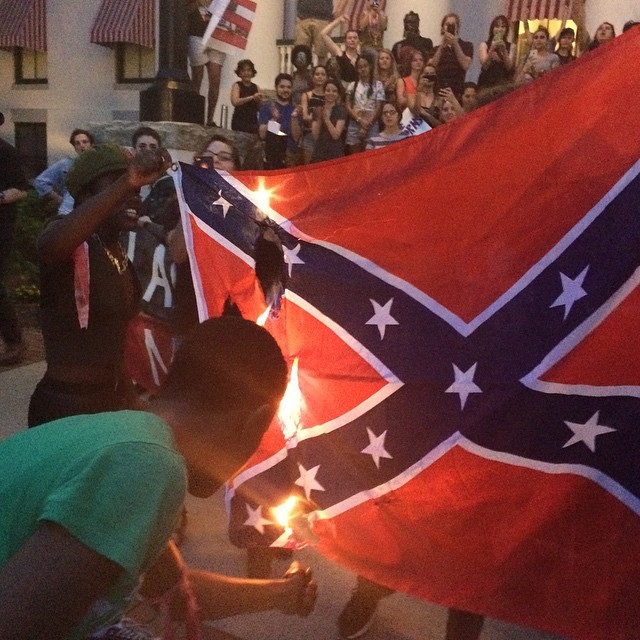
    With the Confederate Battle Standard finally removed from the South Carolina Capitol grounds, many conservative commentators have expressed concern that the battle may not be over, that the movement to abolish public symbols of the Confederacy in may spread to other monuments—for instance, renaming streets and public schools which honor white supremacists, or re-appropriating landmarks and dismantling memorials which commemorate slave owners and segregationists.

    Of course, these fears are not unfounded: there is such a movement underway. But what is perplexing is why anyone would find this to be problematic. Conservative claims that these actions amount to “whitewashing history” or “cultural cleansing” are beyond ironic:

    It is whitewashing history, on several levels, to celebrate and honor the Confederacy independent of its subjugation of blacks. The so-called “states’ rights” narrative about the origins and meanings of the war are falsified by Declarations of Secession from the southern states, and the words of Confederate leaders themselves—who left no doubt that what they were fighting for was the continuation of slavery. In fact, had they won independence from the North, the vision was to build an empire by conquering and enslaving the denizens of Mexico and Central America as well.

    While it is true that there were issues related to the proper collection and allocation of taxes and tariffs, representation in the Congress, and the extent of federal sovereignty—even most of these problems ultimately turned on questions about the legal status of blacks (especially given that slaves constituted the majority of the population in many southern districts, and the economy was heavily-dependent on slave labor).

    The developments which provoked outright secession were principally the northern state’s general refusal to enforce the Fugitive Slaves Act, along with concerns that Lincoln and the Republicans might ban slavery in any new states which joined the Union (even if they allowed existing slave states to continue the practice, for lack of viable alternatives).

    That “Southern culture and way of life” the Confederates were so eager to preserve? It was entirely contingent upon the subjugation of blacks. Whites in slave states rightfully viewed emancipation as an existential threat to their livelihood, their culture and their very lives. They dreaded reprisals by newly freed slaves, be they political, economic, or violent (they assumed the latter most often, given the “savage” constitution of blacks). For this reason, even those few southerners who supported the abolition of slavery generally proposed dumping blacks back in Africa, rather than allowing them to live free and equal alongside their former oppressors (even when the slaves were eventually “freed” they were kept separate from whites through America’s apartheid system).

    Again, this is spelled out unambiguously by the very people who spearheaded the rebellion—so it is ahistorical to deny or minimize these realities. For elaboration on this point, see the video below featuring Colonel Ty Seidule, the head of the history department at the US Military Academy at West Point:


    (more…)

  • America’s Biggest Terror Threat is from the Far-Right, Not the Middle East

    America’s Biggest Terror Threat is from the Far-Right, Not the Middle East

    According to a New America Foundation report, right-wing extremists have killed nearly twice as many Americans through domestic terrorism as Islamic jihadists have since 9/11.  However, this same database shows that jihadists constitute a much higher percentage of those indicted on terror charges or killed when confronted by authorities: despite causing only 35 percent of the total terrorism casualties, they make up 60 percent of the total indictments. The reason for the discrepancy is that far-right extremists tend not to be monitored or investigated as heavily.

    Shortly after President Obama’s election– particularly following a groundbreaking 2009 Department of Homeland Security (DHS) report on the threat of right-wing extremism–Republican lawmakers, along with conservative media and lobbying groups, argued that the White House was politicizing the term “extremism” in order to deploy law-enforcement against otherwise lawful dissidents (such as those affiliated with the Tea Party).

    In order to help defuse this narrative, national security agencies were heavily restricted as to how they can monitor and prosecute right-wing groups. The DHS was stripped down to the point where they have, literally, one single analyst to monitor all non-Muslim domestic terror activity–and the organization no longer collects statistics on right-wing extremists at all.

    There was absolutely no discussion of the threat posed by these ideologues in the recent White House Summit on Countering Violent Extremism. In fact, law enforcement and national security agencies are generally hesitant to even refer to acts committed by right-wing ideologues as terrorism. Joseph Andrew Stack’s 2010 suicide bombing of Austin’s Echelon Complex is a paradigmatic example:

    His own manifesto clearly defines the U.S. Federal Government as motivating his attack—particularly grievances with the Internal Revenue Service (whose offices he struck). The document goes on to detail his intention to create a mass-casualty event as a catalyst for political change—more-or-less verbatim reflecting the Federal Bureau of Investigation’s own definition for terrorism. And yet, the FBI declared that the event was not being investigated as such—and there was no broader plan underway to help prevent subsequent attacks down the line.

    Given this non-response from national security agencies, two weeks later the IRS began investigating Tea Party-affiliated groups itself. When this became public, it was immediately held up as further evidence of the Obama Administration using law enforcement to target political opponents. As a result of the political fallout from the scandal, rather than investigating right-wing terrorism, the FBI has instead opened a criminal probe against the IRS!

    (more…)
  • Change We Can Believe In

    Change We Can Believe In

    “It was like hamburger meat shootin’ out of his chest.”

    His burger was rare; blood & oil ran down his double-chinned beard, down his marshmallow-chain fingers, staining his freedom fries. Nirvana on his face. Brown on the outside, pink on the inside. Just like a nigger.

    I.

    That nicotine itch on the back of my brain. Dim lights, lukewarm coffee, waitresses preparing for the worst. Denny’s. Just after Friday, approaching 2AM, the bars letting out soon; the diner to be filled with drunk, obnoxious GI’s & 20-somethings who wished they didn’t live here anymore. All looking to fight or to fuck, some looking for both, maybe simultaneously. Our cue to leave.

    Three of us: me, King, and Jones. This story’d be better if you knew ‘em. Hell, your life would be better if you knew ‘em. But you go to the page with the readers you’ve got, and I’m sure this story and your life will both be pretty good anyway, so let’s move on. We’re black, the three of us. I wouldn’t usually take the time to point that out, wouldn’t usually have to, but again, you don’t know us. Yet.

    Waiting for the bill, got that paranoid itch on the back of my neck. Turn around — green eyes socketed into a blue-collar cracker, polo shirt that doesn’t fit on so many levels. Looks like he’s got something to say.

    People stare at King. A lot. He’s not a fan of that. He engages our suitor, with a touch of menace in his voice:

    “Yo, you need something man, or what?”

    Guy picks up his burger.

    “You ever seen that movie, Boondock Saints? Best goddamn movie ever made. They’re making a sequel. I killed a black guy once.”

    Takes a bite; just like that.

    (more…)

  • Do Black Lives Matter? The World’s Shameful Response to Charleston

    Do Black Lives Matter? The World’s Shameful Response to Charleston

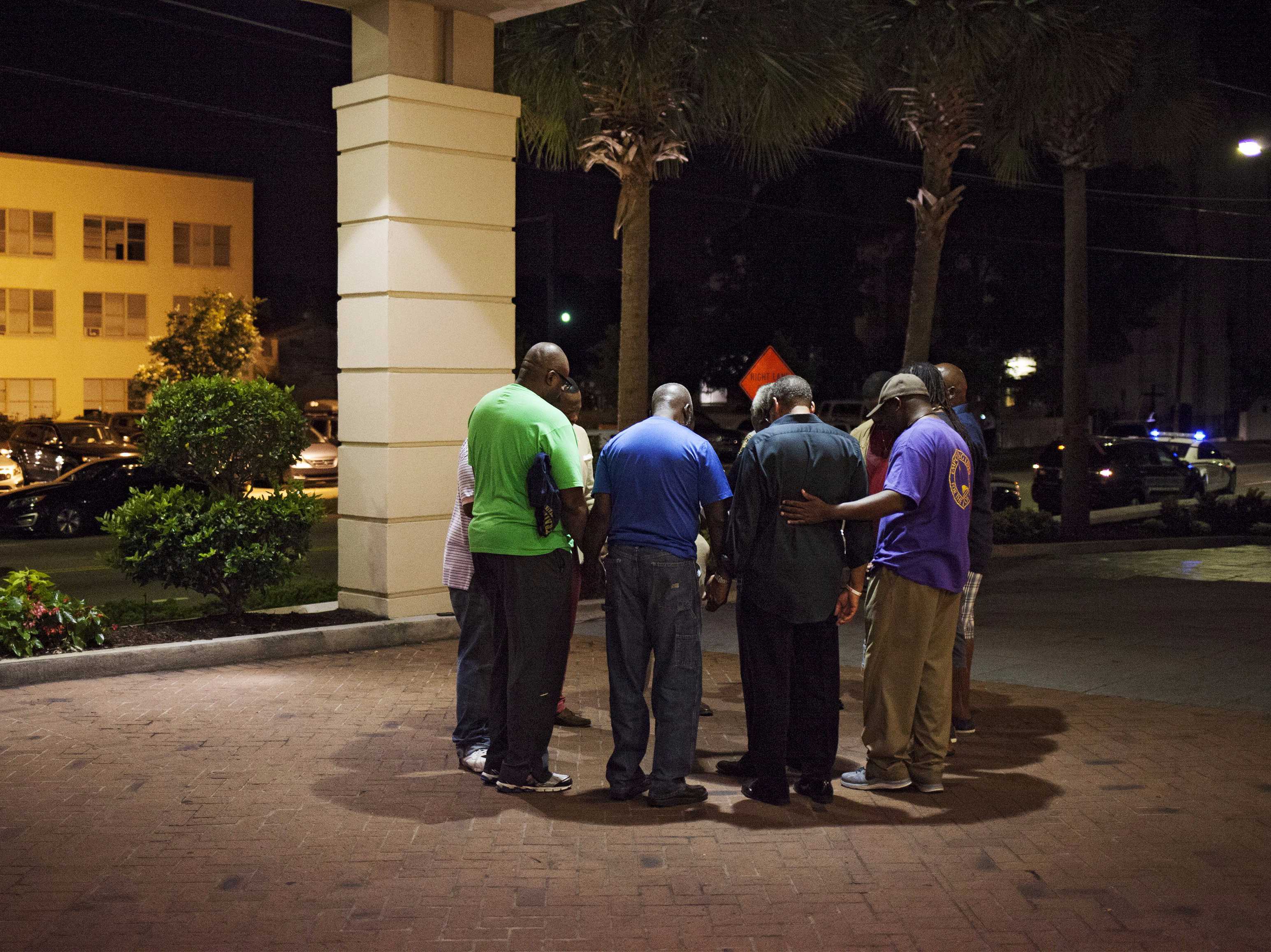
    In the wake of the massacre at Emanuel African Methodist Episcopal Church (AME), analysts have been busying themselves with apparently self-evident questions as to whether the atrocity was racially motivated, or constituted an act of domestic terrorism. Americans have been focused on questions about gun control and the ubiquity of the Confederate Flag—with an emerging consensus that there will be little-to-no evolution on the former issue at this time, and token movement on the latter (while the flag will likely be removed from the S. Carolina capitol, most other Confederate icons will remain in place, both in S. Carolina and across the South).

    But there has been one glaring absence in our public conversation about the tragedy—namely any meaningful acknowledgement of just how pervasive and dangerous the white supremacist views which motivated the Charlotte massacre are—and not just in America, but throughout most Western societies.

    This omission is shameful, not only because the victims of this massacre had dedicated their lives to exposing these ideologies and dismantling the systems, institutions and practices built around them (indeed, this is why they were targeted for assassination)—but also because this silence enables further crimes, creating a culture of complicacy and complacency about the threat these groups pose to the security of Western nations, and also to the values which are supposed to define them.

    (more…)
  • The attack on Emanuel AME was certainly terrorism

    The attack on Emanuel AME was certainly terrorism

    The Charleston Massacre was an act of domestic terrorism. Consider:

    Emanuel African Methodist Episcopal Church (AME) was a historically black church founded by a freed slave who eventually tried to lead a revolt to free his people. In the aftermath, the church was burned down. Because predominantly-black churches like Emanuel AME were known to be hubs of activism for the oppressed, soon after the church was rebuilt it became illegal for congregates to gather there. They had to hold their meetings in secret until after the civil war.

    Since that time, it has remained a seat of civil rights activism, hosting the likes of Booker T. Washington and Martin Luther King Jr. And for this, Emanuel AME and other predominantly-black churches were (and remain) frequent targets of domestic terrorists with segregationist and white supremacist leanings.

    None of this was lost on the shooter—he chose this target precisely because of its symbolism. He drove 100 miles to get there, arrived during a Bible study, and asked for his primary target by name: Rev. Clementa Pinckney—the serving pastor of Emanuel AME, a tireless civil rights activist, and a sitting state senator. All said, the spree resulted in the deaths of four preachers and five others—almost all of whom were involved in various types of community organizing, civil rights activism and public service.

    Mr. Roof committed this atrocity with political ends in mind: he wanted to restore segregation, and to ensure that whites continued to be the socio-economic and cultural majority in the United States. He was hoping that his massacre would spur a race war, from which whites would emerge victorious, reclaiming their rightful place in American society, and subjugating the vanquished minorities. He viewed pluralism, equality and tolerance as Trojan Horses, existential threats to his kind—and ideologies which would be abolished in the aftermath of the cataclysm he was hoping to provoke.

    To indicate both the historical and global dimensions of the conflict, he wore a jacket emblazoned with the flags of apartheid South Africa and Rhodesia. His car had a Confederate Flag license plate, and in the lead-up to the shooting he took a pilgrimage to notorious slave plantations and Confederate landmarks, photographing every step of the journey and disseminating these images online.

    He participated in internet forums with fellow ideologues both in America and worldwide, and released a detailed manifesto explaining what how and why he chose his target, how he was drawn into the movement, and what his aspirations were for the attack.

    It was a textbook example of domestic terrorism, and the single most lethal incident in the United States since 2009. It is disturbing that there is even controversy as to if it was a terrorist act, or if it was a racially-motivated hate crime. Disturbing, but typical of incidents of white terrorism.

  • Understanding ISIL’s Appeal

    Understanding ISIL’s Appeal

    [su_quote cite=”Slavoj Zizek” url=”https://dvd.netflix.com/Movie/Zizek/70043440″]Thirty, forty years ago, we were still debating about what the future will be: communist, fascist, capitalist, whatever. Today, nobody even debates these issues. We all silently accept global capitalism is here to stay.
    On the other hand, we are obsessed with cosmic catastrophes: the whole life on earth disintegrating, because of some virus, because of an asteroid hitting the earth, and so on. So the paradox is, that it’s much easier to imagine the end of all life on earth than a much more modest radical change in capitalism.[/su_quote]

    It is oft-remarked that proponents of the prevailing international order, despite rhetoric about freedom and democracy, eagerly support dictators, warlords and other autocrats in order to preserve the status quo. However, this tendency is no less pronounced in opponents of the system. For example: during the Cold War, Lenin and Mao inspired large swaths of Westerners, particularly young people, into leftist movements—many of which carried out campaigns of domestic terrorism in order to provoke revolution.

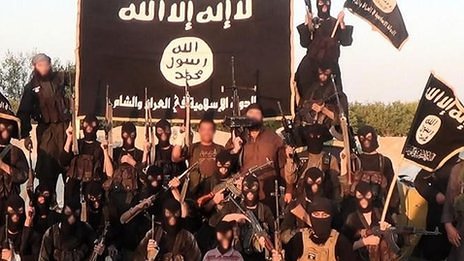
    The Islamic State in Iraq and the Levant (ISIL) similarly aspires towards a new form of social arrangement. In this post-Occupy movement period, where no one else seems to have the willingness or ability to meaningfully “fight the system,” ISIL appears to many as virtually the only actor interested in, and capable of, radical societal reforms. Understanding this source of ISIL’s appeal will be critical to countering its narratives, undermining its recruitment, and ultimately defeating the group. 

    Beyond brainwashing

    ISIL’s recruits are generally not stupid, ignorant or naïve , nor are they religious zealots,  nor are they somehow unable to resist social media messaging. It is comforting to write-off ISIL supporters as deranged or “brainwashed” because it helps distract from the role the anti-ISIL coalition’s members played in creating and perpetuating the conditions under which the “Islamic State” could emerge and flourish—but the extensive post 9/11 body of research on terrorism clearly shows that regardless of how a campaign may be framed, the primary reason people support terrorism is to achieve political aspirations.

    For example, it is widely assumed that most suicide bombers were uneducated, mentally ill or otherwise cognitively deficient. Or that martyrs were simply nihilistic (often from having few socio-economic prospects), or were narcissists eager for notoriety. It turns out that those cases are the exception rather than the rule:  Suicide bombers tend to be wealthier and better educated than most in their societies. In fact, it is their deeper understanding of societal problems that often impels their activism. And rather than being sociopathic, would-be martyrs tend to be prosocial, idealistic and altruistic, driven by compassion and a sense of moral outrage.

    Millennials tend to be especially globally conscious and passionate about making a difference. However, they are also intensely skeptical about societal institutions, or that “the system” can work to evoke sufficient change on pressing issues. This is the main source of ISIL’s allure among youth.

    Sympathizers are well-aware of the atrocities committed by the organization—crimes which are disseminated widely by ISIL itself, in part to lure unpopular foreign actors into their theater of war. By taking the bait, the Western-led coalition has allowed ISIL to position itself as a resistance organization against a U.S.-dominated unipolar world order, a bulwark against meddling in Middle East and Muslim affairs by former colonial and imperial powers and the repression of western-backed autocrats. ISIL’s recruitment has surged as a result.

    (more…)
  • What we now know about police brutality (and how to end it)

    What we now know about police brutality (and how to end it)

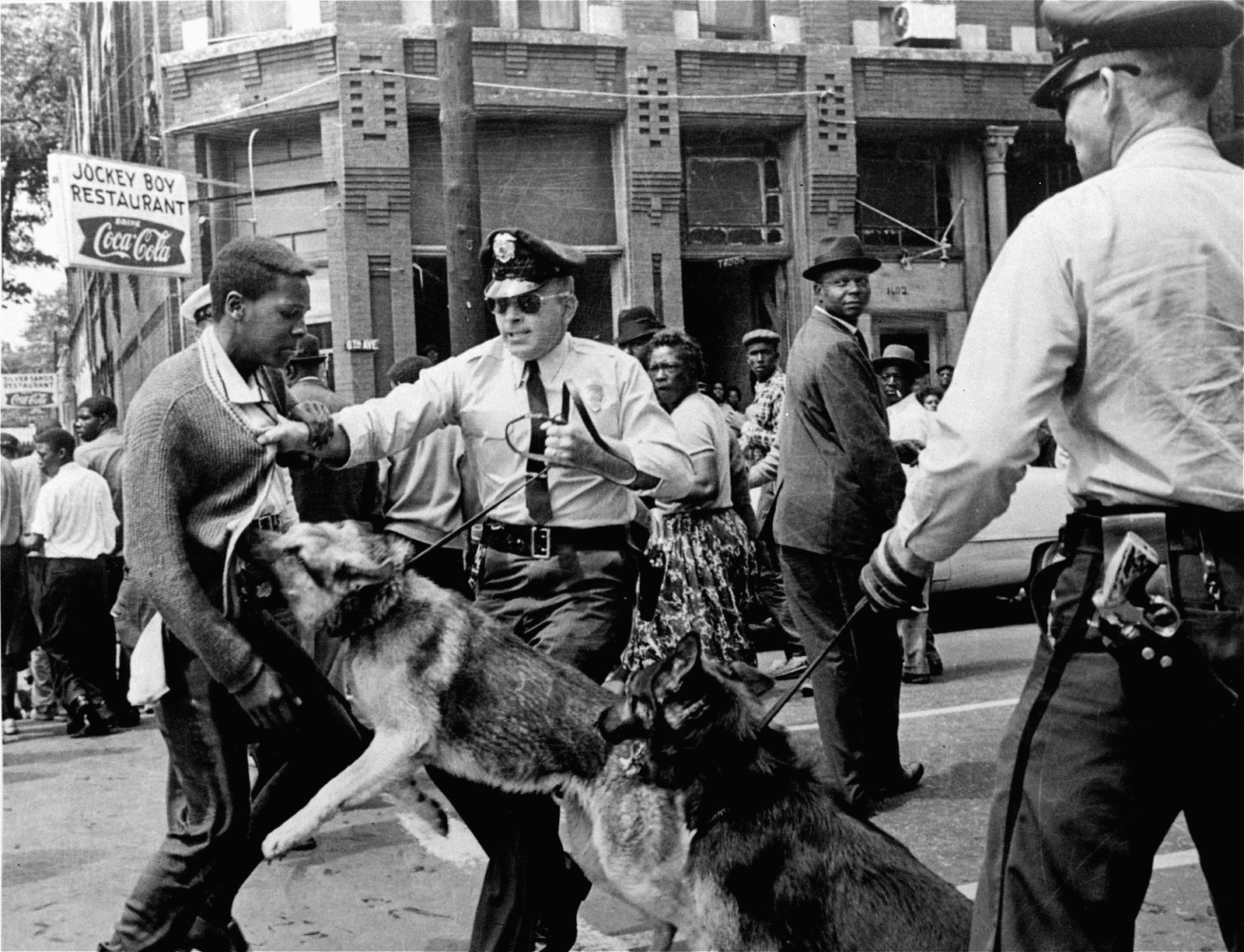
    Police brutality has been an integral part of the black experience since the birth of the modern law enforcement. Until recently, however, it was difficult to establish how stark or pervasive the problem was; this opacity plagues many aspects of the U.S. criminal justice system. In part, the data has been hard to come by due to the decentralized nature of policing in America: while the FBI attempts to collate national statistics on the use of force, they rely exclusively on voluntary reporting from America’s 18,000 law enforcement agencies–the overwhelming majority of which (more than 95%) do not participate fully or at all.

    However, the uprisings in Ferguson and Baltimore have trained the social consciousness on police use of force. And as a result of open-source data mining and some outstanding investigative journalism, a clearer picture of the problem is finally beginning to emerge…and it isn’t pretty.

    By the numbers

    An in-depth report from the Washington Post identified nearly twice as many fatalities from police than FBI estimates–and this investigation only considered shootings. Over this same period dozens have been killed by Tasers, in chokeholds, by vehicles, or otherwise while in police custody. For information on these, The Guardian has a more comprehensive and interactive database, updated in real-time.

    Some troubling patterns elucidated by these studies include:

    • On average, three people have been killed by police every single day in 2015—this equates to 1 out of every 15 homicides in the country (by all means).
    • Gunfire is the cause of 87% of police killings, and 82% of non-accidental line-of-duty police deaths (vs. 73% of all national homicides).
    • As of the time of writing, 419 Americans have been shot to death this year by police. These amount to nearly 1 out of every 12 gun deaths in the country overall. Over this same period, 14 police officers were casualties of hostile fire: for every cop killed by guns, the police shot nearly 30 civilians to death.
    • Adjusting for census data, blacks are killed at more than 3 times the rate of whites or other racial groups: while whites are nearly 64% of the total population, they only constitute about 51% of the total gunfire casualties (49% of overall police killings). By contrast, blacks amount to roughly 12% of the total population in America, but total 26% of police gunfire casualties (28% of overall police killings).
    • Nearly 1/10 of police shootings (and more than 1/5 of all police killings) are against people who are unarmed. For whites, the ratio is 1/16 shooting deaths (1/6 total casualties). For blacks, the unarmed ratio is more than 1/6 for shooting deaths, and roughly 1 out of every 3 total casualties. That is, police are twice as likely to kill an unarmed black suspect as an unarmed white one. But even among those suspects who were armed, dozens were killed while running away.
    • Nearly a quarter of those shot to death were known to be mentally ill or disabled.

    (more…)
  • On the limitations of body cameras for reducing police misconduct

    On the limitations of body cameras for reducing police misconduct

    The problem of police brutality and misconduct is uncomfortable for many Americans–in large part because it contravenes so many of our cherished narratives about social progress, and about the United States as a land of freedom & justice–not to mention our post-9/11 idealization of first-responders.

    When forced to confront these kinds of issues, which we would rather not have had to acknowledge at all, there is a temptation to seek out some kind of simple solution which can be easily applied to the problem wherever it manifests–and which can thereby allow us to stop thinking (and talking) about it.

    Perhaps the primary focus in the aftermath of Ferguson and Baltimore has been on body cameras. Advocates point to the Department of Justice (DoJ) “Interim Report of the President’s Task Force on 21st Century Policing” which suggested that among the precincts studied, officers wearing body cameras had 87.5% fewer incidents of use of force, and 59% fewer complaints than officers who were not wearing cameras. These reductions, they claimed, are in part due to the fact that both police officers and suspects behaved differently under the knowledge they were being recorded. However, while “observer effects” on behavior have been well-documented in myriad contexts, there are reasons to temper one’s optimism as it relates to reducing incidences of police misconduct:

    (more…)

  • Police Reform Is More Important Than You Think

    Police Reform Is More Important Than You Think

    In the wake of Freddy Gray’s death and the uprising which followed in Baltimore, President Obama acknowledged the need to reform police practices and accountability, but insisted that the real problem faced by the black community in Baltimore, and around the country, is not the police—but a system of institutionalized racism, socio-economic polarization, and a public which has refused to confront and address these disparities.

    This assessment is absolutely correct. The issues facing the black community are systemic, reinforced over the course of generations. At the same time, however, the President and others who express similar sentiments, seem to misunderstand the reason police are in the crosshairs of activists:

    Institutionalized Racism

    Relative to other groups who arrived in America, black people remained at an immense disadvantage as a result of slavery, neoslavery, and then Jim Crow and segregation. Exclusion from many sectors of the formal economy dramatically inhibited the ability of blacks to build wealth. Meanwhile, the political marginalization of blacks allowed whites to continue these exploitative policies more-or-less uncontested until the very recent present.

    For instance, 2.5 million blacks volunteered for service in WWII—about half of whom were accepted into combat. They fought in segregated units, for a society that viewed them as subhuman, and they paid a terrible price—as they have in virtually every war in U.S. history. However, after the war many received GI Bill benefits which raised their economic position relative to white people to perhaps the highest level ever achieved previously or since.

    But they returned home to an apartheid state, and housing policies from the 50’s through the 80’s prevented the wealth of blacks from growing or being transferred across generations at the rates of whites. And even the relatively small amounts blacks managed to painstakingly accumulate and maintain in the intervening time was wiped out by the 2008 financial crisis: a full 50% of the wealth relative to whites disappeared in a flash. Black families currently make about 60% as much income as white families (which is, of course, a problem on its own), but only have about 5% of the wealth of white families.

    This calamity was in large part due to predatory programs which explicitly targeted blacks, encouraging them to refinance their homes for short-term cash to weather the crisis—and with sub-prime loans, even if they qualified for better ones. As a result, when the housing market imploded and interest-rates skyrocketed, black families more than any other group were forced to forfeit their property, and found themselves once again living in poor urban settings.

    These housing disparities have profound ripple effects. For instance, funding and distribution of school resources is heavily dependent on property taxes in many areas. Because blacks tend to own substantially less property (and less valuable property) than whites—their schools were and remain often radically inferior: underfunded, understaffed, with insufficient resources for extra-curricular activities, vocational training, advanced placement courses, technological assets—or even basic school supplies, up-to-date textbooks or needed renovations and maintenance.

    As neighborhoods are gentrified, schools improve. But blacks rarely reap these benefits: often the increased property costs, cost-of-living inflation, and other factors displace even longstanding residents into poor suburban areas—in the process tearing apart critical social networks which help people cope with poverty, and diffusing black voting power.

    Imbalances in the criminal justice system exacerbate these trends.

    (more…)
  • Foreign Policy Fundamentalism

    Foreign Policy Fundamentalism

    Originally published in The Wilson Quarterly, Vol. XXXIX, No. 3 (Summer 2015)
    Print version available here.


    With pomp and polish and platitudes, the 2016 presidential campaign is underway. It began in December, as former Florida Governor Jeb Bush announced he was “actively exploring” a run for the White House. Bush is more moderate than much of the Republican base on many issues–perhaps too moderate to ultimately win his party’s nomination.[1] On foreign policy issues, however, Bush tows a hawkish line, pushing for a more aggressive U.S. posture against Syria, Russia, Iran, China, and Cuba in order to better promote and defend American ideals and interests throughout the globe.[2]

    On the whole, the Republican hopefuls are “racing to the right” on foreign policy, arguing for a more muscular approach to international affairs. A narrative is taking hold that many of the problems facing the world today are the result of the Obama administration’s “failed leadership.” More specifically, they were not brought about by America’s ill-conceived actions, but instead, because of U.S. inaction: a failure to intervene as often or aggressively as “needed” around the world, which (to many conservatives’ minds) projected American weakness and undermined U.S. credibility.[3] The solution? Clear principled American leadership. This line of reasoning permeates the recently-announced campaigns of noted surgeon Ben Carson, Florida Senator Marco Rubio, and Texas Senator Ted Cruz, and increasingly reflects the political strategy of Kentucky Senator Rand Paul as well.[4]

    The presumed Democratic nominee, Hillary Clinton, is perhaps more aggressive still: unwavering in her advocacy of Israel, comparing Putin to Hitler over Ukraine, pushing for a more confrontational approach to China, championing intervention in Libya and Syria (just as she previously did for Iraq), supporting the troop surge in Afghanistan as well as the likely ill-fated campaign against ISIL, defending the counterproductive drone program, and arguing for increased sanctions and the threat of force against Iran (although she now tentatively supports the nuclear negotiation effort).[5]

    During her pre-announcement book tour, Clinton lambasted the Obama administration’s foreign policy, particularly the administration’s aspirational credo:[6] “Don’t do stupid shit.” Her complaint was not that the Obama administration has failed to live up to such an apparently modest goal, but instead, that “don’t do stupid *stuff*” is not an organizing principle, and “Great nations” need doctrines to guide their foreign policy.[7]

    On its face, this line of criticism is absurd. Clearly, “avoid doing harm” is, in fact, a maxim designed to guide action (just ask any medical professional).[8] Granted, it’s a principle guiding what not to do, rather than what to do. However, for this very reason, it is more basic (and more important than) any offensive strategy: it constrains what sorts of affirmative policies are desirable or even permissible. But notwithstanding this apparent lack of understanding about what “organizing principle” means,[9] there is a more profound error that Secretary Clinton holds in common with the Republican frontrunners: the assumption that grand strategies are necessary or useful in guiding foreign policy. They aren’t.

    (more…)

  • If Underpants Gnomes Took Over the Pentagon, Very Little Would Change

    If Underpants Gnomes Took Over the Pentagon, Very Little Would Change

    In the Comedy Central television series South Park, the boys discover a cartel of gnomes who steal people’s underwear. Over the course of the episode it’s revealed that these seizures are part of their business plan which goes:


    Step 1: Collect Underpants Step 2: ? Step 3: Profit


    The punchline, of course, is that the underpants gnomes have set up this elaborate enterprise for stealing and stockpiling people’s unmentionables, but none of them have any idea how to leverage these resources in order to reach their aspiration (profits).

    It is immediately obvious that step 2 may be the most important part of the entire plan: it tells you if there is a viable path from step 1 to step 3. If there isn’t, step 3 is irrelevant and step 1 is (at best) a waste of time and resources.

    But Step 2 happens to be the least exciting part of the process, and the most difficult, complex, contentious—which explains why so many attempt to circumvent it. Instead they just keep repeating step one, at an ever-increasing scale, hoping that step 3 will somehow magically materialize in the process.

    So it goes.

    While this particular episode was meant to lampoon many aspects of the business world, it unfortunately seems just as reflective of U.S. national security policy. Consider:


    Step 1: Sanctions Step 2: ? Step 3: regime change or substantial revision of regime policies

    Step 1: Overthrow “rogue” government Step 2: ? Step 3: a democratic, secular and/or liberal state emerges in its stead (see: Iraq, Libya, and coming soon, Syria).

    Step 1: Arm sub-state or non-state proxies Step 2: ? Step 3: American strategic interests successfully realized in the region

    Step 1: Support dictators Step 2: ? Step 3: long-term stability in the Middle East; containment of radical ideologies antithetical to the prevailing order (see: Saudi Arabia, Egypt, and coming soon, Libya).

    Step 1: Bomb “militants” with drones or airstrikes Step 2: ? Step 3: Transnational/ supranational jihadist groups are defeated

    (more…)

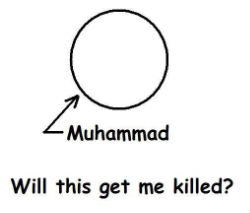
  • Drawing Muhammad, Civil Rights & Religious Liberty in America

    Drawing Muhammad, Civil Rights & Religious Liberty in America

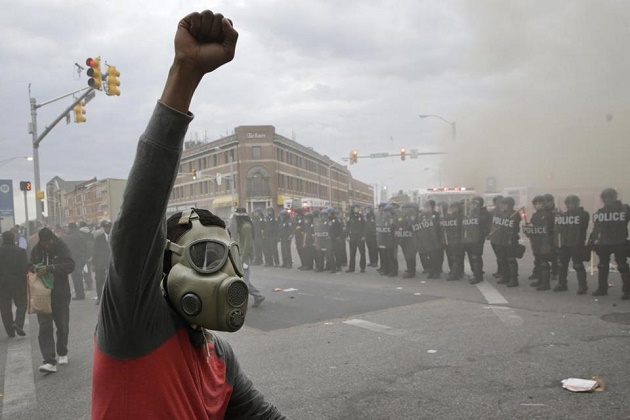
    At the height of the unrest in Baltimore, I wrote a piece for Salon pushing back against the kneejerk condemnations of the riots. In the piece, I argued that advocates of pacifism fail to understand the extent to which their own methods are reliant on violence—to the point where it may not even be feasible to refer to movements as non-violent at all. It may be more appropriate to say that pacifists enjoy a different relationship to violence than their revolutionary counterparts or their state interlocutors. Secondarily I argued that no social change occurs without coercion of some kind—be it economic, political, or something more literal. The idea that authorities will grant major concessions to demonstrators if they feel they have an option to ignore them—simply because they are, for instance, singing in the streets—this has no basis in historical or contemporary realities.

    I was shocked to find these arguments cited in The Wall Street Journal, specifically in an attempt to compare Pamela Geller, orchestrator of the “Draw Muhammad Cartoon Contest,” to Dr. Martin Luther King Jr. The WSJ argument was later repeated by Alan Dershowitz on Fox News, again quoting my description of Dr. King nearly verbatim. And the icing on the cake was when Geller herself decided to compare her actions to those of Rosa Parks. As a black American and a Muslim, and as an inadvertent progenitor of this toxic meme, I felt compelled to write a rebuttal in Salon, demonstrating that the aims and methods of Ms. Geller have absolutely nothing in common with those of the civil rights activists. And highlighting that just because an action is legal doesn’t make it ethical or responsible; similarly, just because an act is provocative doesn’t make it brave, intelligent, or productive.

    This time, I was delighted to find a conservative voice was willing to engage my arguments in a non-cynical way: Ed Berliner from Newsmax TV. In fact, just as I was preparing my rebuttal, Berliner himself launched a rather scathing monologue against Geller and the AFDI on his show The Hard Line. After encountering my essay on Salon, I was invited to be a guest on his show and respond to some of the criticism from the Geller crowd. That exchange follows below:

    Unfortunately, our segment ran out of time before I could respond to my interlocutor’s last point. In his closing remarks, John Griffing declared that even “moderate Muslims” are prone to radicalization. To substantiate this point, he quoted Omar Ahmad of CAIR, “directly” and “verbatim,” declaring that the goal of himself and his fellow believers was to “replace the Constitution with the Qur’an.”

    (more…)

  • Pamela Geller is No Rosa Parks

    Pamela Geller is No Rosa Parks

    “In any war between the civilized man and the savage, support the civilized man.”

    Pamela Geller


     “I would like to be known as a person who is concerned about freedom and equality and justice and prosperity for all people.”

    Rosa Parks


    In the aftermath of the shootings in Garland, Texas New York Times reporter Rukmini Callimachi had the audacity to ask, “Free speech aside, why would anyone do something as provocative as hosting a ‘Muhammad drawing contest?’” The question was met with widespread outrage and derision.

    Wall Street Journal author James Taranto set out to answer that question more thoughtfully. In the process he cited an example from my recent Salon piece about how Dr. Martin Luther King Jr., while advocating pacifism, would often deliberately stage his demonstrations to evoke a forceful response from the authorities or communities they were confronting. Likening the ‘Draw Mohammad contest’ to civil disobedience, he argued that despite the risk entailed, it is sometimes important, even necessary, to be provocative in order to, not only defend freedom, but resist (perceived) oppression.

    Mr. Taranto tried to avoid conflating the struggle of Dr. King with the actions of the American Freedom Defense Initiative (AFDI), which hosted this event—albeit with mixed success. However, Alan Dershowitz would later repeat this comparison, again quoting my description of King almost verbatim on The Kelly File, comparing AFDI head Pamela Geller to MLK. Subsequently, Ms. Geller has also drawn from the WSJ arguments–comparing herself to Rosa Parks.

    As a black American and a Muslim, I believe this comparison demands a response. And so, I have highlighted below a few guidelines for provocation which help illustrate the vast moral differences between how civil rights activists use(d) provocation, as compared to the AFDI:

    (more…)

  • Social Movement Requires Force

    Social Movement Requires Force

    “It is not enough for me to stand before you tonight and condemn riots. It would be morally irresponsible for me to do that without, at the same time, condemning the contingent, intolerable conditions that exist in our society. These conditions are the things that cause individuals to feel that they have no other alternative than to engage in violent rebellions to get attention. And I must say tonight that a riot is the language of the unheard…And what is it that America has failed to hear? It has failed to hear that the plight of the Negro poor has worsened over the last few years. It has failed to hear that the promises of freedom and justice have not been met. And it has failed to hear that large segments of white society are more concerned about tranquility and the status quo than about justice, equality, and humanity… And as long as America postpones justice, we stand in the position of having these recurrences of violence and riots over and over again. Social justice and progress are the absolute guarantors of riot prevention.”

    Dr. Martin Luther King Jr., ‘The Other America‘”

    On the night of Freddy Gray’s funeral, violence erupted in Baltimore. The revolt was immediately condemned by everyone, from media organizations, to civil rights activists, and even by President Obama himself—with all parties referring to the rioters as “thugs,” and the violence as senseless and counterproductive.

    We can set aside the clear double-standard of how rioting is depicted depending on the skin color of those involved; or the absurdity that most seemed more concerned about the destruction of property than of black lives. We can ignore the central role that Baltimore’s police department played in escalating the events of that night, which were neither random nor unprovoked—and paradoxically, the role that actual “thugs” and gangsters played in maintaining the peace.   We can even set aside that the Gray family has condemned the riots. Because while the illegal arrest and extrajudicial execution of their son was the catalyst for the current unrest, the protests are about more than just their personal loss.

    Beyond the firewall of rhetoric about the crisis in Baltimore lies a stark reality: there is no social change without coercion. Authoritarians do not step down because people are saying mean things about them on Facebook or Twitter; social elites do not relinquish their privilege simply because they saw people walking down the street, arms locked, singing kumbaya. One has to speak to power in a language it understands. It must be made clear that there are consequences for ignoring dissidents, that a return to the status quo is not an option. Shy of this, there is no change.

    Violence is always unfortunate, especially insofar as it is indiscriminate. However, these outbursts must not be reflexively dismissed—if for no other reason than because it is violence which enables non-violent resistance.

    (more…)
  • There Is No Iranian Nuclear Threat

    There Is No Iranian Nuclear Threat

    On April 21, Iran and six world powers resumed the final phase of nuclear talks after a preliminary framework deal reached earlier this month. Iran and the P5+1 countries — Britain, China, France, Germany, Russia and the United States — are expected to reach a final accord by the end of June.

    Yet hawks in Washington and Israel argue that Iran cannot be allowed to obtain a nuclear weapon, or even remain within “sprinting” distance of acquiring one. They argue that a nuclear-armed Iran would be an existential threat to Israel, would be increasingly belligerent on the international stage, likely provoking an arms-race in the Middle East. In worst-case scenarios, a nuclear-armed Iran may even precipitate WWIII and cast the world into nuclear winter. Given these dire projected risks, hawks generally oppose any nuclear agreement with Iran which allows the country to continue enriching uranium—which is tantamount to saying they oppose negotiations altogether.

    For the sake of argument (and simply for the sake of argument), let’s assume these fears are well-founded, and not only does Iran want a nuclear weapon, but they actually succeed in obtaining one. Moreover, let’s assume that the Islamic Republic may even be willing to use weapons of mass destruction against their adversaries. The brute fact remains that Iran would not actually be able to carry out a successful nuclear strike against Israel or the U.S.; even the threat of a so-called “dirty bomb” is negligible.

    (more…)

  • Understanding Iran’s Nuclear Intentions

    Understanding Iran’s Nuclear Intentions

    Iran’s nuclear program was founded in 1957 as part of U.S. President Eisenhower’s “Atoms for Peace” initiative. As part of this deal, the United States helped provide the training, technology and infrastructure allowing Iran to become a nuclear power. It was America that built Iran’s first nuclear reactor in 1967, subsequently providing them with the highly-enriched uranium to power it.

    Soon thereafter, Iran began researching how to weaponize the technology. Ironic from today’s vantage point, Israel played a pivotal role in helping Tehran develop this capacity–much to the chagrin of the United States at the time. Washington would soon see further “Atoms for Peace” investments in India, Pakistan and Israel translated into weapons programs—with these latter three refusing to sign onto the U.S.-sponsored Nuclear Non-Proliferation Treaty (NPT), and eventually obtaining the bomb. In a further irony, all three have emerged as critical U.S. allies in the region despite these maneuvers.

    For his part, Mohammad Reza Pahlavi did sign onto the treaty in 1968, although this did not end his ambition for weaponized nuclear capacity, which was ultimately brought to a halt by the 1979 Islamic Revolution which drove him from power.

    Iran’s new religious leadership not only reaffirmed the NPT signed by the deposed dictator, but Ayatollah Khomeini disparaged nuclear weapons as haram under Islamic law–a binding fatwa reiterated and expanded in 2005 by Khomeini’s successor and current Supreme Leader, Ayatollah Khamenei. (more…)

  • Netanyahu’s Politics of Fear Have Proven Highly-Effective

    Netanyahu’s Politics of Fear Have Proven Highly-Effective

    As the Israeli election results continue to be finalized, it appears that Benjamin Netanyahu’s Likud Party has again emerged victorious—likely holding onto 30 of their current 31 seats in the government. The Zionist Union, Netanyahu’s primary opposition, garnered only 24 seats, with the Joint List of Arab candidates rounding out third place with a likely 14 seats. It was a decisive win for Likud and Netanyahu—one which could extend their mandate into 2019 and put Netanyahu on the path to being the longest-serving Prime Minister in Israel’s history.

    In the international media, much has been made of PM Netanyahu’s brazen last-minute maneuvers to energize his right-wing base: His controversial speech before a joint session of the U.S. Congress on Iran’s supposed nuclear threat was intended largely as domestic propaganda—a successful attempt to circumvent Israeli campaign laws. In the days before the polls, he also grew more transparent in his position on the Palestine, insisting that there will be no Palestinian State so long as he remains Prime Minister. In the final hours he resorted to race-baiting pleas that Israeli Jews go to the polls to prevent “Arabs” from having a meaningful sway in the elections.

    None of these maneuvers should have been surprising. Benjamin Netanyahu has built his entire political career out of portraying Iran and Palestine as existential threats to the Jewish people:

    (more…)

  • How Hardliners in the U.S. and Israel Empower Hardliners in Iran

    How Hardliners in the U.S. and Israel Empower Hardliners in Iran

    For many, Hassan Rouhani’s administration seems like a breath of fresh air, an unprecedented moment of opportunity for reform in Iran. Many have pointed out that Rouhani’s progressive aspirations are in many ways restrained or undermined by Iran’s hardliners–but ironically, U.S. hardliners played a pivotal role in creating this dynamic.

    Following the re-election of reformist president Mohammad Khatami, the Islamic Republic reached out to the White House calling for a dialogue–indicating a willingness to increase transparency of its nuclear program, to recognize Israel and even cut ties with Hamas.

    But the Bush Administration rebuffed this offer, and even tanked Iran’s negotiations with Europe (also led by Hassan Rouhani and Javad Zarif) to limit Iran’s nuclear capacity to a mere 3,000 centrifuges. The White House at the time adopted Netanyahu’s position that any nuclear capacity for Iran was too much, and that the ideal was not just limiting Iran’s nuclear program but outright regime change. President Bush even went on to parrot Netanyahu’s line verbatim comparing the Islamic Republic to Germany’s Nazi regime in the lead-up to World War II–and analogizing those who want to negotiate as appeasers.

    The failure of these bold efforts at diplomacy rendered Khatami unable to fulfill many of his campaign pledges–in turn, leading to massive gains by Iran’s conservative parties in the 2004 Parliamentary Elections, and the landslide victory of the much-more confrontational Mahmoud Ahmadinejad in the 2005 Presidential Elections. We should expect a similar dynamic to play out in Iran if the current attempts at rapprochement fail.

    President Obama was right in noting how hardliners in the U.S. seem to have a common cause with those in Iran–but its hardly the first time. And if these zealots have their way, it won’t be the last.

  • The Islamic State’s Supposed Theology is a Dangerous Distraction

    The Islamic State’s Supposed Theology is a Dangerous Distraction

    It is problematic to assert that the Islamic State (ISIS or IS) is not “Islamic” in large part because the  assertion presupposes there is a “true” and a “false” Islam—one by which Barack Obama or liberal Muslim intellectuals can judge whether others are “authentic” believers or not. This is the same takfir (excommunication) doctrine that animates IS and its precursors, a dogma that most of IS’ critics are eager to condemn when turned on religious minorities (especially Christians) in the Middle East.

    Instead, one could argue that IS’s doctrines are far outside the mainstream beliefs and practices of contemporary and historical Muslim communities. By virtue of its fundamentalism, which relies heavily on fringe interpretations, cherry-picking Quranic verses, and revisionist history, IS rejects and does violence to the rich, diverse, and pluralistic Islamic legal tradition. IS tries to be as provocative as possible, especially in relation to other jihadist groups–often deliberately and cynically evoking Islamophobic and Orientalist tropes to goad its Western enemies. Many of its aspirations and tactics, moreover, have modern, secular roots. Alternatively, one could look at who tends to join the group:

    Of their Western recruits, many are recent converts who adopted Islam as a sign of their pre-existing support for IS (rather than being driven to IS by their religious beliefs). Others have spent their lives as “cultural Muslims,” with more-or-less secular lifestyles, suddenly becoming “devout” after some kind of socio-legal tension that alienated them from their communities. Regardless of their religious or ethnic background, they are overwhelmingly young people. In short, IS tends to appeal to those who lack a strong theological foundation in Islam. (more…)

  • Factions Speak Louder Than Herds

    Factions Speak Louder Than Herds

    There is a growing body of research suggesting that when beliefs become tied to one’s sense of identity, they are not easily revised. Instead, when these axioms are threatened, people look for ways to outright dismiss inconvenient data. If this cannot be achieved by highlighting logical, methodological or factual errors, the typical response is to leave the empirical sphere altogether and elevate the discussion into the moral and ideological domain, whose tenets are much more difficult to outright falsify (generally evoking whatever moral framework best suits one’s rhetorical needs).

    While often described in pejorative terms, these phenomena may be more akin to “features,” than “bugs,” of our psychology.

    For instance, the Machiavellian Intelligence Hypothesis holds that the primary function of rationality is social, rather than epistemic. Specifically, our rational faculties were designed to mitigate social conflicts (or conflicting interests). But on this account, rationality is not a neutral mediator. Instead, it is deployed in the service of one’s own interests and desires—which are themselves heavily informed by our sense of identity.

    This is because our identities are, among other things, prisms through which we interpret the world. These trends hold just as true for secular agents as religious ones, for liberal ideologues as conservatives (as for so-called “independents,” they are generally partisans in disguise)—the phenomenon is known in academic circles as “cultural cognition.” (more…)

  • On the Strategic Logic of ISIL’s Atrocities

    On the Strategic Logic of ISIL’s Atrocities

    Following ISIL’s immolation Moaz al-Kasasbeh, many attributed the viciousness of his execution to the fact that he was a Jordanian pilot. The narrative is that the coalition airstrikes have been devastating for ISIL, and this extreme act was a desperate bid to dissuade allied forces from further strikes. By this logic, their tactic backfired: not only did the execution lead to more airstrikes, but caused widespread revulsion among Muslims.

    There are many problems with this narrative, comforting as it may be—not the least of which its assumption that ISIL somehow couldn’t foresee that Jordan’s likely response would be to escalate. Or that ISIL was somehow surprised that most of their co-religionists were outraged that the group burned to death a fellow Muslim. Of course, these were rather obvious consequences, and it strains credulity that ISIL was taken off guard by them. Indeed, this deepened engagement by hostile powers and heightened polarization of the Muslim community actually serve ISIL’s strategic interests.

    They burned alive Lt. al-Kassasbeh in the hopes of provoking a heavy-handed Jordanian response. ISIL’s roots in Jordan run deep: the country is among the top producers of foreign fighters to Iraq and Syria; ISIL’s movement was started by Abu Musab Al-Zarqawi, himself a Jordanian released from prison in 1999 when Abdullah II took the throne. Accordingly, ISIL knows their adversary well–they know that Jordan’s involvement in the anti-ISIS campaign is unpopular (despite the monarch’s best attempts to quell signs of dissent), especially given the country’s endemic social and economic problems; they know that the Jordanian monarch is already struggling to maintain his credibility.

    And so, to the extent that ISIL is seen as directly challenging King Abdullah al-Thani, of being able to withstand his “earth-shaking” retaliation—it bolsters their own legitimacy even as it makes Abdullah seem weak or inept by comparison. Especially if they can successfully coax Jordan into deploying ground troops: the heavier Jordan’s investment, and the bolder Abdullah’s rhetoric gets, the more pronounced this effect will be.

    Outside the region, ISIL is aware that their provocative actions alienate Muslims in Western societies, often provoking Islamophobia, hate crimes and institutionalized discrimination. They proudly tout progress in achieving a “clash of civilizations” because, to the extent that the Muslim diaspora feels marginalized or persecuted, the greater the appeal of an “Islamic state.”

    (more…)

  • Al-Badghadi: Jihadist Provocateur

    Al-Badghadi: Jihadist Provocateur

    ISIS distinguishes itself from other jihadist organizations, particularly its progenitor al-Qaeda, by positioning itself as the group that will do what other groups are unwilling or unable to do. There is a clear dialectic wherein other terror organizations will commit an a heinous act that receives widespread media coverage; ISIS will then try to divert the international spotlight to themselves by surpassing their rivals in terms of depravity or scale—especially if it is an act which al-Qaeda condemns as being unfit for mujahedeen. Examples:

    (more…)

  • Rethinking ISIL’s Immolation of Moaz al-Kasasbeh

    Rethinking ISIL’s Immolation of Moaz al-Kasasbeh

    One of the most popular narratives about ISIL’s recent immolation of Jordanian Moaz al-Kasasbeh is that the group resorted to such brutal measures against the pilot because they are desperate—pushed to the brink by coalition airstrikes. However, there are four major problems with this interpretation: (more…)

  • Gen. Petraeus Must Face Justice

    Gen. Petraeus Must Face Justice

    The U.S. Justice Department and Federal Bureau of Investigation have recommended felony charges against David Petraeus for giving classified information to his biographer and mistress, Paula Broadwell. While not a crime in itself (because Petraeus was retired from the military at the time the scandal broke), the affair put Petraeus, then director of the Central Intelligence Agency, at significant risk of blackmail. He resigned from the CIA in 2012 shortly after the relationship became public.

    The scandal came to light after Broadwell abused her proximity to Petraeus, threatening to use her CIA connections to make a perceived sexual rival, Jill Kelley, “go away” (mafia style); this spurred an FBI investigation. Federal investigators then stumbled upon classified documents in Broadwell’s possession, allegedly provided by her Petraeus, with whom they discovered she was having an affair. According to the New York Times, Broadwell may have even gained access to her lover’s government email account during this period. Given his position at the head of U.S. intelligence operations, the magnitude of such a breach, if confirmed, would be immense.

    Yet U.S. lawmakers tasked with overseeing intelligence failed to even question Petraeus about his misconduct. Shortly after the scandal broke, Petraeus was summoned to testify before the House and Senate Intelligence Committees, but lawmakers limited their questioning to the 2012 attacks on the U.S. Consulate in Benghazi, Libya. And over the course of this inquiry, they did not even ask how Broadwell gained access to highly-sensitive details about the Benghazi attacks (to include confirming the location of CIA blacksites), which she mentioned in a speech at the University of Denver just before the affair came to light.

    Instead, the vice-chairwoman of the Senate’s Intelligence Committee, Diane Feinstein, D-Calif., urged the White House last week not to press any charges, claiming the general “made a mistake [and] has suffered enough” because of it.

    But it is not clear how, or even if, he has suffered. (more…)

  • The “Paper-State” of Palestine is Worse than Useless

    The “Paper-State” of Palestine is Worse than Useless

    On Dec. 30, the United Nations Security Council rejected a proposal put forward by coalition of Arab states and the Palestinian Authority calling for “full and phased withdrawal of Israeli forces” from all Palestinian territories seized after 1967, and full Palestinian sovereignty over the West Bank and Gaza by December 31, 2017.

    The resolution needed 9 votes to pass, but ultimately garnered 8, with United States and Australia voting against it and 5 abstentions — an outcome achieved by Washington cajoling Nigeria to abstain at the last moment. But even if the measure passed, the U.S. had already signaled plans to exercise their veto and override the vote—as it has already done 41 times on Israel’s behalf since 1972. (more…)

  • Normalize Relations with Iran Now, Not Later

    Normalize Relations with Iran Now, Not Later

    In an administration which has become known for largely continuing the disastrous policies of the previous White House and doubling-down on its own proven failures—President Obama stunned the world with his surprise announcement that the United States would be normalizing relations with Cuba.

    The President pointed out that the extraordinary sanctions regime, which has been in place for more than 50 years, has failed at its stated goal of achieving regime change in Cuba. Instead, it has senselessly immiserated the Cuban people for decades. Deeper engagement, he offered, would be the best path forward in bolstering an exchange of ideas between the two countries and promoting mutual well-being. The logic which motivated the Administration to revise its policy on Cuba would seem to apply equally to Iran. (more…)

  • A Brief History of Palestinian Statehood

    A Brief History of Palestinian Statehood

    Although they have not yet been given full-membership in the U.N. (and would not have gained membership through Abbas’ proposal), the body has affirmed Palestinian statehood numerous times, most recently with a 2012’s UN General Assembly (UNGA) resolution 67/19, which passed with 138 votes in favor, 9 votes opposed and 41 abstentions, recognizing Palestine as a non-member observer state. (more…)

  • Deconstructing the “Islamic State”

    Deconstructing the “Islamic State”

    Sarah Olsson interviews Musa al-Gharbi about ISIS, Islam, and the media

    Why has ISIL become so famous?

    Basically, there are a few reasons ISIL generates so much interest.

    One reason is because they are successful. While they have importantly different methods and goals than the group they spun from (al-Qaeda), and the areas they’ve seized have been largely sparsely populated or otherwise “soft” targets they have nonetheless managed to occupy a significant portion of Iraq and Syria, and have proven difficult to dislodge. And they’re great about broadcasting these successes to the world, via their online platforms and the mainstream media.

    Second, they go out of their way to become the exact specter that Westerners are paranoid about, deliberately evoking Islamophobic and Orientalist tropes through elaborate and grotesque spectacles in order to manipulate Western publics and policymakers. They’ve been very successful on this front as well, unfortunately.

    As a result of ISIL playing into this sensationalism, Western media is virtually obsessed with the group–magnifying their significance while putting forward ISIL’s own narratives fairly uncritically. And again, ISIL is great about piggybacking on this mainstream media coverage through their own rather impressive social media and public relations operations. And so there is this real and problematic synergy with sensational media and the attention-hungry extremists feeding off of one another.

    This is a problem with terrorism and extremism in general, vis a vis the media. But it is especially pronounced in this case, because we are not talking about a single individual or act, but a sustained campaign by both ISIL and the media to keep this story at the forefront—with the network pursuing higher ratings and ISIL seeking to advance its cause internationally.

    To be clear, the problem isn’t that the media covers ISIL, it’s the way the media covers ISIL (and also, perhaps, the frequency). Far too late, President Obama has cautioned the media against exaggerating the ISIL threat—but its good advice to heed.

    (more…)
  • Why the SSCI Report on CIA Torture Doesn’t Matter

    Why the SSCI Report on CIA Torture Doesn’t Matter

    In 1984, the United Nations adopted the Convention against Torture and Other Cruel, Inhuman or Degrading Treatment or Punishment. The treaty forbade signatories from carrying out torture or related practices, or from deporting to detainees to other places where they knew these acts would be carried out. It would be ten years before the U.S. Congress ratified this agreement, which would then take on the force of law.

    In light of the U.S. signing onto the convention against torture (and also, the Geneva Conventions and the Universal Declaration of Human Rights), the activities revealed in the U.S. Senate Select Committee on Intelligence (SSCI) report on the CIA’s “enhanced interrogation” program constitute clear violations of international law, perhaps even crimes against humanity. But it unlikely that anyone will face justice:

    Violations would typically be investigated and prosecuted in the International Criminal Court (ICC), which the United States struggled to prevent from coming into existence. While President Clinton eventually signed onto the Rome Statute which established the court towards the end of his term, his successor would withdraw the U.S. commitment before the agreement was ratified by Congress—precisely out of concerns about American policies in the wake of 9/11. And as Undersecretary of State (and future U.S. Ambassador to the U.N) John Bolton underscored at the time, because America is not a member of the ICC, it is not accountable to the court unless referred by a resolution from the U.N. Security Council, which the U.S. would simply veto.

    Because the perpetrators will not be held to account in international forums, the United Nations and human rights groups have called on the White House to prosecute those involved in American courts, compliant with U.S. treaty obligations to prevent and prosecute war crimes and crimes against humanity. After all, in the Tokyo War Crimes Trials, the United States helped condemn to death Japanese soldiers and leaders who committed or approved of these very same acts against American forces during WWII.

    However, contrary to these international obligations (or even the U.S. Bill of Rights which repeatedly prohibits torture), Bush Administration officials approved the CIA’s enhanced interrogation program. As a result of this clearance by White House and the Department of Justice, prosecution in U.S. courts would be difficult. Moreover, President Barack Obama has already de facto pardoned those who took part in the program, even those who stepped outside the permissive framework laid out by the Bush administration. In fact, the only agent who has been jailed with regards to the “enhanced interrogation” program to date is the CIA whistleblower who leaked these abuses to the press.

    Reforms to rein in U.S. intelligence agencies seem highly unlikely as a result of the partisan way in which the report was received on Capitol Hill—with some Republican lawmakers going so far as to defend the torture program and even its continued use. And across polls, a plurality of the American public seems to agree with these torture apologists.

    This leads one to question whether the SSCI report even matters. (more…)

  • Credibility is about Outcomes, not “Resolve”

    Credibility is about Outcomes, not “Resolve”

    In wake of Vladimir Putin annexing Crimea into the Russian Federation and supporting Eastern separatists against a Ukrainian government it perhaps rightly views as illegitimate, U.S. policy hawks argued the entire crisis could have been prevented: had President Obama followed through on his August 2013 commitment to bomb the Syrian government in retaliation for its alleged use of chemical weapons, Russia would have been cowed by America’s resolve and therefore responded to subsequent events in neighboring Ukraine by more-or-less capitulating to Western demands.

    These counterfactuals are empty, offered without any corroborating evidence that carrying out the strikes would have actually changed Putin’s calculus. In fact, the whole notion of deterrence has been greatly undermined by contemporary research in cognitive science and psychology. Unfortunately, beltway Washington hasn’t gotten the memo.

    Russia’s response to Ukraine has nothing to do with Obama’s actions in Syria (something the critics would know that if they simply listened to Putin). If anything, the Ukrainian crisis was caused, not because Washington was too soft in Syria, but because it was far too aggressive everywhere else.  Moscow was not responding to perceived American weakness, but instead attempting to defend its critical interests from what it viewed as Western expansionism.

    Obama’s decision to back down from the precipice of another ill-fated direct military engagement in the Middle East was a rare and laudable moment of sanity. Following through on a threat simply because the president had previously committed to it doesn’t help U.S. credibility if the policies in question prove disastrous. Nonetheless, policy hawks insist that the Administration’s momentary pragmatism has undermined “U.S. credibility”—which, to their minds, is about the United States “standing by” its stated commitments (no matter what).

    Succumbing to pressure from these critics, the White House has responded to Russia’s actions in Ukraine by striking an even more confrontational posture. A year into this new dynamic, the Obama Administration’s strategy has proven totally ineffective at changing Russia’s approach to Ukraine, and have been highly counterproductive in the broader geopolitical arena.

    The current rift between the U.S. and Russia threatens critical initiatives, from the impending NATO drawdown from Afghanistan, to the ongoing negotiations with Iran and resolving the crisis in Syria. Meanwhile, the Kremlin has been aligning itself more closely with other emerging powers to act as a collective counterweight to Western hegemony—even as it enacts its own effective countermeasures to punish the Europeans who joined the U.S. efforts at isolating Moscow.

    But instead of acknowledging its missteps and seeking reconciliation with the Kremlin, Washington is ramping up its provocative, irresponsible, and inaccurate rhetoric with regards to Russia (because, once again, backing down would supposedly jeopardize U.S. “credibility”). The hopefuls for the next U.S. administration are also jumping on board, with Hillary “reset-button” Clinton going so far as to compare Putin to Hitler. How these actions are supposed to promote American interests is totally unclear.

    In fact, the critics have it precisely inverted: it wasn’t U.S. weakness in Syria that informed Putin’s thinking on Ukraine. Instead, the same pernicious psychology that the U.S. had brought to bear throughout the Syrian crisis also poisoned America’s response to Ukraine: doubling-down on strategies which were clearly failing in a misguided attempt to “preserve U.S. credibility.”

    (more…)

  • Yes, ISIS is “Islamic” (But with regards to policy, it really, really doesn’t matter)

    Yes, ISIS is “Islamic” (But with regards to policy, it really, really doesn’t matter)

    It is perhaps disingenuous to claim that ISIS is not “Islamic,” as many Muslim apologists have attempted. This is in part because there is no “true” and “false” Islam objectively accessible to human beings. And it’s in part because ISIS, it’s leaders and its supporters all explicitly tie themselves to Islam.

    Would-be Caliph Abu Bakr Al-Baghdadi’s interpretation may be far outside the mainstream contemporary or traditional approaches to Islam, but doesn’t make it “un-Islamic.” In fact, making these pejorative declarations about others’ faith (takfir) is a highly-controversial practice definitive of ISIS, which it uses to justify the persecution of religious minorities. Mainstream Muslims would be emulating their error to declare ISIS as non-Muslims in virtue of their fringe views. God will decide who is a Muslim and who is not. What we have to decide is how to respond to the organization that calls itself the Islamic State.

    That said, it is ill-advised to focus intensely on ISIS’ religious affiliation, in part because it implies that

    1. The group is organized around some well-worked out theological system, and
    2. most of ISIS’ members subscribe to this system, and
    3. adherents joined the organization for primarily religious reasons.

    There is absolutely no evidence to substantiate any of these premises. (more…)

  • Mexico’s Cartels Are More Depraved, Dangerous than ISIL

    Mexico’s Cartels Are More Depraved, Dangerous than ISIL

    The horrific rampage of the Islamic State of Iraq and the Levant (ISIL) has captured the world’s attention. Many Western commentators have insisted that ISIL’s crimes are unique, no longer practiced anywhere else in the civilized world. Worse still, they argue that the group’s barbaric practices are intrinsically Islamic, a product of the aggressive and archaic worldview which dominates the Muslim world.

    The ignorance of these commentators is stunning. In fact, there are organizations whose depravity, scale, and threat to the United States far surpass that of ISIL. But these groups do not engender the kind of collective indignation and hysteria that ISIL provokes, begging the question: Are Americans truly concerned ISIL’s specific atrocities or the threat they supposedly pose? Or are they particularly disturbed because it is Muslims who are carrying out these actions, or posing this threat?

    For example, even as U.S. media establishments and policymakers radically inflate the threat posed by ISIL to the Middle East and United States, most Americans appear to be unaware of the institutional magnitude of Mexican drug cartels, let alone the scale of their atrocities or the threat they pose to the U.S.:

    (more…)

  • Reclaiming Jihad

    Reclaiming Jihad

    In the wake of the excesses by ISIS, and the public outcry against them which often takes on an Islamophobic hue, many Muslims have tried to defend their religion by minimizing jihad (struggle) as something peripheral to the faith, or else as antiquated: necessary in the time of Mohammed, but rarely of relevance in contemporary societies. Still others attempt to portray jihad as almost entirely metaphorical, as being primarily an internal and personal struggle — this interpretation based on a questionable hadith in which the Prophet makes reference to a “greater” struggle, which is inside oneself v. the “lesser” struggle, which is in the world.

    Ultimately, all of these methods are counterproductive to promoting understanding, be it within the Muslim community, or between the community and the broader population. To many who are wary of Islam, these maneuvers seem disingenuous because, as they are eager to point out, the Qur’an clearly tells a different story. Rather than trying to avoid this basic reality, Muslims should embrace it. Jihad is not a dirty word, it is the base upon which Islam’s other “pillars” rest.

    (more…)
  • Forget the Islamic State, Focus on the United States

    Forget the Islamic State, Focus on the United States

    America’s War on Sexual Violence, Mass Atrocities & Religious Persecution Should Begin at Home

    Without question, the so-called “Islamic State” is an abomination that should be wiped from the face of the earth. However, it is unclear whether America is the right agent to see this through. Part of the trouble relates to the Obama Administration’s strategy, which seems likely to empower ISIS even as it undermines the security and interests of America and its allies—but there is an ethical dimension as well:

    While ISIS poses a serious (although likely overstated) threat to the governments of Iraq and Syria, over the last two Administrations, the U.S. has itself forcibly overthrown the governments of Iraq and Libya—both in defiance of international law. And along with ISIS, the U.S. has spent the last three years seeking to undermine the Syrian government. Additionally, they have sheltered Israel from meaningful accountability to the international community, allowing the crisis in Palestine to fester. As a result of these policies, it would not be a stretch to say that the United States is actually a greater threat to peace and stability in the region than ISIS—not least because U.S. actions in Iraq, Libya and Syria have largely paved the way for ISIS’s emergence as a major regional actor.

    But perhaps more disturbingly, many of the same behaviors condemned by the Obama Administration and used to justify its most recent campaign into Iraq and Syria are commonly perpetrated by U.S. troops and are ubiquitous in the broader American society. Until these problems are better addressed, the United States’ efforts to undermine ISIS will be akin to using a dirty rag to clean an infected wound.

    (more…)

    Pages: 1 2

  • Comparing the Scale of Mexican Drug Cartels to ISIL

    While ISIL is trying to achieve a state, the cartels already have one. They have infiltrated every level of the Mexican government: from law enforcement and the military, to the judiciary, political parties, and even private-sector enterprises such as the banks and media organizations. They act with virtual impunity, checked only by competition from other cartels.

    ISIL shocked the world by netting an estimated $2 billion during their capture of Mosul in August. Additionally, the group generates more than $1 million per day from enterprises such as extortion, kidnapping, smuggling, and oil sales. This pales in comparison with the cartel economy. For example, the Sinaloa cartel alone generates more than $3 billion every yearmore than $8 million per day. Conservative estimates hold that, collectively, the Mexican cartels earn at least $6.6 billion annually, which translates into more than $18 million daily.

    While ISIL has up to 31,000 fighters at its disposal, the cartels have more than 100,000 foot soldiers—more than three times the number of ISIL fighters, and roughly equivalent to the size of the actual Mexican army (many of whom also work for the cartels, with Los Zetas founded and led primarily by military and police defectors).

  • Obama is Falling into Al-Baghdadi’s Trap

    Obama is Falling into Al-Baghdadi’s Trap

    Just prior to the U.S.-led anti-Daish (ISIS) campaign into Syria, the group released a highly-polished 55-minute documentary, “Flames of War,” in which they challenged the United States to heavily mobilize in Iraq and Syria. They have made similar taunts when they executed Western hostages, seized American weapons, or co-opted the rebels trained to fight against them.

    Why are these extremists so eager to lure America into the theater?

    Because while al-Daish has unrivaled wealth from multiple channels, a vast array of arms, and commands tens-of-thousands of soldiers– the one thing they seem to lack is popular legitimacy among the local populations. This is a big problem for a group that aspires to statehood. However, the recently-expanded intervention will likely help al-Daish mitigate this challenge by galvanizing the public against a greater enemy (the U.S.-led coalition)—with ISIL portraying themselves as the only force capable of repelling these malignant invaders. Meanwhile, the U.S. will be drawn ever deeper into a war of attrition in which its non-state interlocutors have little exposure and everything to gain.  (more…)

  • Critical Context on the U.S. Airstrikes in Syria

    Critical Context on the U.S. Airstrikes in Syria

    The Obama Administration has just announced that they and their coalition allies have begun a fierce campaign of airstrikes in Syria, bombing primarily “hard-targets” in the IS stronghold of Raqqa (about 20 of them). Here’s what is known—and perhaps more importantly—what is not known so far:


    “Sunni Arab” Partners

    The U.S. was the only non-Arab actor to participate in the Syria raids. Collaborating with the U.S. were five other Arab states: Saudi Arabia, Qatar, the UAE, Bahrain, and Jordan.

    While many pundits have and will continue to describe them as “moderate Arab allies”—what “moderate” usually means is something akin to “compliant with the U.S. agenda in the region.” What may be more significant to note about these powers is that they are all monarchies—in fact, the actors who took part in the strike are most of the region’s surviving dynasties (excluding only Oman, Kuwait, and Morocco).

    The Gulf monarchs are far from beloved in Iraq, even among the Sunni population. Readers may remember that the “Sunni” Hussein regime wanted to go to war with the KSA, provoking the U.S.-led Operation Desert Shield; even in the face of the ISIS threat, Iraq has categorically refused to allow ground troops from these countries to operate on Iraqi soil. There is a long enmity between the peoples of Iraq and the Gulf monarchs—and an even deeper enmity between these powers and the Syrians. So the idea that the populations of IS-occupied Iraq and Syria will find these forces and their actions legitimate simply in virtue of the fact that they are “Sunni” is a gross oversimplification that reinforces problematic sectarian narratives even as it obscures important geopolitical truths. Among them:

    If anything, the alliance that carried out the strike actually reinforces the narrative of the IS: it will be framed as the United States and its oppressive monarchic proxies collaborating to stifle the Arab Uprisings in order to preserve the doomed status quo. (more…)