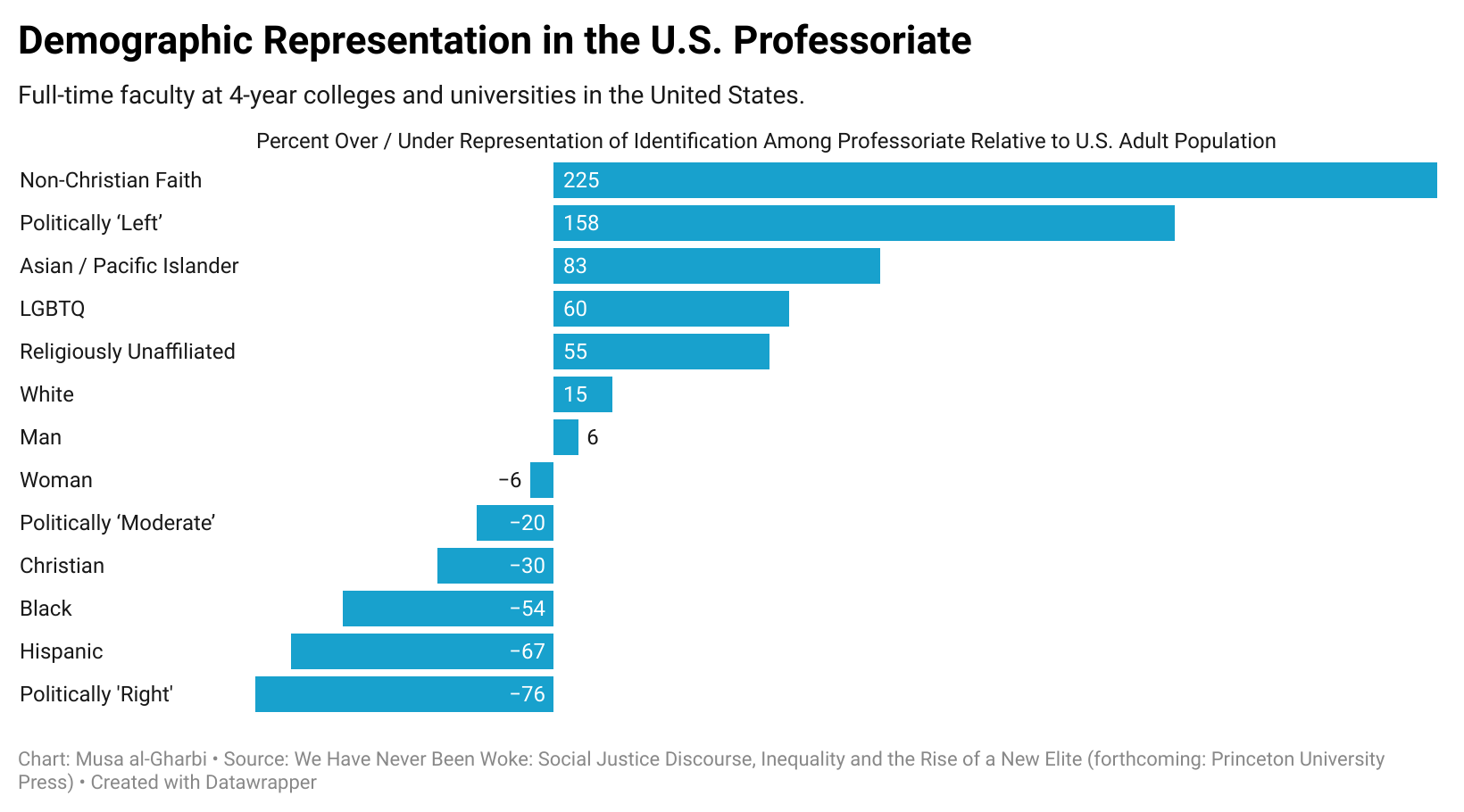
According to the prevailing narrative, it is a disadvantage to be non-white as compared to white. To be LGBTQ as compared to straight. To be a woman as compared to a man. To be a religious minority as opposed to a Christian. To be neurodivergent or disabled as compared to being neurotypical and able-bodied. Undergirding this narrative is tons of empirical data showing that, on average, people who belong to these latter categories do in fact fare worse in life, as a result of structural disadvantages, ongoing stigma and more. However, this isn’t quite the whole picture.
Understanding these identities as strictly stigmatized or disadvantageous makes it hard to explain why so many contemporary elites go out of their way to paint themselves as members of historically marginalized and disadvantaged groups – often stretching the truth to do so. To understand that tendency, we need to look at the origins and contemporary workings of a relatively new and increasingly powerful elite formation.
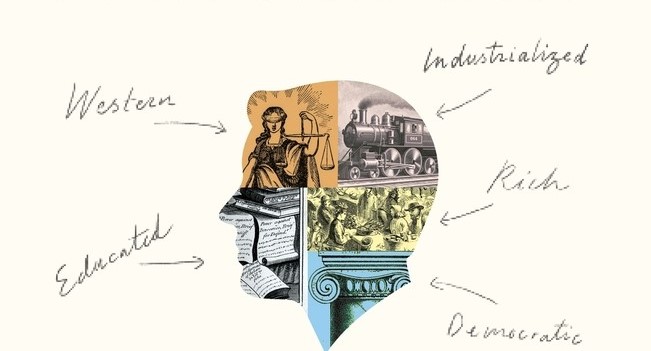
Starting in the interwar period and rapidly accelerating in the 1970s, there were shifts to the global economy that radically increased the influence of the ‘symbolic industries’ – science and technology, education, media, law, consulting, administration, finance, non-profits, NGOs and advocacy organizations and so forth. Rather than providing physical goods and services, people who work in these fields traffic in useful knowledge or technical skills, novel and compelling ideas, social networks – and their social prestige or credibility. Because everything in these industries ultimately boils down to what you know, who you know, and how you’re known, we can refer to these professionals as ‘symbolic capitalists’.
I’m a symbolic capitalist. If you’re reading this, there’s a strong chance you’re a symbolic capitalist too.
One defining trait of symbolic capitalists is our commitment to social justice. We are the group most likely to self-identify as feminists, antiracists, environmentalists or allies to LGBTQ people. Politically, we’re overwhelmingly aligned with parties of the Left.
Many of our professions are explicitly defined in terms of serving the common good as impartial adjudicators, knowledge producers, facilitators and advisers. Journalists, for instance, are supposed to ‘speak truth to power’, serve as a voice for the voiceless, and democratize knowledge in the service of democratic self-rule. Academics are supposed to follow the truth wherever it leads and tell the truth as they see it, without regard to whether it serves anyone’s financial, political or other ends.
From the outset of the symbolic professions, the high pay, autonomy and prestige symbolic capitalists enjoy has been tied to our altruism – including and especially our advocacy on behalf of the most vulnerable, marginalized and disadvantaged in society.
This mode of legitimation set the stage for a unique form of status competition within the symbolic professions: those who are perceived to be more effective at, or committed to, promoting the common good and (especially) helping the least among us also tend to be perceived as more worthy of prestige, deference, autonomy and so on. Meanwhile, folks who are successfully portrayed as possessing values, priorities and behaviors that seem unworthy of their profession – those who come to be seen as selfish or myopic, as serving elite interests at the expense of the broader public or as parasitic on society rather than advancing the greater good – will often find their jobs in the symbolic professions, and their social status, in a precarious position.
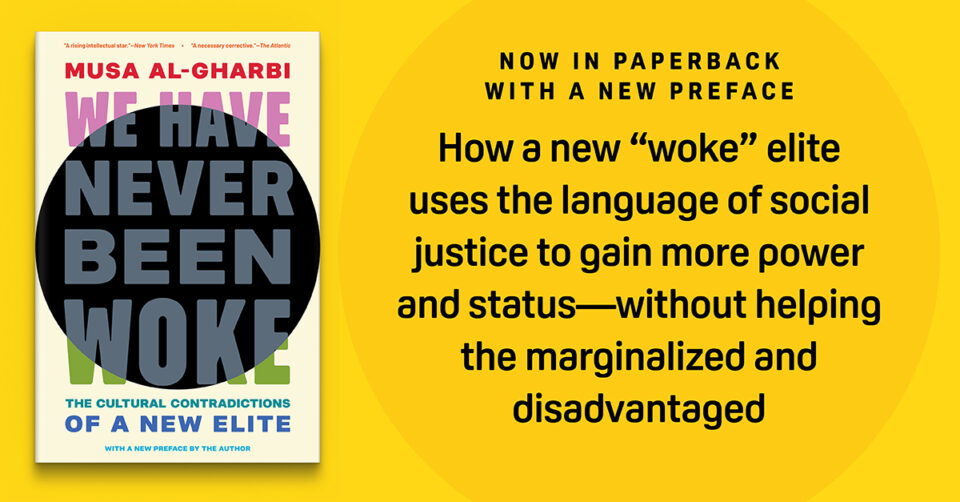
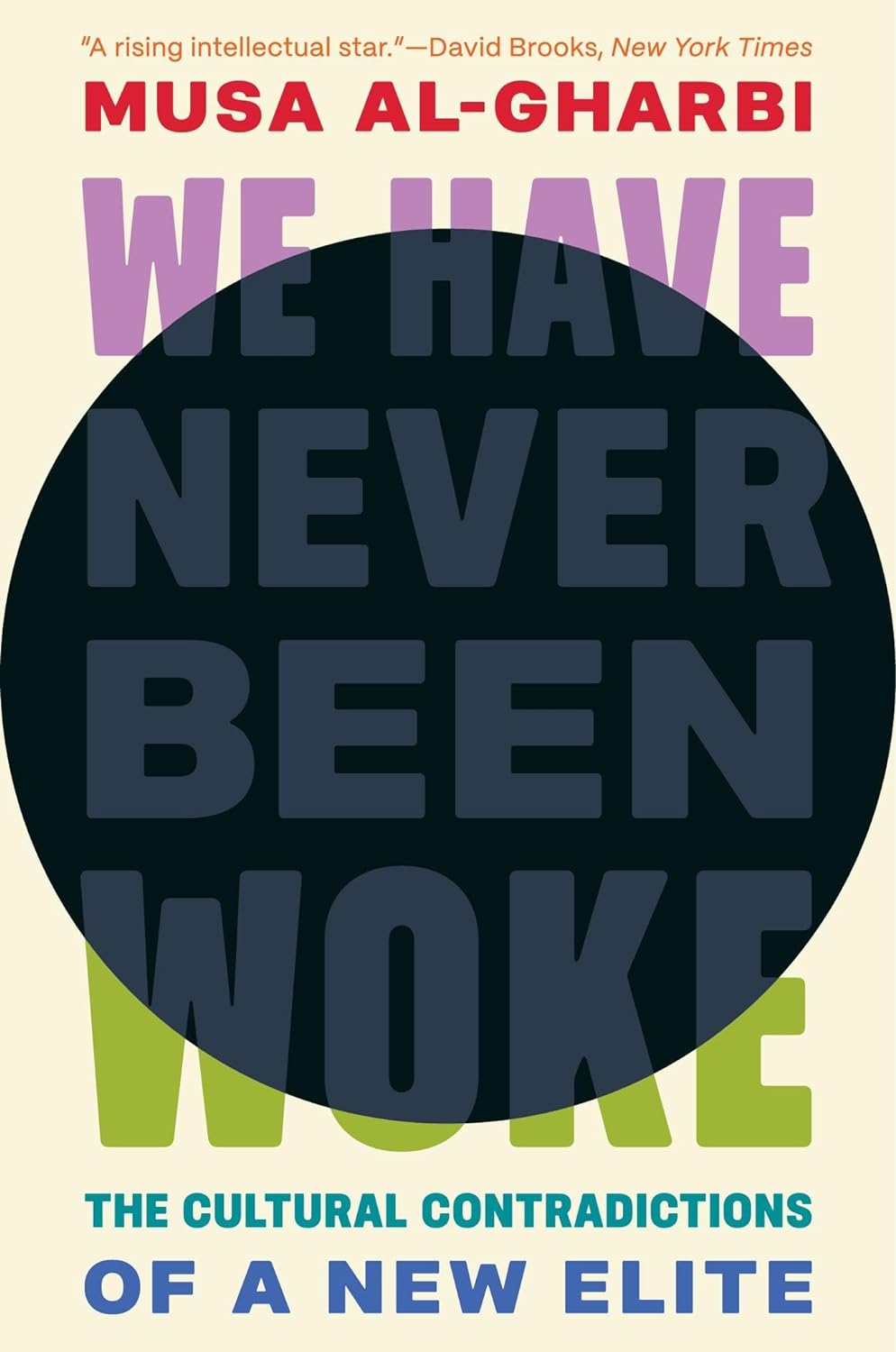
And so, for more than a century now, symbolic capitalists have sought to enhance their own prospects and undermine rivals through appeals to ‘social justice’. And, as detailed at length in my new book, We Have Never Been Woke, in moments when these competitions grow particularly fierce, the symbolic professions tend to get rocked by ubiquitous ‘cancellation’ and censorship campaigns, extreme moral grandstanding, growing activism and politicization within the professions and their outputs, and growing polarization around expertise as a result. We saw this cycle play out most recently throughout the 2010s.
Over the course of the last century, however, the nature of these intra-elite struggles changed in important ways. For instance, in the wake of America’s Civil Rights Acts and other legislation, the symbolic professions grew more diverse (although they remain highly parochial compared to most other lines of work). This ultimately opened up a new front for ‘social justice’ competition.
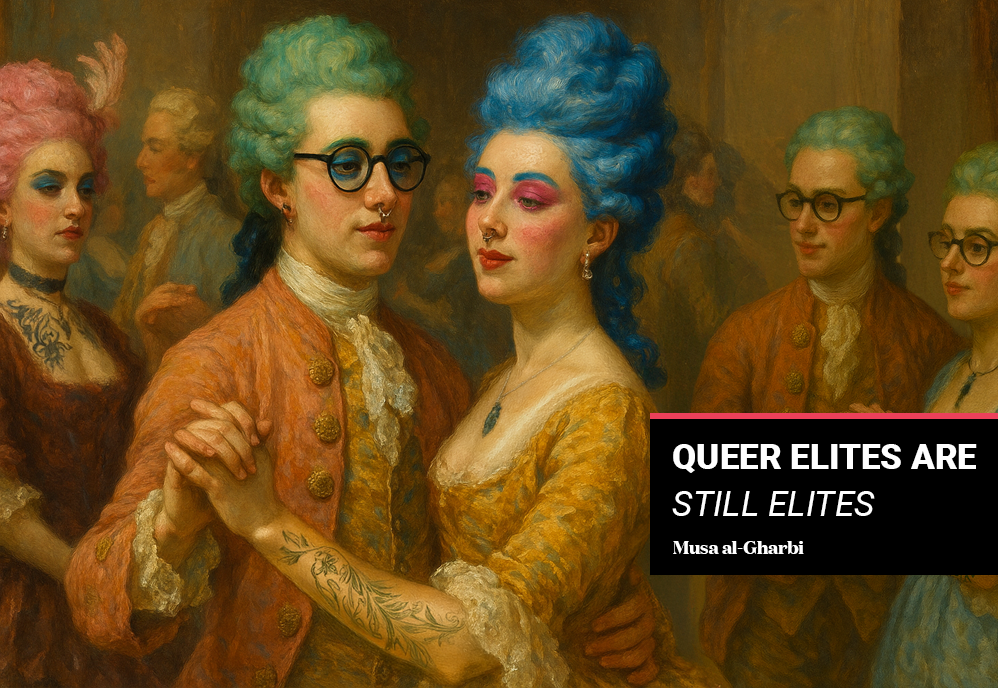
Rather than simply being allies and advocates for the marginalized and disadvantaged, growing numbers of elites and elite aspirants positioned themselves as literal embodiments of historically marginalized and underrepresented groups – as avatars or representatives who could make strong claims on behalf of said groups (even though they tend to be highly unrepresentative of those populations, in truth). Today, many symbolic capitalists simultaneously portray themselves as advocates for those victimized by society and as people who have been personally victimized by society on the basis of immutable characteristics they happen to possess.
There are many incentives for contemporary elites to position themselves this way:
(more…)